
Knoxville, TN

Metal Siding Installation in Knoxville, TN

Steel & Aluminum · Exposed and Concealed Fastener Systems · Lap, Board & Batten, Ribbed and Vertical Panels · Built for East Tennessee Weather

Family Owned& Operated
20+Years in East Tennessee
BBBAccredited
East TNKnoxville and surrounding areas

If your current siding is warping, rotting, or requiring too much upkeep, metal siding can be a durable long-term upgrade for your home.

Metal will not rot or swell, and it holds a factory-applied finish rather than asking to be repainted on a cycle the way wood-based systems do. In East Tennessee — where humidity, heavy rain, and seasonal storms stress every exterior surface — that matters. It is not maintenance-free, and we will not call it that.

We install metal siding systems with attention to fastening, trim, moisture control, and the details that actually protect the wall behind the panels.

Google Reviews

True Metal Supply Factory Certified — through-fastened metal roofing/siding systems, August 2026

Posted on Google Google
Dan Hopp profile picture
Dan Hopp
Google star 1Google star 2Google star 3Google star 4Google star 5Trustindex verifies that the original source of the review is Google.
Had a fascia bit replaced. That was one of the fastest, cleanest jobs
Posted on Google Google
Richard profile picture
Richard
Google star 1Google star 2Google star 3Google star 4Google star 5Trustindex verifies that the original source of the review is Google.
Thanks for the great work! Quick, fair price, professional and friendly. Highly recommend.
Posted on Google Google
Andreas Enns profile picture
Andreas Enns
Google star 1Google star 2Google star 3Google star 4Google star 5Trustindex verifies that the original source of the review is Google.
The guys were very responsive and did a great job!
Posted on Google Google
Lauren Senesac Nichols profile picture
Lauren Senesac Nichols
Google star 1Google star 2Google star 3Google star 4Google star 5Trustindex verifies that the original source of the review is Google.
Mel was so easy to work with. We had him out because we needed to figure out how to fix a roof leak where the flashing wasn't done right (and part of the siding was also not right). He did a thorough inspection and explained to me what issues he saw. His quote was similar to the other we got. We ended up having him put on a new roof, with a new under shingle ventilation system and a roof vent. He also corrected siding issues (and flashing), fixed some rotten trim, and repainted part of the siding and trim. Everything looks great! His crews were very nice. Of all the contractors we've worked with on various renovations, Mel was easily one of the best at quickly responding when we had a question or saw an issue we wanted handled differently. We'll definitely hire him again if we need roof or siding work!
Posted on Google Google
James Keller profile picture
James Keller
Google star 1Google star 2Google star 3Google star 4Google star 5Trustindex verifies that the original source of the review is Google.
Mel and his team were extremely thorough in identifying and correcting a water leakage problem from the top of our deck into the enclosed sun room below. They were both professional and courteous and provided great follow up after the job was completed. I highly recommend MI Homesiding & Roofing for any problem that involves water leakage into your home. I will definitely use MI in the future.
Posted on Google Google
Laura Romans profile picture
Laura Romans
Google star 1Google star 2Google star 3Google star 4Google star 5Trustindex verifies that the original source of the review is Google.
Highly recommend MI Homesiding! They completed a major home exterior project for us including replacing and painting our siding as well as replacing our roofing and gutters. They did an excellent job and we began getting compliments immediately from our neighbors about it! Mel was very communicative and proactive, listened to our questions and ideas, and took care of things in a timely manner. His team was always professional and the work is just superb! We not only recommend MI Homesiding, we will be using them again for future projects ourselves.
Posted on Google Google
Ricardas Lukosiunas profile picture
Ricardas Lukosiunas
Google star 1Google star 2Google star 3Google star 4Google star 5Trustindex verifies that the original source of the review is Google.
I found MI Homesiding & Roofing through their YouTube channel and called with a few questions about siding. Even though I’m not located in Tennessee and wouldn’t be hiring them directly, they answered the phone right away and took the time to answer every question in detail. They provided specific, helpful information and even assisted me in finding a contractor in my area. It’s rare to find a company so willing to help someone who isn’t even a local customer. Awesome people, excellent service, and truly knowledgeable. Thank you so much!
Posted on Google Google
Jeff Nelden profile picture
Jeff Nelden
Google star 1Google star 2Google star 3Google star 4Google star 5Trustindex verifies that the original source of the review is Google.
Exceptionally pleased with entire process and results. Most professional estimate I received, good communication, timely, and did what they said they would. Building looks exceptional. I highly recommend Mel and his crew,

Verified credentials

Who you are actually hiring, and who stands behind the work.

  • James Hardie brand logo

    James Hardie™ ALLIANCE Affiliate

    Fiber cement siding · Affiliate level

  • True Metal Supply brand mark

    True Metal Supply Factory Certified

    Through-fastened metal roofing and siding systems · August 2026

  • BBB Accredited Business badge

    BBB Accredited Business — A+ Rating

    Verify on bbb.org

  • TN #13334Licensed & Insured

    Licensed Home Improvement Contractor

    Tennessee license #13334 · General Liability and Workers’ Compensation insured

  • Knoxville Chamber Investor badge

    Knoxville Chamber Investor

    Investor member of the Knoxville Chamber

Metal Siding ServiceWhat It Covers
Steel panel systemsMetallic-coated, factory-finished steel in lap, ribbed, board-and-batten-style and vertical profiles
Aluminum panel systemsLighter aluminum panels, fastened with aluminum nails as the code requires
Exposed-fastener systemsThrough-fastened panels; faster to install, fastener heads visible
Concealed-fastener systemsClip or lock systems with no visible hardware on the face
Trim, corners and closuresCorners, window and door wraps, soffit and roof-line transitions, profile closures
Technical Assessment$350, credited back in full if the project moves forward with us

We do not publish blanket pricing for metal siding on this page. The panel system, profile, finish and the condition of the wall behind it change the number too much for a range to mean anything. For how siding pricing works in this market, see our siding cost guide.

True Metal Supply supplier banner

Why Metal Siding Works Well in Knoxville

Metal does not rot, swell or absorb water, which is what makes it hold up through East Tennessee humidity, heavy rain and seasonal storms.

Homeowners who are tired of repainting, replacing soft trim, or dealing with siding that cannot handle repeated moisture choose metal because it stays more stable over time. Unlike wood siding, metal does not rot or swell, and its finish is applied at the factory rather than renewed on a repainting cycle.

See best siding for Tennessee climate to understand where metal fits among the materials we install.

Why Correct Metal Siding Installation Matters

Metal siding requires correct fastening, expansion spacing, and moisture protection — or the wall can still take on water even when the outside looks clean.

If spacing, fastening, or flashing is handled poorly, panels distort, stress trim details, and create weak points around openings. On homes where shortcuts already caused problems, that leads to improper siding installation repair before new siding can go on correctly.
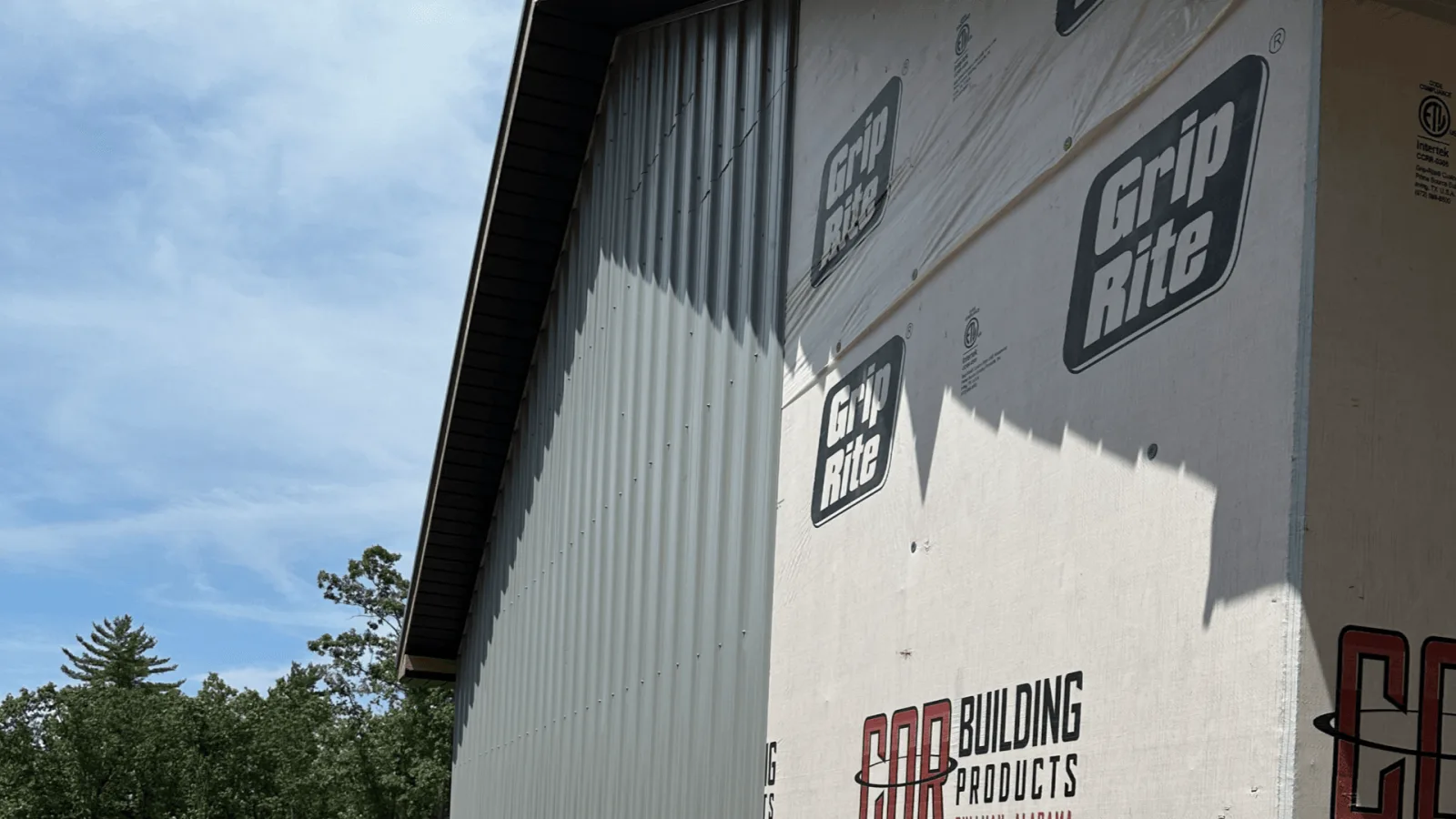
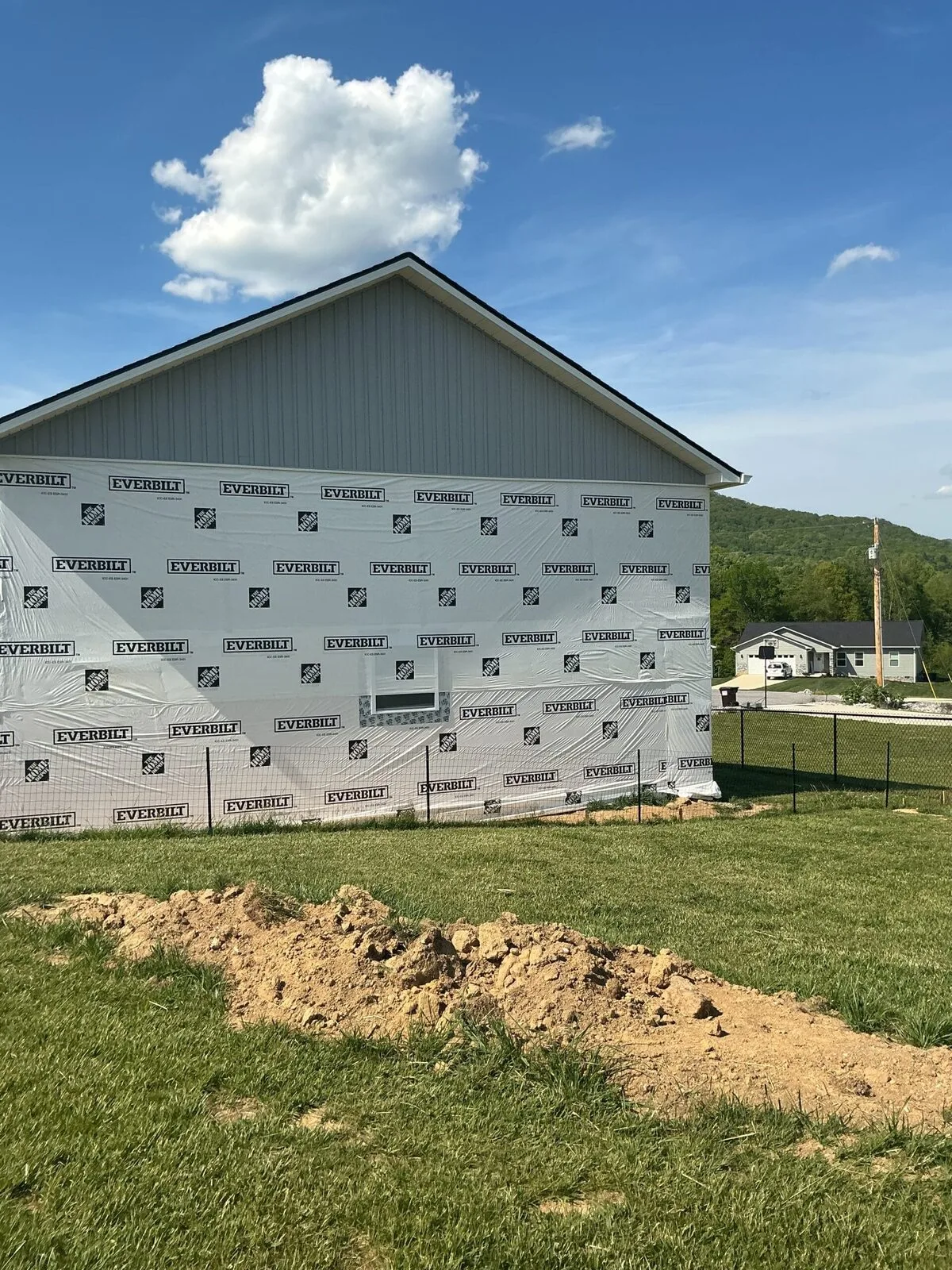
Missing window head flashing allowing water to get behind the siding on a Knoxville, TN home

Metal Siding Styles We Install

Metal siding is not one product. Three things decide what your wall ends up looking like and how it behaves: the metal itself, how it is fastened, and the profile it is rolled into. The sections below work through each one.

See vinyl siding installation for a contrast in maintenance and appearance.

Call now for a free metal siding estimate: (865) 243-1243

Metal Siding Systems We Install

MI Homesiding & Roofing installs a range of residential metal siding systems, including steel and aluminum panels, exposed-fastener and concealed-fastener systems, ribbed/corrugated profiles, board-and-batten-style metal, horizontal/lap-style metal and vertical wall panels, subject to manufacturer requirements, current product availability and the approved project scope.

Those are not interchangeable choices. They change how the wall looks, how it is fastened, how it is trimmed, and what happens years later when something has to be repaired. Here is what each one actually means.

Horizontal, lap-style metal. Panels run across the wall and overlap like traditional lap siding. It is the most familiar look, and it reads as a normal house rather than a modern statement.

Board-and-batten-style metal. Vertical panels with raised battens at the joints. Popular on farmhouse and rural elevations across East Tennessee, and it makes a tall wall look taller.

Vertical wall panels. Flat or lightly profiled panels run vertically. Often used on a single elevation or an accent wall rather than a whole house.

Ribbed and corrugated profiles. Repeating ribs or waves pressed into the sheet. The ribs are not only decoration: they stiffen the panel, which is one of the reasons a ribbed wall shows less waviness than a wide flat one.

Exposed-fastener, also called through-fastened. The screws pass through the face of the panel and you can see the heads in rows. Quicker and usually less expensive.

Concealed-fastener. The panel clips or locks over fastening you never see. Cleaner appearance, higher cost, slower to install.

Trim, corners and closures. Corners, window and door wraps, soffit and roof-line transitions, and the closure pieces that shut the open ends of a ribbed profile. On a metal wall this is not an afterthought — it is most of the waterproofing detail.

We work on houses. We are not an industrial metal-building envelope contractor and we do not present ourselves as one.

If you want a steel wall that reads as wood or log, that is a specific manufactured product rather than a generic metal system. TruLog has its own profiles, finishes and warranty, and it is covered on our TruLog siding page.

Call now for a free metal siding estimate: (865) 243-1243

Steel or Aluminum: How to Choose

Neither metal is better in every case, and anyone who tells you otherwise is selling what they stock. They behave differently, and the building code treats them as different materials.

What the code requires. The 2018 International Residential Code lists minimum nominal thicknesses in its prescriptive attachment table, Table R703.3(1), for two specific profiles: 29 gauge for steel lap siding, and 0.019 inch or 0.024 inch for horizontal aluminum siding, the applicable figure depending on whether the panel is backed or insulated and on the panel width limits set out in the table footnotes. Those thicknesses assume studs at a maximum of 16 inches on center. For both materials, fastening directly to studs with no sheathing is listed as not allowed.

Those are prescriptive minimums for those two profiles, not a specification for every metal wall. Concealed-fastener systems, ribbed and corrugated panels and vertical wall panels are not covered by that table row, and they are governed instead by the current manufacturer installation instructions for the specific product, any evaluation report it carries, and the applicable local code for the project. We go to those documents rather than stretch a lap-siding figure to cover a panel system.

Aluminum has its own fastening rule. The same table carries a footnote stating that aluminum nails shall be used to attach aluminum siding. That is not a preference. Putting the wrong fastener through an aluminum panel puts two dissimilar metals in permanent wet contact, and the code also states that aluminum siding shall not be fastened directly to cold-formed steel light frame construction.

Weight and handling. Aluminum is the lighter of the two, which matters on tall or awkward elevations.

Denting. Aluminum is a softer metal than steel, so at a similar thickness it generally marks more easily. Steel resists a ladder knock or a stray rock better.

Corrosion. Aluminum contains no iron, so it cannot rust. Steel panels are protected instead: the sheet is metallic-coated before it is painted, either with zinc under ASTM A653 or with a 55 percent aluminum-zinc alloy under ASTM A792. Prepainted steel for exterior building products is covered by ASTM A755.

Finish. Both are finished at the factory on a coil line, not painted on site. Architectural coating performance is specified in ascending tiers — AAMA 2603, 2604 and 2605, now published by FGIA — with 2605 the most demanding. We will quote the finish system a manufacturer actually publishes for the panel you choose rather than a general number.

Repairability. Roughly comparable, and governed far more by the fastening system and by whether the profile and color can still be matched than by the metal itself.

In practice, steel is the more common residential choice here, and aluminum earns its place where weight or a salt-free, rust-free substrate matters more than dent resistance.

Exposed or Concealed Fasteners

This is the decision that changes the look of the wall most, and the one homeowners hear least about.

Exposed-fastener, or through-fastened. The fastener goes through the face of the panel into the framing or sheathing behind it, with a gasketed washer under the head. You see the heads, usually in regular rows. It installs faster and costs less. Over the long run the washers are the wear item — manufacturers describe fastener replacement as a realistic maintenance event after a couple of decades, not an immediate concern.

Concealed-fastener. Each panel locks or clips over fastening hidden by the next panel. Nothing shows on the face. It costs more and takes longer to install, and manufacturers note that because the fasteners are not weather-exposed they are less affected by the daily expansion and contraction the wall goes through.

Which is better? Neither, universally. Exposed systems give easier access later; concealed systems give a cleaner elevation and no fastener maintenance. It is an appearance, budget and maintenance decision, and it should be made before the panels are ordered because it also determines the trim and closure details.

One thing we will not do is quote you fastener spacing, slot placement, panel gaps or clip spacing from a metal roofing manual. Roof and wall systems are documented separately. Those figures come from the current installation instructions for the specific wall panel being installed, and if we do not have them in hand for your product we will say so rather than guess.

Call now for a free metal siding estimate: (865) 243-1243
House wall prepared with a weather-resistive barrier before siding installation in Knoxville, TN

Common Exterior Problems in Knoxville — Metal Siding

Metal siding homes deal with the same East Tennessee conditions as any exterior system.

🏠 Flashing failures: Poorly planned transitions around windows, doors, and roof lines allow water behind the panels. → Siding flashing repair

💧 Water behind panels: Failed corners or weak trim let water reach the wall cavity silently. → Water behind siding repair

🔨 Distortion from restrained movement: Panels fastened without the movement allowance the manufacturer calls for buckle and stress their trim in summer heat. Slight waviness in flat areas — oil canning — is a separate matter: the Metal Construction Association states it is generally an aesthetic issue that does not typically affect structural integrity, and that nobody can assure its total prevention.

🪵 Hidden rot under old siding: Many homes have damage behind the original siding that needs correction before metal goes on. → Rotted siding repair

🌧️ Leak repair needed first: Active leaks or panel failure may need siding leak repair before installation can begin.
Why Cheap Metal Siding Installs Fail

Low quotes skip custom trim, use weak flashing, ignore thermal movement, or treat panels like decorative cladding instead of a protective system.

Those mistakes show up later as leaks, weak corners, distorted panels and water getting behind the wall. The install looks fine on day one — the problems start after the first storm season.

What Goes Behind Metal Siding

This is the part of the job nobody photographs, and it is the part that decides whether the wall lasts.

Metal siding is cladding, not the water-management system. No lap siding of any material is watertight, and metal is no exception. Water gets behind cladding. The assembly has to expect that and drain it back out.

Sheathing. The structural skin the panels and the barrier are attached to. It is also the layer where hidden damage shows up once the old siding is off.

Water-resistive barrier. The 2018 International Residential Code requires one layer of No. 15 asphalt felt complying with ASTM D226 Type 1, or another approved water-resistive barrier, applied over the studs or sheathing of all exterior walls and continuous to the top of the walls.

Drainage. The code is explicit that the wall must be built in a way that prevents water accumulating inside the assembly, and must give water that gets past the cladding a means of draining to the exterior.

Flashing. Corrosion-resistant flashing applied shingle-fashion, extending to the surface of the exterior wall finish. The code names the places it is required: exterior window and door openings, continuously above projecting trim, at wall and roof intersections, and at built-in gutters. Self-adhered membranes used as flashing are required to comply with AAMA 711.

Laps. The code sets prescriptive lap dimensions for No. 15 asphalt felt specifically. Other approved water-resistive barriers are lapped according to their own manufacturer instructions, so the lap on your wall comes from the barrier being used and the applicable local code rather than from one universal figure.

Windows, doors and penetrations. Every hole through the wall is a place water can enter. Hose bibs, vents, lights, meter bases and dryer terminations each need a detail, not a bead of sealant.

Roof-to-wall transitions, corners and masonry. Where a roof meets a wall, where two walls meet, and where metal meets brick or stone are the three details that fail most often in East Tennessee.

Soffit and fascia. The top of the wall has to close out correctly or the whole assembly is open at the eave. If that is the part of your house giving trouble, see soffit and fascia repair.

How we use sealant. Caulk where a joint genuinely calls for sealant, flashing wherever water has to be redirected. We do not rely on caulk alone as primary water management, because sealant has a service life and flashing does the work after it has aged.

If water is already getting in, that comes first: siding flashing repair, water behind siding repair or siding leak repair before new panels go on.

Thermal Movement and Fastening

Metal expands when it heats and contracts when it cools, every day, for the life of the wall. A south-facing elevation in July moves measurably more than the same wall in January.

A panel system is designed to absorb that movement. Fastening is what either allows it or fights it. Pin a panel too tightly, or in the wrong place along its length, and the metal has nowhere to go — so it buckles, stresses the trim, and opens joints that were tight on the day of installation.

What we will not do is publish universal numbers. Exact fastener spacing, slot placement, panel end gaps, clip spacing and expansion allowances are set by the manufacturer of the specific wall panel, and they differ between products and between profiles of the same product. Where we do not hold the current wall-panel instructions for your system, our answer is that the figure is not verified, and we go and get the document rather than apply a number from somewhere else.

The code does set one threshold worth knowing: where the design wind pressure exceeds 30 pounds per square foot, or the limits of its attachment table are exceeded, the attachment of the wall covering has to be designed to resist the component and cladding loads rather than simply follow the prescriptive table.

Finishes, Cut Edges and Corrosion

We do not describe any siding as rust-proof, corrosion-proof or maintenance-free. Here is what is actually true about metal.

The finish is applied at the factory. Panels are coil-coated before forming: a metallic coating on the steel first, then a primer and top coat. The result is more uniform than anything that can be sprayed on site, and it is the reason a factory finish holds color the way it does.

Cut edges are the real exposure. A panel cut in the field is bare metal at the cut. Manufacturers are direct about this: field cuts should be made by shearing with nibblers, snips or shears, and torches, cut-off saws, reciprocating saws, hacksaws and grinders should be avoided because they leave irregular or rough edges that are no longer coated or finished, which causes rust and corrosion.

Filings matter as much as the cut. Cutting throws off metal particles — swarf. They come off hot, embed into the panel coating, and they are raw uncoated metal with no corrosion protection, so they rust quickly. Manufacturers warn that a significant accumulation in one spot can rust completely through a panel, and that particles landing on finished work cause permanent staining.

So we cut on the ground, not over installed panels, and we clean the filings off the same day. It is an unglamorous habit and it is the difference between a wall that still looks right in year five and one speckled with rust freckles.

Marking. Graphite pencils should not be used to mark panels. Permanent or dry-erase markers are the correct tool, and marks get cleaned off.

Dissimilar metals. Where two different metals sit together in a wet joint, the detail has to account for it. The clearest documented case is the code requirement that aluminum nails be used to attach aluminum siding.

Warranties. Finish and substrate warranties vary by manufacturer, panel and finish system. We will not publish a blanket coating warranty for metal siding, because there is no single one to publish.

Dents, Scratches and Repairs

Metal siding can dent. How easily depends on the thickness of the sheet, the profile, how well the panel is supported behind it, and what hits it. Aluminum is softer than steel and marks more readily at a comparable thickness. Hail, ladders, string trimmers and thrown debris are the usual culprits. Flat, wide panels show a dent more than ribbed ones.

Scratches that reach bare metal should be addressed. A scuff in the top coat is cosmetic; a scratch through to the substrate is the same exposure as an uncoated cut edge.

Replacing a single panel is often possible, but it depends on the system. On an exposed-fastener wall the fasteners are accessible, so a damaged panel can usually be removed and replaced on its own. On a concealed-fastener wall, whether one panel can come out without disturbing its neighbors depends on the clip and joint design of that specific product — some systems allow it, others are built to be taken apart in sequence from an edge.

Matching is usually the harder problem. Profiles are discontinued and colors shift over the years. On an older installation an exact match is not something anyone can promise, and we will not promise you an invisible repair.

Trim and flashings are separate. Corners, wraps, closures and flashings are their own pieces, and damage to them is its own repair — occasionally more involved than the panel beside them.

And about waviness. Slight waviness in the flat areas of metal panels is called oil canning. The Metal Construction Association treats waviness, elastic buckling, stress wrinkling and oil canning as the same thing, and states plainly that oil canning is generally an aesthetic issue and that structural integrity is typically not affected. It also states that no panel manufacturer, fabricator or installer can assure the total prevention of oil canning on any given project. What can be done is to reduce it: it becomes more pronounced as panel width increases and as thickness decreases, stiffening ribs break up the flat surface and make it less apparent, and ordering tension-leveled material reduces the effect. Anyone promising you a dead-flat metal wall is promising something the industry says cannot be guaranteed.

Wall sheathing and weather barrier exposed during an exterior project in Knoxville, TN

Hidden Damage Policy

  1. 01
    If we find rot, damaged sheathing, or moisture damage during installation — we stop.
  2. 02
    We photograph it. We explain what we found. We issue a written Change Order before continuing. You approve it first.
  3. 03
    New metal siding goes on after the damage underneath has been documented and addressed in writing.

$350 Technical Assessment for Complex Projects
For homes with suspected hidden damage or complex trim details, we offer a $350 Technical Assessment. If you move forward with the project, that amount is credited back in full.
Installing Metal Siding Over Existing Siding

Metal siding can sometimes be installed over existing siding when the wall condition, manufacturer requirements and approved scope allow it. However, MI Homesiding & Roofing generally recommends removing the existing siding when needed to inspect the sheathing, weather barrier, flashing and hidden conditions before installation. If a homeowner chooses to leave existing siding in place after the limitations are explained, that decision should be documented in the written scope because concealed pre-existing conditions cannot be fully evaluated.

The reason is simple. Once new panels are on, whatever was behind them is sealed in and out of sight. If the sheathing was soft, if the barrier was torn, if a window was never flashed, covering it does not stop it — it just removes your ability to find it.

There are walls where going over makes sense, and we will tell you when yours is one of them. What we will not do is make that call for you without explaining what it costs you in certainty.

Metal Compared With the Other Materials We Install

There is no universal winner here, which is exactly why we install several materials instead of one.

Metal. Will not rot or swell, holds a factory finish well, and does not ask to be repainted on a cycle. It can dent, cut edges need care, and the trim detailing is where the quality of the job lives. Warranty varies by manufacturer, panel and finish system.

Vinyl. The lowest-cost option and the lightest to work with. Certified against ASTM D3679. It moves a great deal with temperature, and color options and impact resistance vary by line.

James Hardie fiber cement. Heavy, rigid and dimensionally stable, with its own non-prorated warranty structure and its own finish program. Heavier to handle and it asks for careful cutting practice.

LP SmartSide engineered wood. Lighter than fiber cement, takes a nail well, and has a real wood texture. Its warranty structure and finish options are its own.

Cedar and wood. The material many owners like most to look at, and the one that asks the most in return. Plan on a refinishing cycle.

TruLog. A specific manufactured steel product with a log or woodgrain appearance, and its own profiles, finishes and warranty. It belongs in this list as a product, not as a category.

If you are weighing materials rather than committing to metal, our siding overview and best siding for Tennessee climate pages lay the options out side by side. If the question is really repair or replacement, start with siding repair or siding replacement.

Warranty: What Is Ours and What Is the Manufacturer’s

Two different things get called a warranty, and they are worth keeping apart.

Our workmanship warranty has two levels. A full metal siding installation carries a Five (5) Year Limited Workmanship Warranty. General repair work carries a One (1) Year Limited Workmanship Warranty, unless stated otherwise in writing. Which one applies depends on the signed agreement and the scope it defines.

The manufacturer’s material warranty is separate, and it varies. It is not one number for metal siding. It changes by manufacturer, by panel, and by finish system, and the substrate and the coating can carry different terms. We will give you the actual document for what goes on your house rather than a figure for metal in general.

A warranty term is not a service life. A thirty-year finish warranty is a statement about what the manufacturer will stand behind under its own conditions. It is not a prediction of how long the wall will last, and we will not present it as one.

How a Metal Siding Project Runs With MI

1. Free on-site estimate. We look at the actual wall, not a satellite photo. Elevations, trim conditions, openings, transitions and whatever the last installer left behind.

2. System selection. Steel or aluminum, exposed or concealed fastening, profile and finish, decided before anything is ordered because it determines the trim package too.

3. Written scope. What is included, what is not, and anything you have chosen to leave in place gets written down.

4. Tear-off and inspection. Where the existing siding is coming off, this is when the sheathing, barrier and flashing finally become visible.

5. If we find hidden damage, we stop. We document it, explain it, price it, and issue a written Change Order. You approve it before any additional work happens.

6. Barrier and flashing. The water-management layer goes in before a single panel does.

7. Panels and trim. Cut on the ground with shears, filings cleaned off, closures and corners detailed as part of the system rather than patched at the end.

8. Walkthrough. We walk the finished job with you.

Licensed Tennessee Home Improvement Contractor · City of Knoxville Building Contractor License · BBB Accredited A+ · General Liability and Workers’ Compensation insured · 500+ siding projects · 20+ years of hands-on exterior remodeling · Family Owned & Operated · English and Spanish.

Call now for a free metal siding estimate: (865) 243-1243

Why Knoxville Homeowners Choose MI Homesiding & Roofing

We answer the phone. We show up on schedule. We walk the finished job with you.

Our ⭐⭐⭐⭐⭐Google Reviews reflect that commitment.

Licensed Tennessee Home Improvement Contractor · City of Knoxville Building Contractor License · BBB Accredited A+ · General Liability and Workers’ Compensation insured · 500+ siding projects · 20+ years of hands-on exterior remodeling · Family Owned & Operated · English and Spanish.

True Metal Supply Factory Certified — through-fastened metal roofing/siding systems, August 2026. That certificate covers through-fastened systems, and we do not stretch it to cover every concealed-fastener or generic wall system we install.

Call now for a free metal siding estimate: (865) 243-1243

Serving Knoxville and East Tennessee

MI Homesiding & Roofing installs residential metal siding — steel and aluminum panels, exposed-fastener and concealed-fastener systems, lap, ribbed, board-and-batten-style and vertical profiles — across Knoxville and the surrounding East Tennessee communities, subject to manufacturer requirements, current product availability and the approved project scope.

If your community is not listed, it is worth asking — we work across East Tennessee around Knoxville.

Homeowners looking for a metal siding contractor near them in East Tennessee tend to find the same thing: plenty of roofers who also do siding, and very few crews who treat a metal wall as its own system with its own trim, closures and movement details. That is the gap we work in.

Talk with MI Homesiding & Roofing about your metal siding project.

Call Now 865-243-1243

Our Workmanship Warranty and What the Estimate Covers

Our workmanship warranty, in plain terms. We carry a one-year limited workmanship warranty on siding work, and five years on a full James Hardie replacement. We publish both figures rather than one blanket number, because a single figure quoted across every job is almost always the shorter one applied to the bigger job.

What the written estimate itemizes. Square footage by elevation, the product line and profile by name, the weather-resistive barrier, flashing at every opening and transition, trim, fasteners, caulking and finish, an allowance for sheathing repair, and removal and disposal of the existing cladding. Where two siding quotes differ sharply, the gap is nearly always in the barrier, the flashing and the sheathing allowance — the parts nobody sees once the wall is closed.

Licensed Home Improvement Contractor (TN #13334) · BBB Accredited with an A+ rating · Workers’ Compensation and General Liability carried · family owned and operated, bilingual English and Spanish · 20+ years of hands-on construction and exterior remodeling experience · Google Reviews.

Frequently Asked Questions — Metal Siding Knoxville, TN

Is metal siding good for homes in Knoxville?

Yes. It resists humidity, heavy rain, and seasonal storms without rotting, swelling, or requiring frequent repainting — ideal for East Tennessee conditions.

Does metal siding rust?

Steel panels are not bare steel. The sheet carries a metallic coating — zinc under ASTM A653, or a 55 percent aluminum-zinc alloy under ASTM A792 — and then a factory paint system. Aluminum contains no iron, so it does not rust at all. The practical risk is not the face of the panel but cut edges and leftover filings, which are raw uncoated metal and will corrode. That is why cuts are sheared rather than ground, and filings are cleaned off the same day. We do not describe any siding as rust-proof.

Does metal siding dent?

Yes, metal siding can dent. How easily depends on the thickness of the sheet, the profile, how well the panel is supported behind it, and what hits it. Aluminum is a softer metal than steel, so it generally marks more easily at a comparable thickness. Hail, ladders, string trimmers and thrown debris are the usual causes. We will not tell you a metal wall is dent-proof, and we do not promise an invisible repair.

Is steel or aluminum siding better?

Neither is better in every case. The 2018 International Residential Code treats them as different materials: its prescriptive table lists a minimum nominal thickness of 29 gauge for steel lap siding and 0.019 inch or 0.024 inch for horizontal aluminum siding, and requires that aluminum nails be used to attach aluminum siding. Those figures apply to those two prescriptive profiles; panel systems follow the manufacturer instructions for the product and the applicable local code. Steel is harder and resists denting better. Aluminum is lighter and contains no iron, so it cannot rust. The right answer depends on the elevation, the profile you want and the budget.

What is the difference between exposed and concealed fasteners?

On an exposed-fastener system, also called through-fastened, the screws pass through the face of the panel and you can see the heads in rows. On a concealed-fastener system the panel clips or locks over hidden fastening and no hardware shows. Exposed systems install faster and cost less, and the gasketed washers are a long-term maintenance item. Concealed systems cost more, take longer, and give a cleaner elevation. Neither is universally better.

What goes behind metal siding?

Metal siding is cladding, not the whole water-management system. Behind the panels the wall needs sheathing, a water-resistive barrier and flashing at every opening and transition. The 2018 International Residential Code requires a water-resistive barrier over the studs or sheathing of all exterior walls, continuous to the top of the wall, and requires the assembly to provide a means of draining to the exterior any water that gets past the cladding. Flashing must be corrosion-resistant and applied shingle-fashion.

Can metal siding be installed over existing siding?

Metal siding can sometimes be installed over existing siding when the wall condition, manufacturer requirements and approved scope allow it. However, MI Homesiding & Roofing generally recommends removing the existing siding when needed to inspect the sheathing, weather barrier, flashing and hidden conditions before installation. If a homeowner chooses to leave existing siding in place after the limitations are explained, that decision should be documented in the written scope because concealed pre-existing conditions cannot be fully evaluated.

Can damaged metal panels be replaced?

Often yes, but it depends on the system. On an exposed-fastener wall the fasteners are accessible, so a single panel can usually be removed and replaced. On a concealed-fastener wall, whether one panel can come out without disturbing its neighbors depends on the clip and joint design of that product. The harder problem is usually matching, because profiles and colors change over the years and an exact match on an older installation is not guaranteed. Damaged trim, corners and flashings are separate pieces and may need their own repair.

Does metal siding need maintenance?

Less than wood, but not none, and we do not call any siding maintenance-free. Periodic washing keeps dirt and organic growth off the finish. Scratches that reach bare metal should be touched up. On exposed-fastener systems the fastener washers are a long-term wear item. Trim, corners, sealant joints and flashings should be checked the same way you would on any other cladding.

Is metal siding noisy during Tennessee rainstorms?

Much less than people expect, because a wall is not a bare metal roof deck. Sound reaching the inside of the house passes through the panel, the wall cavity, the sheathing and the insulation, and those layers do most of the work. How quiet it ends up depends on the wall assembly rather than on the fact that the cladding is metal. We do not publish a comparison figure for this, because we have no measured source for one.

Does metal siding make my house hotter in the summer?

The exterior finish affects how much solar heat the surface absorbs, and lighter, more reflective colors absorb less. What the rooms actually feel depends far more on insulation, air sealing and attic ventilation than on the cladding material. We are not going to claim a specific energy saving for metal siding, because that depends on the whole assembly and we have no verified figure for it.

Is metal siding better than vinyl or fiber cement?

No material wins across the board, which is why we install several. Metal will not rot or swell and holds a factory finish well, but it can dent. Vinyl is the lowest-cost option and is certified against ASTM D3679. James Hardie fiber cement is heavy and rigid with its own warranty structure. LP SmartSide is engineered wood and lighter to work with. Cedar looks best to many owners and asks for the most upkeep. The right answer depends on your wall, your budget and how much maintenance you want to take on.

What workmanship warranty does MI Homesiding & Roofing provide?

Two levels, and which one applies depends on the signed agreement and the scope it defines. A full metal siding installation carries a Five (5) Year Limited Workmanship Warranty. General repair work carries a One (1) Year Limited Workmanship Warranty unless stated otherwise in writing. The manufacturer material warranty is separate and varies by manufacturer, panel and finish system — a warranty term is not a statement of how long the product will last.

What happens if you find hidden damage during installation?

We stop, photograph it, explain what we found, and issue a written Change Order. You approve it first. Hidden damage is documented and priced in a written Change Order before new siding goes over it.

Do you offer free estimates for metal siding in Knoxville?

Yes. Free on-site estimates for standard metal siding projects across Knoxville and Surrounding East Tennessee.

Ready to Get Started?

MI Homesiding & Roofing exterior project in Knoxville, TN
01
✅ Licensed Home Improvement Contractor
Tennessee
02
✅ BBB Accredited Business
03
✅ Workers' Compensation & Liability Insured
04
✅ Google Reviews
05
✅ Family Operated
06
✅ Bilingual
English & Spanish

Call or Message for Prompt Assistance

MI Homesiding & Roofing is proud to serve Knoxville, TN, and surrounding communities with quality craftsmanship and dependable home improvement services.

Email

contact@mihomesidingllc.com

Location

Knoxville, TN