
MI Homesiding & Roofing
Full exterior integration — flashing, sealing, and drainage planning — not just a frame dropped into an opening.
We seal air leaks and improve insulation to stop drafts and lower energy bills.
Learn more → 💧We fix flashing, siding, and sealing issues to stop water intrusion for good.
Learn more → 🪟We repair failed seals or replace glass to restore clarity and efficiency.
Learn more → 🔨We install energy-efficient windows designed for Knoxville's climate.
(865) 243-1243 →Old or poorly installed windows cost Knoxville homeowners money every month — drafts, foggy glass, and air leaks all drive up energy bills.
They trace back to missing flashing, poor sealing, or windows that were never tied into the house wrap correctly. Correcting that starts with proper window flashing installation.
We install and repair windows with full exterior integration — flashing, sealing, and drainage planning — not just a frame dropped into an opening.
Choosing a window contractor in Knoxville is mostly a question about the wall, not the window. Plenty of companies sell windows. Fewer treat the opening as part of a wall system that has to keep water out for the next twenty years. That difference is most of what separates a window that performs from one that leaks behind the trim two winters later.
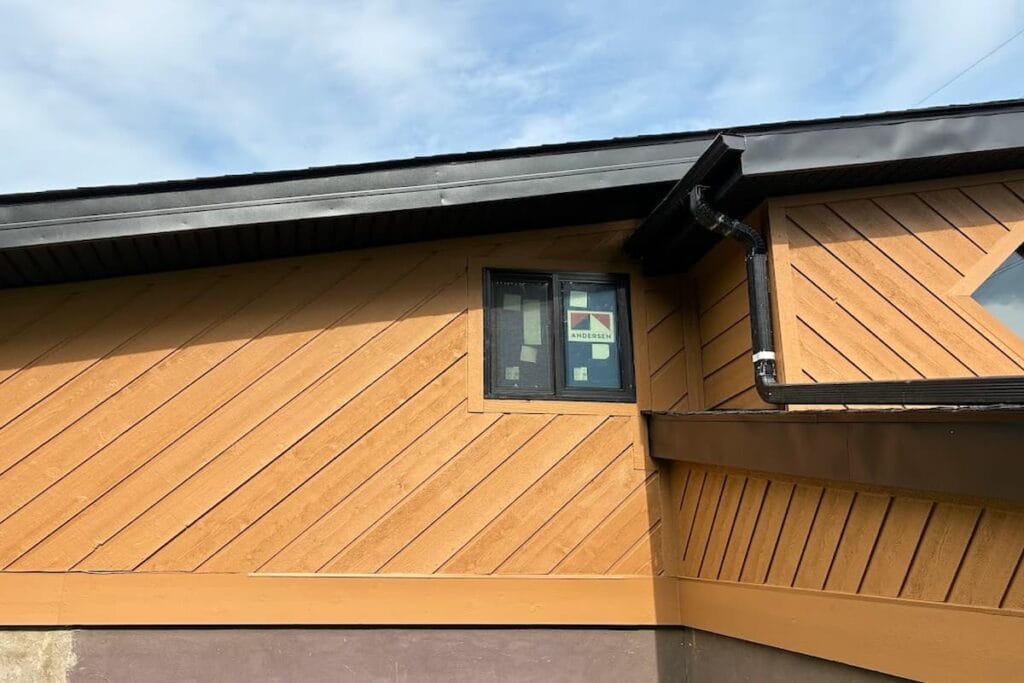
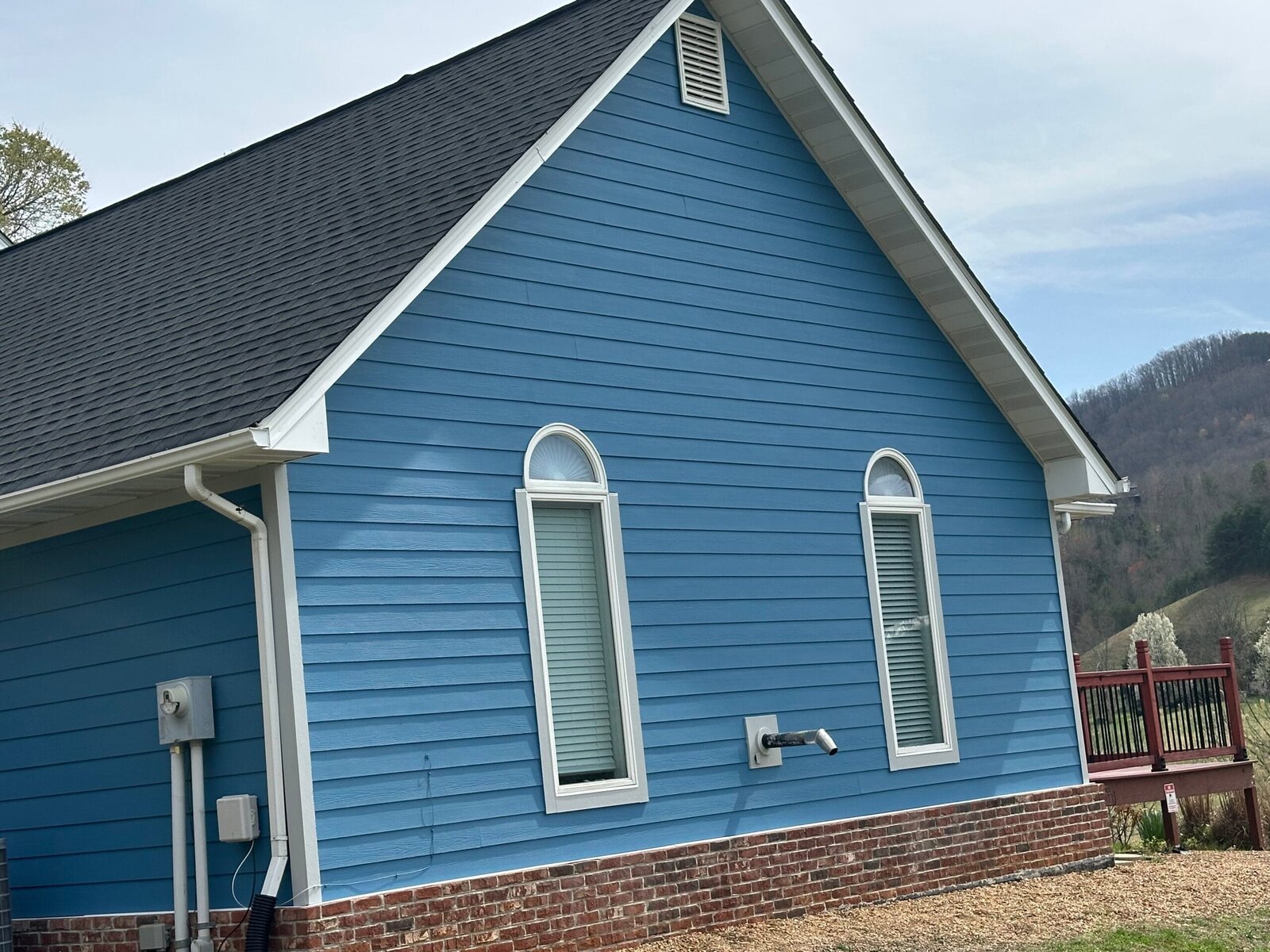
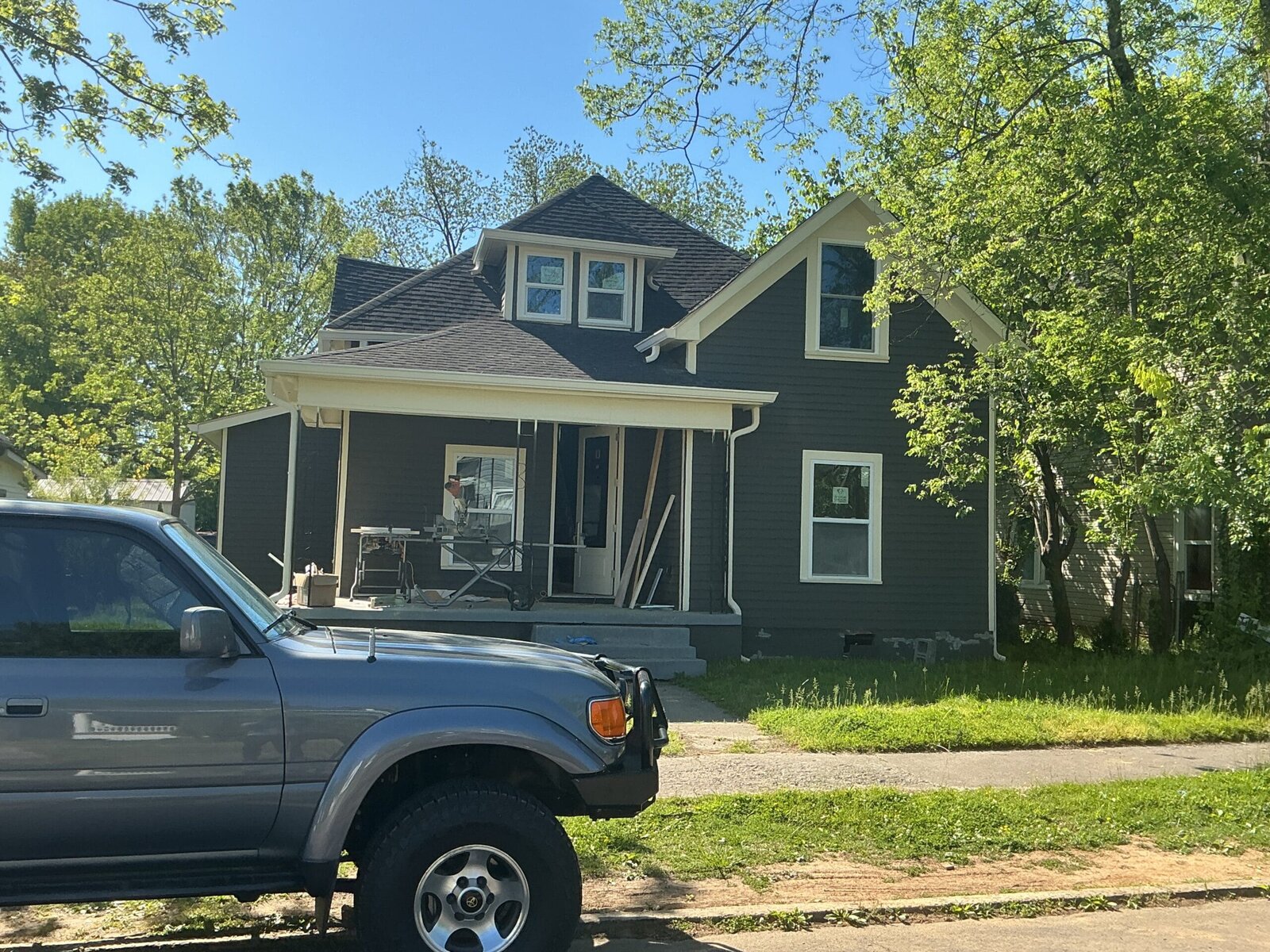
MI Homesiding & Roofing works on both sides of that line. We install replacement windows in existing openings and new-construction windows with nailing fins on additions and new builds, and because we install siding every week, the flashing and drainage details around the opening are our normal work rather than someone else’s problem.
New units into existing openings, by insert or full-frame depending on what the opening can take.
Nail-fin units on additions, remodels and new builds, integrated with the weather barrier as the wall goes up.
When the unit is sound and the failure is at the seal, trim or flashing, we fix that instead. See window repair.
Flashing, weather barrier, trim and siding reset so the opening drains outward.
These are not interchangeable, and which one suits your house is decided at the opening, not in a brochure. Anyone quoting one method for every window on the street has not looked yet.
The sash and hardware come out and a new unit sets into the existing frame, which stays. It is the least invasive option and usually keeps the interior and exterior trim intact. It depends entirely on the existing frame being square, sound and dry — and it gives up a little glass area, because the new unit sits inside the old frame.
Everything comes out down to the rough opening, including the old frame. It costs more and disturbs more trim, but it is the only way to see and correct what is behind the frame, and the only option when there is rot, when the frame is out of square, or when the original flashing was never done.
The window carries an integral fin that fastens to the sheathing and is lapped into the weather barrier. It applies on additions, new builds, and on remodels where the siding is coming off anyway — which is exactly why window work and siding work belong on the same schedule.
We look at the existing frame, the sill, the surrounding trim and whatever the wall will show us before the estimate is written. If the opening cannot be judged from outside, that is what the inspection is for.
Whole-home projects, where the method is usually settled one way for the house, are covered on our whole house window replacement page.
EXCELLENT
Based on 64 reviews
Posted on Google![]()
Dan HoppTrustindex verifies that the original source of the review is Google.
Had a fascia bit replaced. That was one of the fastest, cleanest jobsPosted on Google![]()
RichardTrustindex verifies that the original source of the review is Google.
Thanks for the great work! Quick, fair price, professional and friendly. Highly recommend.Posted on Google![]()
Andreas EnnsTrustindex verifies that the original source of the review is Google.
The guys were very responsive and did a great job!Posted on Google![]()
Lauren Senesac NicholsTrustindex verifies that the original source of the review is Google.
Mel was so easy to work with. We had him out because we needed to figure out how to fix a roof leak where the flashing wasn't done right (and part of the siding was also not right). He did a thorough inspection and explained to me what issues he saw. His quote was similar to the other we got. We ended up having him put on a new roof, with a new under shingle ventilation system and a roof vent. He also corrected siding issues (and flashing), fixed some rotten trim, and repainted part of the siding and trim. Everything looks great! His crews were very nice. Of all the contractors we've worked with on various renovations, Mel was easily one of the best at quickly responding when we had a question or saw an issue we wanted handled differently. We'll definitely hire him again if we need roof or siding work!Posted on Google![]()
James KellerTrustindex verifies that the original source of the review is Google.
Mel and his team were extremely thorough in identifying and correcting a water leakage problem from the top of our deck into the enclosed sun room below. They were both professional and courteous and provided great follow up after the job was completed. I highly recommend MI Homesiding & Roofing for any problem that involves water leakage into your home. I will definitely use MI in the future.Posted on Google![]()
Laura RomansTrustindex verifies that the original source of the review is Google.
Highly recommend MI Homesiding! They completed a major home exterior project for us including replacing and painting our siding as well as replacing our roofing and gutters. They did an excellent job and we began getting compliments immediately from our neighbors about it! Mel was very communicative and proactive, listened to our questions and ideas, and took care of things in a timely manner. His team was always professional and the work is just superb! We not only recommend MI Homesiding, we will be using them again for future projects ourselves.Posted on Google![]()
Ricardas LukosiunasTrustindex verifies that the original source of the review is Google.
I found MI Homesiding & Roofing through their YouTube channel and called with a few questions about siding. Even though I’m not located in Tennessee and wouldn’t be hiring them directly, they answered the phone right away and took the time to answer every question in detail. They provided specific, helpful information and even assisted me in finding a contractor in my area. It’s rare to find a company so willing to help someone who isn’t even a local customer. Awesome people, excellent service, and truly knowledgeable. Thank you so much!Posted on Google![]()
Jeff NeldenTrustindex verifies that the original source of the review is Google.
Exceptionally pleased with entire process and results. Most professional estimate I received, good communication, timely, and did what they said they would. Building looks exceptional. I highly recommend Mel and his crew,Showing only 5 star reviews
Verified credentials
Who you are actually hiring, and who stands behind the work.

BBB Accredited Business — A+ Rating
Licensed Home Improvement Contractor
Tennessee license #13334 · General Liability and Workers’ Compensation insured

Knoxville Chamber Investor
Investor member of the Knoxville Chamber

Knoxville's humidity, heat, and storms put real stress on window seals and frames. But what fails first is usually the connection between the window and the wall — not the unit.
Condensation between the panes means the thermal seal inside the unit has failed.
Cold spots near a closed window usually point to loose tolerances at install.
Where most leaks start, and almost always a flashing problem.
A warped frame or settling — sometimes repairable, sometimes not.
The window was never tied in correctly with the siding installation and house wrap around it.

We install energy-efficient vinyl windows with Low-E glass and argon gas fill, chosen to reduce heat transfer through the full swing of Tennessee weather.
Loose tolerances are one of the biggest causes of drafts after installation. Every opening gets measured, not estimated.
Most window leaks start at the corners. Flashing tape goes on before anything else.
House wrap integration and exterior sealing so water that reaches the wall has somewhere to go.
When the unit itself is still sound, replacing it is money spent on the wrong thing. We fix what is actually failing.
We inspect first and explain the real cause before recommending repair or replacement — not the other way around.

A new window installed over rotted framing looks finished and fails anyway. The opening has to be sound before anything goes back into it.

Near a closed window, this usually means a failed seal or bad installation — not just an old frame.
Often repairableA clear sign the thermal seal inside the unit has failed. This one cannot be repaired.
ReplacementUsually a warped frame or settling. Sometimes a repair fixes it, sometimes the frame is compromised.
Depends on the frameNone of them are visible from inside the house. All of them show up later as a draft, a stain, or rot behind the siding.
The most common problem by far. Without it, water gets behind the siding and damages the wall over time — leading to rot, mold, and hidden water behind siding issues.
A window should be tied into the house wrap and drainage plane. Too many crews treat it like a simple insert dropped into a hole.
Instead of flashing and insulation together. This is the single most common cause of the drafts homeowners call us about.
This is the part of a window job nobody photographs and the part that decides whether the wall stays dry. A window is not a waterproof plug in a hole. Water reaches the wall, and the assembly has to send it back out.
The weather barrier comes first. The 2018 International Residential Code requires a water-resistive barrier over the studs or sheathing of all exterior walls, continuous to the top of the wall, and requires the assembly to prevent water accumulating inside it and to provide a means of draining to the exterior any water that gets past the cladding. The window is tied into that barrier, not laid on top of it.
Flashing is lapped, not sealed. The code calls for approved corrosion-resistant flashing applied shingle-fashion — each piece overlapping the one below so water runs down and out — extending to the surface of the exterior wall finish, and it names exterior window and door openings as one of the required locations. Where a self-adhered membrane is used as flashing, the code requires it to comply with AAMA 711.
The sill is where water collects if anything above fails, so it is detailed to carry that water back out rather than hold it. This is the detail most often missing on a window that leaks without any visible damage outside.
The sides are lapped over the sill detail and under what comes above, so the sequence itself does the work.
The top is the last piece and laps over the jambs and under the barrier above. Get this one backwards and the wall funnels water inward.
Sealant is part of the assembly, never the whole of it. It has a service life; the lapped flashing keeps working after the bead has aged. A window held in with caulk alone is the single most common cause of the drafts and stains we get called about.
Industry installation practice for windows is set out in ASTM E2112, Standard Practice for Installation of Exterior Windows, Doors and Skylights, which covers the job from pre-installation through post-installation and distinguishes barrier systems from membrane and drainage systems. Exact dimensions — pan heights, lap widths, fastener spacing — come from the installation instructions for the specific window being installed. We work from that document rather than publishing one number as if it applied to every unit.
If water is already getting in, start at window leak repair or window flashing installation.
Most window companies in Knoxville do not install siding, and most siding companies do not install windows. The connection between the two is where the majority of exterior water problems start, and it is nobody’s responsibility when the work is split.
Replacing windows during a siding project is the right order. With the siding off, the weather barrier and the opening are visible, the flashing can be lapped correctly into the barrier, and nail-fin windows become an option. Doing the windows afterwards means cutting into finished siding and trying to tie new flashing into a barrier that is already covered.
The weather barrier has to be continuous around the opening and lapped in the right order. That is far easier to get right while the wall is open.
Some window work needs siding taken off around the opening and put back. We say so in the scope rather than discovering it on the day.
Exterior trim, wraps and returns are detailed as part of the system. See aluminum window wrap and capping.
Barrier, then flashing, then window, then siding, then trim — so every layer drains onto the one below it.
If siding is part of the same project, see siding in Knoxville, siding replacement, siding repair or, on a new build, new construction siding. Where the eave is involved, soffit and fascia closes out the top of the same wall.
Most window crews stop at the frame. We integrate every window into the house wrap and drainage system correctly the first time, because we work on that wall system every day.
The opening, the surrounding siding, and the flashing condition — before recommending repair or replacement.
A breakdown of materials and labor. No pressure, no unnecessary upsells.
House wrap, flashing tape, and drainage plane tied together around every unit — not caulking alone.
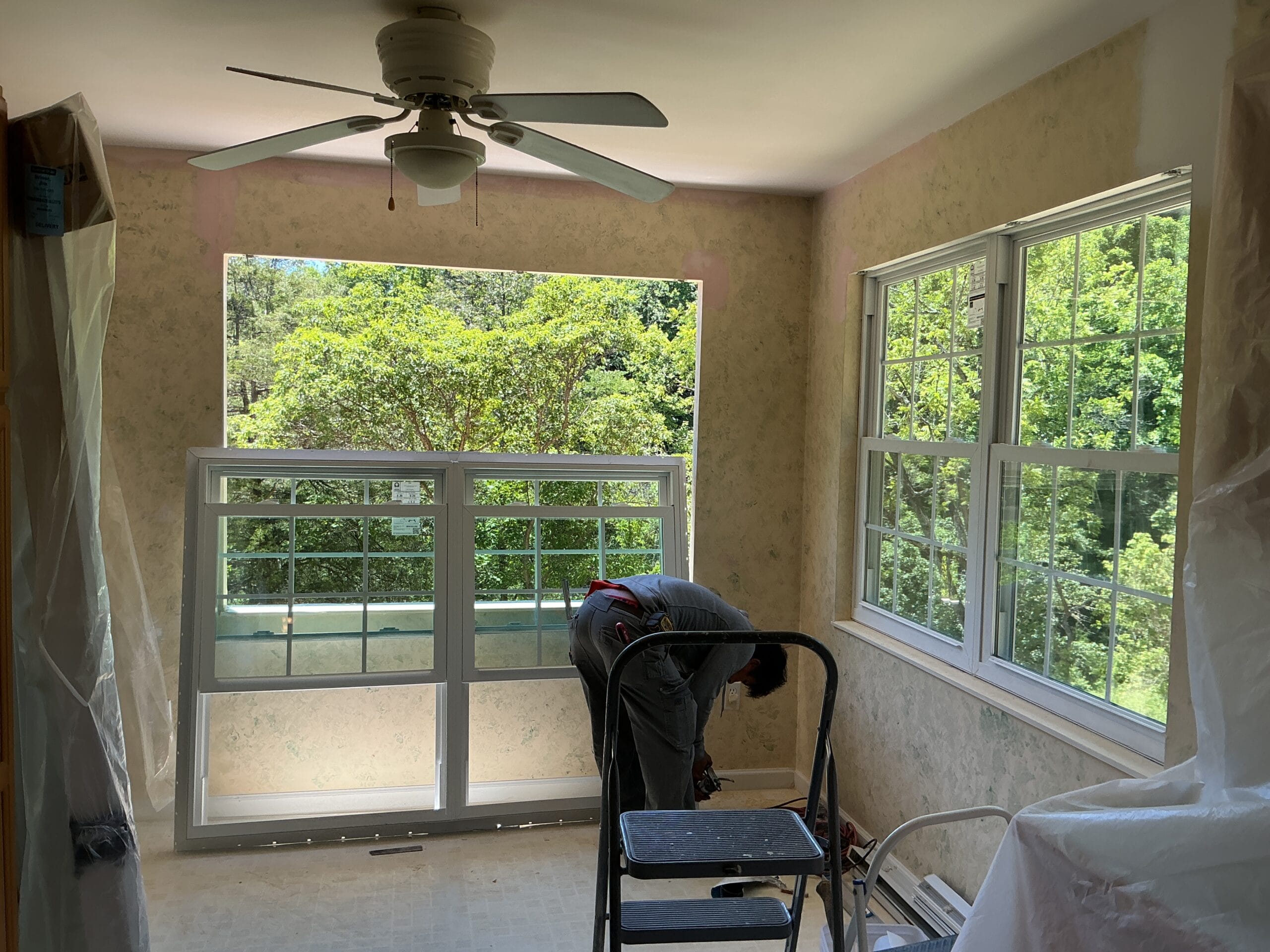
We install a range of common window brands and styles based on the home, the opening, the project scope and the product selected. Windows may be sourced through suppliers such as ABC Supply, Lowe’s and Home Depot. Product warranties vary by manufacturer and model, while MI’s workmanship warranty applies separately to our installation work.
What that means in practice: the brand on the sticker matters less than most advertising suggests, and the installation matters more. A well-made window set into an opening with no sill detail will still let water into the wall. We would rather talk about the opening.
Vinyl is the most common choice here. Wood, aluminum-clad and fiberglass each have their place depending on the house and the budget.
Double-hung, sliding, casement, picture, bay and bow, and basement and egress units.
Low-E coatings and argon fill are the common upgrades. The ratings that describe them are explained below.
The most frequent request in this market — see vinyl window installation and double-hung windows.
Every window carries a label with numbers on it. Four terms explain most of what those numbers mean, and knowing them makes a quote much easier to compare.
The U-factor measures the rate of heat transfer and tells you how well the window insulates. The lower the U-factor, the better the window insulates.
The Solar Heat Gain Coefficient measures the fraction of solar energy transmitted, and tells you how well the product blocks heat from incident sunlight. It matters on west-facing glass in a Tennessee summer.
The National Fenestration Rating Council independently verifies those ratings. The NFRC label shows performance ratings in five categories, and it is the same basis for every brand, which is what makes windows comparable at all.
A product certification. ENERGY STAR sets U-factor and SHGC criteria by climate zone, assigned by county, and the current Version 7.0 took effect on October 23, 2023. It certifies the window, not the contractor who installs it.
We will not quote you a percentage off your power bill. What a window changes is heat transfer through the glass and air leakage around the frame; what your bill does afterwards depends on the insulation, the air sealing and the HVAC system as much as the windows. Anyone promising a specific saving has not measured your house. More on the options at energy efficient windows.
The order matters, and most of it happens before a new window comes out of the box.
Permits. We coordinate the permit requirements that apply to our contracted window scope. Deposit. Our standard deposit is 33%, with the balance governed by the signed agreement.
Same humidity, same storms, same window failures. We work across all of these communities and know how each one stresses a wall system.

If the frame is solid and the problem is a draft, stuck sash, or failed caulking, repair is usually enough. If you see condensation between the panes or rotted framing, replacement is the better long-term option.
An insert, or pocket, replacement sets a new unit into the existing frame, which stays in place. It is less invasive and usually keeps the trim intact, but it depends on that frame being square, sound and dry, and it gives up a little glass area. A full-frame replacement takes everything out down to the rough opening. It costs more and disturbs more trim, but it is the only way to see and correct what is behind the frame, and the only option when there is rot or the original flashing was never done.
Yes. New-construction windows carry an integral nailing fin that fastens to the sheathing and laps into the weather barrier. We install them on additions, new builds, and on remodels where the siding is coming off anyway. We also install replacement windows into existing openings.
Sometimes, and it depends on the method and the condition of the opening. An insert replacement often does not require it. A full-frame or nail-fin installation frequently does, because the flashing has to lap into the weather barrier behind the siding. If siding needs to be removed and reset, we put that in the written scope rather than discovering it on the day.
Most leaks trace back to missing or improper flashing at the window-to-wall connection, not the window unit itself. We inspect the flashing and house wrap integration before recommending a fix.
Sealant is part of the assembly, not the whole of it. It has a service life, and when it ages the wall still has to shed water. The building code calls for corrosion-resistant flashing applied shingle-fashion at window openings so each layer drains onto the one below. A window held in with caulk alone is the most common cause of the drafts and stains we get called about.
Condensation between the panes means the thermal seal inside the insulated glass unit has failed, and that seal cannot be restored. The glass unit is replaced, which does not always mean replacing the whole window. We look at whether the frame and hardware are still sound first.
Usually the installation rather than the unit. Loose tolerances at the opening, missing insulation in the gap, or a window sealed with caulk instead of flashed and insulated will all produce a draft through a brand-new window. It is worth having the opening looked at rather than replacing the window again.
We stop. Concealed rot, damaged sheathing, framing damage, water damage and insect damage are not visible until the unit is out. We document what we found, explain it, price it, and issue a written Change Order. You approve it before any additional work happens. Hidden repair is not assumed in the original estimate.
We coordinate the permit requirements that apply to our contracted window scope.
We complete the interior trim, drywall and finish work that the approved contracted scope requires, so the opening is left finished rather than handed back as a hole with a new window in it.
Two separate things. Full window installation and replacement carries a Five (5) Year Limited Workmanship Warranty, and window repair or partial-repair scopes carry a One (1) Year Limited Workmanship Warranty, both subject to the signed agreement and the scope it defines. The manufacturer product warranty is separate, comes from whoever made the window, and varies by brand and model.
We install a range of common window brands and styles based on the home, the opening, the project scope and the product selected. Windows may be sourced through suppliers such as ABC Supply, Lowe's and Home Depot. Product warranties vary by manufacturer and model, while our workmanship warranty applies separately to our installation work.
New windows reduce heat transfer through the glass and air leakage around the frame, and most homeowners notice the comfort difference first. What the bill does afterwards depends on insulation, air sealing and the HVAC system as much as the windows, so we do not publish a percentage. The U-factor and SHGC on the NFRC label are the figures that describe the window itself.
Most single or multi-window replacements are completed in one day. Whole-house replacements typically take two to four days depending on the number of openings.
Yes. We handle single window replacements as well as whole-house projects — there is no minimum requirement.
If both are planned, yes, and the windows are usually better done during the siding work. With the siding off, the weather barrier and the opening are visible, the flashing can be lapped into the barrier correctly, and nail-fin windows become an option. Doing the windows afterwards means cutting into finished siding.
Our standard deposit is 33%, with the balance governed by the signed agreement.
Yes. MI Homesiding & Roofing holds Tennessee Home Improvement Contractor License #13334 and City of Knoxville Building Contractor License #BC13334, and is fully insured, BBB Accredited, and Family Owned & Operated.
A full window replacement is a real investment, and paying for all of it up front is not always the right move. Financing is available through our lending partner, so you can spread the cost over time and still have the work done right the first time.
Applications are reviewed by the lender. Approval, terms, and rates are set by them, not by us.
Window advertising blurs these together constantly. They are not the same thing and they are not backed by the same party.
Full window installation and replacement carries a Five (5) Year Limited Workmanship Warranty. Window repair and partial-repair scopes carry a One (1) Year Limited Workmanship Warranty. Both are subject to the signed agreement and the scope it defines.
Separate, and it comes from whoever made the window. Terms vary by brand and by model, and they are not one figure we can publish for every unit. Manufacturer warranties vary by brand and product. MI’s workmanship warranty applies separately to the installation scope described in the signed agreement.
A warranty term is also not a statement of service life. It describes what the manufacturer will stand behind under its own conditions, which is a different question from how long the window will last in your wall.
We do not publish a blanket per-window figure on this page, because the same window costs very different amounts to install depending on what is behind it. These are the factors that actually move the number.
An insert into a sound frame and a full-frame replacement down to the rough opening are different amounts of work.
Setup cost spreads across the job, so per-window cost usually falls as the count rises.
Frame material, style, and the glass and coating specified.
Rot or damaged sheathing found after removal is handled by Change Order and is not assumed in the original estimate.
Exterior wrap, siding removal and reset, and the interior trim and drywall work included.
Second-storey and awkward elevations take longer and need more staging.
On-site estimates are free for standard projects. For complex cases — active leaks, previous repair work, or conditions we cannot verify from the ground — we charge a $350 Technical Assessment, credited back in full if you move forward.
On new construction and additions, we review rough opening dimensions, window schedules and counts shown in the drawings as part of the project scope. Where field verification is needed before ordering, the plan information gives us a clear starting point for checking sizes and quantities.
Drafty, leaking, foggy, or hard to open? Do not wait. Window problems rarely stay at the window. They usually point to hidden issues in the surrounding wall — and that wall gets more expensive the longer it stays wet.
Call for a free window estimate, or use our contact form to schedule an inspection.