

Knoxville, TN

Energy Efficient Windows in Knoxville, TN

Family Owned& Operated
20+Years in East Tennessee
Licensed Home Improvement ContractorWC & Liability Insured
East TNKnoxville and surrounding areas

An energy-efficient window is not one feature, and it is not a promise about your utility bill. It is a product whose measured performance suits the opening it goes into — installed so that you actually get that performance. This page explains how to read those measurements and what changes them.

Related: window replacement and installation, window installation and repair, and drafty window repair.

Energy-efficient windows can make a house more comfortable to live in, and the measured ratings on the product are what tell you how much they should help. In Knoxville, high humidity and temperature changes make proper insulation essential. Many homeowners upgrade their windows but still experience drafts and high bills due to poor installation. At MI Homesiding & Roofing, we focus on installing energy-efficient windows the right way, ensuring proper sealing, insulation, and long-term performance. Our goal is to help you maintain a comfortable home while reducing energy loss throughout the year.

“Energy Efficient” Is Not One Feature

It is a description of how a whole assembly behaves, and at least seven things contribute. A window can have one of them and still perform poorly.

The frame

Material and construction. A hollow chamber insulates differently from solid metal.

The glass

How many panes, and how they are assembled into the insulated unit.

Coatings

Low-E layers, which come in different formulations tuned for different climates.

Gas fill

Where the product uses it. Not every unit does, and it is not visible from outside.

The spacer

What separates the panes around the edge. A metal spacer conducts heat; warm-edge designs conduct less.

Build quality

How the corners are joined and how well the sash seals against the frame when it is shut.

And the seventh: the installation, which no product rating covers at all. More on that below.

Which is why we will not reduce any of this to a savings percentage. A number like that would have to assume your current windows, your house, your equipment and your weather — and we know none of them until we look.

How to Read the Label on the Glass

Every claim about efficiency should end at one place: the rating label on the window. In the United States those ratings are issued through the National Fenestration Rating Council (NFRC), which tests and rates the whole window as a unit — frame, glass and spacer together — rather than rating the glass on its own. That is what makes two products comparable.

What each number on an NFRC label tells you
U-Factor
The rate at which the window conducts non-solar heat flow — in plain terms, how well it insulates against a temperature difference. Lower generally means better insulating performance.
SHGC
Solar Heat Gain Coefficient: the fraction of solar radiation admitted through the window. Lower means less solar heat gets in.
Visible Transmittance
How much visible light comes through. Higher means a brighter room. It tends to move against a very low SHGC, which is the trade-off worth understanding before you chase one number.
Air Leakage
How much air passes through the assembly itself. Lower is better. Note this rates the window — the gap between the window and your wall is a separate matter, and it is the installer’s.
Condensation Resistance
How well the window resists condensation forming on its interior surfaces. Higher is better. Often the most relevant number in a humid climate.

Not every label carries all five; Visible Transmittance, Air Leakage and Condensation Resistance are optional ratings and some manufacturers do not publish them.

We do not publish target figures on this page. The values that qualify depend on the climate zone and on the version of the program in force, so the number that matters is the one printed on the window you are actually being quoted. Bring us the label and we will read it with you.

ENERGY STAR and NFRC Are Two Different Things

They are often used interchangeably in sales conversations. They are not the same.

NFRC — the measurement

An independent rating system that tests and reports how a specific window product performs. It tells you the numbers. It does not tell you whether they are good enough for your house.

ENERGY STAR — the qualification

A program administered by the U.S. EPA that identifies products meeting its criteria, which differ by climate zone. The current residential windows specification, Version 7.0, took effect on October 23, 2023.

In practice: NFRC supplies the measured numbers, and ENERGY STAR uses numbers like those to decide which products qualify in a given zone.

ENERGY STAR and NFRC ratings apply to qualifying window products and their tested performance. MI uses those ratings to help homeowners compare window options; our workmanship warranty applies separately to the installation.

Posted on Google Google
Andreas Enns profile picture
Andreas Enns
Google star 1Google star 2Google star 3Google star 4Google star 5Trustindex verifies that the original source of the review is Google.
The guys were very responsive and did a great job!
Posted on Google Google
Lauren Senesac Nichols profile picture
Lauren Senesac Nichols
Google star 1Google star 2Google star 3Google star 4Google star 5Trustindex verifies that the original source of the review is Google.
Mel was so easy to work with. We had him out because we needed to figure out how to fix a roof leak where the flashing wasn't done right (and part of the siding was also not right). He did a thorough inspection and explained to me what issues he saw. His quote was similar to the other we got. We ended up having him put on a new roof, with a new under shingle ventilation system and a roof vent. He also corrected siding issues (and flashing), fixed some rotten trim, and repainted part of the siding and trim. Everything looks great! His crews were very nice. Of all the contractors we've worked with on various renovations, Mel was easily one of the best at quickly responding when we had a question or saw an issue we wanted handled differently. We'll definitely hire him again if we need roof or siding work!
Posted on Google Google
James Keller profile picture
James Keller
Google star 1Google star 2Google star 3Google star 4Google star 5Trustindex verifies that the original source of the review is Google.
Mel and his team were extremely thorough in identifying and correcting a water leakage problem from the top of our deck into the enclosed sun room below. They were both professional and courteous and provided great follow up after the job was completed. I highly recommend MI Homesiding & Roofing for any problem that involves water leakage into your home. I will definitely use MI in the future.
Posted on Google Google
Laura Romans profile picture
Laura Romans
Google star 1Google star 2Google star 3Google star 4Google star 5Trustindex verifies that the original source of the review is Google.
Highly recommend MI Homesiding! They completed a major home exterior project for us including replacing and painting our siding as well as replacing our roofing and gutters. They did an excellent job and we began getting compliments immediately from our neighbors about it! Mel was very communicative and proactive, listened to our questions and ideas, and took care of things in a timely manner. His team was always professional and the work is just superb! We not only recommend MI Homesiding, we will be using them again for future projects ourselves.
Posted on Google Google
Ricardas Lukosiunas profile picture
Ricardas Lukosiunas
Google star 1Google star 2Google star 3Google star 4Google star 5Trustindex verifies that the original source of the review is Google.
I found MI Homesiding & Roofing through their YouTube channel and called with a few questions about siding. Even though I’m not located in Tennessee and wouldn’t be hiring them directly, they answered the phone right away and took the time to answer every question in detail. They provided specific, helpful information and even assisted me in finding a contractor in my area. It’s rare to find a company so willing to help someone who isn’t even a local customer. Awesome people, excellent service, and truly knowledgeable. Thank you so much!
Posted on Google Google
Jeff Nelden profile picture
Jeff Nelden
Google star 1Google star 2Google star 3Google star 4Google star 5Trustindex verifies that the original source of the review is Google.
Exceptionally pleased with entire process and results. Most professional estimate I received, good communication, timely, and did what they said they would. Building looks exceptional. I highly recommend Mel and his crew,
Posted on Google Google
George Corley, Jr profile picture
George Corley, Jr
Google star 1Google star 2Google star 3Google star 4Google star 5Trustindex verifies that the original source of the review is Google.
Mi Home Siding did a great job. Mel was very profrssional and was on time. He replaced sidng on my chimney and flashed the top. I would highly recommed them. As a previous home builder, Mel's craftmansship was surperb. I will call them again for future work.
Posted on Google Google
Charlotte Henson profile picture
Charlotte Henson
Google star 1Google star 2Google star 3Google star 4Google star 5Trustindex verifies that the original source of the review is Google.
Very good experience. Knowledgeable, efficient, prompt and very friendly. Will definitely use Mel in the future and will recommend him to others. Happy with the service. Good price. !!
Posted on Google Google
jeff Scott profile picture
jeff Scott
Google star 1Google star 2Google star 3Google star 4Google star 5Trustindex verifies that the original source of the review is Google.
The Video Says it All…. From Hardie Board Siding , To Roofing and Flashing to Painting..THEY DO IT ALL Exceptionally Well! I Highly Recommend MI Siding And Mr Mel (Sorry, Out of Breath) just came from a Run..

Verified credentials

Who you are actually hiring, and who stands behind the work.

  • BBB Accredited Business badge

    BBB Accredited Business — A+ Rating

    Verify on bbb.org

  • TN #13334Licensed & Insured

    Licensed Home Improvement Contractor

    Tennessee license #13334 · General Liability and Workers’ Compensation insured

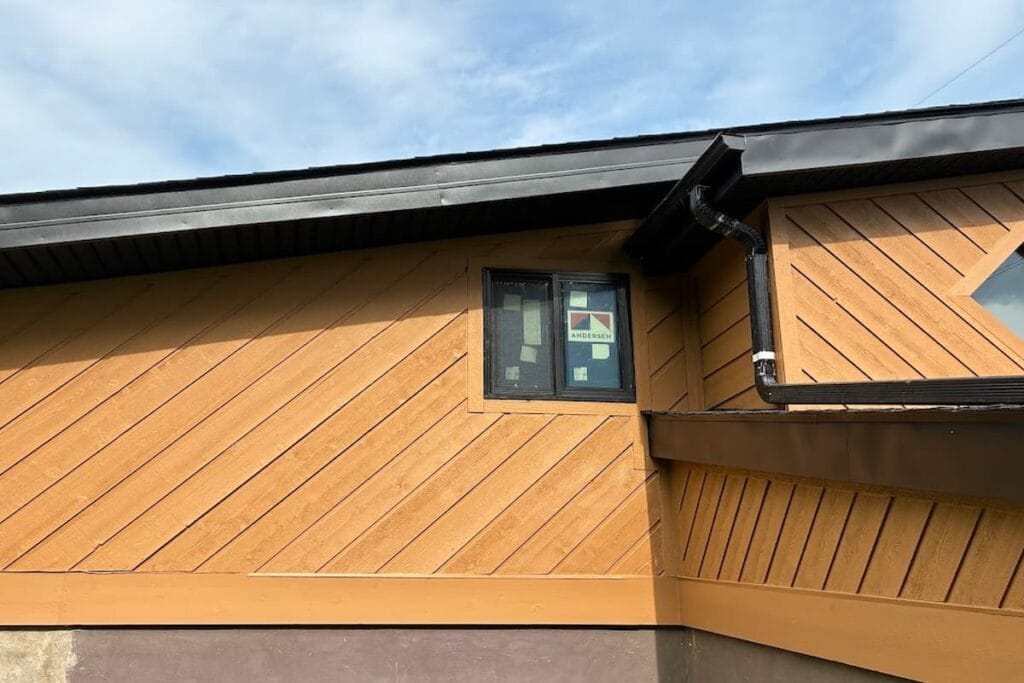
Window set into cedar board and batten siding on a Knoxville, TN home

What Makes a Window Energy Efficient

Energy-efficient windows are designed to reduce heat transfer and improve insulation. Features like Low-E glass and argon gas help keep heat out during summer and retain warmth in winter. However, the performance of these windows depends not only on the product but also on how they are installed. Proper sealing and insulation are essential to maximize efficiency.

Why “Lower Is Better” Needs a Caveat

For U-factor the rule is simple enough: lower generally means better insulating performance, and that holds in summer and winter alike.

SHGC is the one people get wrong. Yes, a lower SHGC admits less solar heat — which is usually what you want on a west-facing wall in a Tennessee August. But it is not a universal buying rule, because the same number applies in January.

Orientation

A south-facing window and a north-facing one receive very different amounts of sun. Specifying the whole house to one aggressive number ignores that.

Shading

A deep porch, a roof overhang or a mature tree already does some of the job that a low SHGC would do.

Winter gain

Solar heat through a window in winter is free heat. A very low SHGC gives some of that up.

Daylight

Coatings that cut solar gain hard can also cut visible light and tint the glass. Worth seeing a sample before committing.

So the useful question is not “which window has the lowest numbers” but “which numbers suit this opening, on this elevation, on this house.”

The Glass Package

Most of a window is glass, so most of its thermal behavior comes from the glass package rather than from the frame material.

Double pane

Two panes separated by a sealed cavity, as an insulated glass unit. Standard on current replacement products. Triple pane exists and is less common in this climate.

Low-E coatings

A microscopically thin, largely invisible metallic layer that reflects heat energy. There are different formulations tuned for different climates, so “has Low-E” is not one specification.

Gas fill

An inert gas, denser than air, used in the cavity to slow heat transfer where the product includes it. Its contribution shows up in the U-factor rather than as a separate claim.

The spacer

What holds the panes apart at the edge. A conventional metal spacer conducts heat around the perimeter; warm-edge designs use less conductive materials. It affects both the edge temperature and condensation resistance.

Not every product includes every one of these, and the combinations vary by line. Each changes the rated numbers, which is exactly why the comparison that matters is label against label on the actual products quoted — not feature lists.

Common Energy Loss Problems in Knoxville Homes

Many homes in Knoxville lose energy through poorly installed windows. Air leaks around the frame allow conditioned air to escape. Gaps in sealing or missing insulation reduce performance. In some cases, the issue is not the window but the surrounding trim or siding. These problems can lead to high utility bills and uncomfortable indoor temperatures.
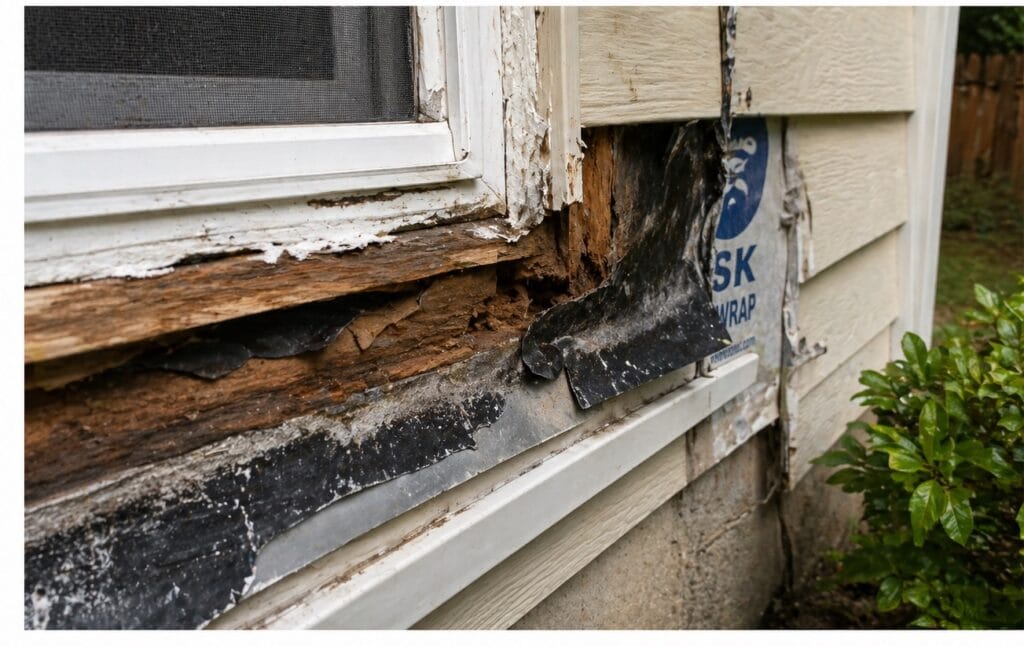
Window frame with wood rot and failed flashing exposed during repair in Knoxville, TN

The Frame Matters Too

The glass does most of the work, but the frame is part of the rated assembly and it behaves differently by material.

Vinyl

Hollow multi-chamber profiles insulate reasonably well, and quality varies a great deal between products. See our vinyl windows page.

Wood

A good natural insulator, with ongoing exterior maintenance as the trade-off.

Fiberglass

Dimensionally stable with temperature, which helps seals stay tight over time.

Aluminum

Metal conducts heat readily, so thermal performance depends heavily on whether the frame has a thermal break.

None of these is simply better. The NFRC number on the finished product already accounts for the frame, which is the advantage of a whole-window rating.

Window set into cedar board and batten siding on a Knoxville, TN home

Our Approach to Energy Efficient Window Installation

We focus on installing windows as a complete system. This includes proper flashing, sealing, and insulation to address air leakage at the opening. Every window is installed level and integrated with the home’s exterior system. Our approach ensures that energy-efficient windows perform as intended and provide long-term benefits.

The Part No Label Covers

An NFRC rating describes the window as it leaves the factory. It says nothing about the gap between that window and your wall — and that gap is where a great many efficiency problems actually live.

Level, square and unracked

A unit forced into an out-of-square opening binds, and its seals stop meeting the way they were built to.

The perimeter gap

The space between frame and rough opening, insulated properly — not stuffed tight, not over-expanded, not left empty.

Air sealing

The interior air seal around the opening is what stops conditioned air moving through the wall cavity around a perfectly good window.

Flashing and the weather barrier

Water management is a separate system from air sealing, and both have to be right. See window flashing.

To be precise about it: installation does not change the window’s NFRC rating. The rating is a property of the product. What installation decides is whether you get the performance that rating describes. The methods are set out on our window replacement and installation page.

Benefits of Energy Efficient Windows

Upgrading can change several things a homeowner actually notices: fewer drafts where air was moving through the opening, interior glass surfaces that are less cold to sit beside in winter, and more control over solar heat on exposed elevations. Many modern units also dampen outside noise. What the change does to a utility bill depends on the whole house, not on the windows alone — so we do not put a figure on it.

Comfort and Utility Bills Are Not the Same Thing

Most homeowners say “energy efficient” and mean “the room is cold by the window and the bill is high.” Those are two different outcomes, and windows affect them differently.

Drafts

Where air is genuinely moving through or around the opening, addressing the air leakage is usually felt directly and quickly.

Cold surfaces

A single-glazed pane can be close to outdoor temperature. Sitting beside it feels cold even with no draft at all — a better-insulating unit raises that interior surface temperature.

Solar heat

A room that overheats in the afternoon is an SHGC and shading question more than an insulation one.

Condensation

In a humid climate, warmer edges and better condensation resistance can reduce moisture collecting on the glass in winter.

What we will not tell you is what your bill will do. That depends on what you have now, the products chosen, how the rest of the envelope is insulated and sealed, your heating and cooling equipment, the weather and how you live in the house. Anyone quoting you a percentage has not measured any of that.

Window set into cedar board and batten siding on a Knoxville, TN home

When to Upgrade to Energy Efficient Windows

You may need to upgrade if you notice drafts, high energy bills, or uneven temperatures inside your home. Older windows or poorly installed units often fail to provide proper insulation. Sometimes replacing the windows is the answer. Sometimes the draft is at the trim rather than the window, or the real problem is attic insulation or ductwork — and we will tell you if that is what we find.

When New Windows Help — and When They Will Not

We would rather say this plainly than sell you windows that will not fix your problem.

Likely to help

Single-glazed or failed units. Frames that no longer close or seal. Openings with genuine measurable draft. Rotted or damaged units that need replacing regardless.

Attic insulation

In most houses, far more heat moves through the ceiling than through the windows. If the attic is under-insulated, that is usually the cheaper first move.

General air sealing

Leaks at rim joists, top plates, recessed lights and ductwork often outweigh what is coming through the windows.

Heating and cooling equipment

An ageing or poorly sized system shows up on the bill no matter what the windows do.

Sun exposure and shading

An afternoon overheating problem may be better solved by glass selection, shading or landscaping than by replacing every window.

Ductwork and distribution

A room that is always the wrong temperature may simply not be getting enough air.

If what you are describing sounds more like one of these, we will say so. For a window that is specifically drafty, see window repair — and if water is involved rather than air, window leak repair.

Doing Several Windows at Once

Where more than a few openings are being replaced, the practical advantage is consistency of specification rather than any particular saving.

One glass package

The same Low-E formulation across the house, so the glass reads the same from outside and behaves the same inside.

One rated set of numbers

Easier to compare quotes, and easier to document for your records.

One installation standard

The same air sealing and flashing detail at every opening, done in one pass.

How a multi-opening project is scoped, sequenced and priced is covered on our whole-house window replacement page. We do not attach a whole-house savings figure to it there either, and for the same reason.

Energy Efficient Window Installation in Knoxville and Nearby Areas

MI Homesiding LLC provides energy-efficient window installation in Knoxville, TN and surrounding areas. We understand the local climate and the common issues homeowners face. Our work focuses on proper installation, long-term performance, and real results. If you are looking to improve your home’s efficiency, we are ready to help.

If you are not sure which of your openings are actually losing energy, a window inspection is the place to start.

Window frame with wood rot and failed flashing exposed during repair in Knoxville, TN

Warranty

The window and its performance

Covered by the manufacturer. Terms vary by brand, product line and component — the insulated glass seal is often covered separately from the frame. We provide the documentation for the product quoted.

Full installation by MI

Five (5) Year Limited Workmanship Warranty, subject to the signed agreement and the scope it defines.

Repair or partial work

One (1) Year Limited Workmanship Warranty, subject to the signed agreement.

MI’s workmanship warranty covers our installation. It is separate from, and does not restate or extend, what the manufacturer warrants about the product — including anything the manufacturer says about thermal performance.

What Drives the Cost

We do not publish a per-window price or an energy-upgrade price, because the same opening can be a straightforward insert or a full-frame rebuild. These are what actually change the number.

Frame material

Vinyl, wood, fiberglass or clad — usually the largest single difference between two quotes.

Glass package

Low-E formulation, gas fill, spacer type, grids and any specialty glazing.

Size and style

And how many openings share a size, since repetition brings the per-unit cost down.

Replacement method

Insert against full-frame against new-construction, decided per opening.

Trim and finish

Exterior trim or wrap, interior casing and any drywall repair included in the scope.

Hidden damage

Rot, sheathing or framing repair found once the opening is exposed, priced only when found, by written Change Order.

Schedule, Estimate and Warranty

Energy performance is decided as much by the installation as by the label on the glass.

How long it takes. Single and multi-window replacements typically run about one day, and whole-house projects about two to four days. That is the normal expectation rather than a guarantee: the number of openings, access, how the wall is built, what we find once the old unit is out, and the weather all move it. The schedule goes in the written proposal.

What the written estimate itemizes. The number of openings and their sizes, the window line and series by name, the installation method for each opening — insert, full-frame or new-construction — flashing and weather barrier at every opening, interior and exterior finish, removal and disposal of the old units, and an allowance for what is found once the opening is bare. Where two window quotes differ sharply, the gap is almost always in the method and the flashing rather than in the glass.

Two warranties, kept separate. The manufacturer warrants the window; we warrant the installation. Our workmanship warranty runs five years on a full window installation or replacement and one year on a repair scope. Manufacturer coverage varies by product line and comes from the manufacturer, not from us.

Paying for the work. Financing options may be available through a third-party financing partner, subject to approval and the provider’s terms. MI Homesiding & Roofing is not the lender, and the rates and terms come from the provider rather than from us.

Licensed Home Improvement Contractor (TN #13334) · City of Knoxville Building Contractor (#BC13334) · BBB Accredited with an A+ rating · Workers’ Compensation and General Liability carried · family owned and operated, bilingual English and Spanish · 20+ years of hands-on construction and exterior remodeling experience · rated 5.0 from 61 Google reviews.

Energy-Efficient Window FAQs

What makes a window energy efficient?

Not one feature. The frame material and construction, the number of panes, the Low-E coating, any gas fill, the spacer that holds the panes apart, how well the sash seals when shut, and the quality of the installation all contribute. A window can have one of these and still perform poorly, which is why the rated label on the specific product is worth more than a feature list.

What is an NFRC label?

The National Fenestration Rating Council issues the independent rating label found on window products in the United States. The important thing about it is that it rates the whole window as a unit — frame, glass and spacer together — rather than rating the glass alone, which is what makes two different products directly comparable.

What does U-factor mean?

U-factor is the rate at which a window conducts non-solar heat flow. In plain terms it describes how well the window insulates against a temperature difference between inside and outside. Lower generally means better insulating performance, and that holds in both summer and winter.

What does SHGC mean?

SHGC is the Solar Heat Gain Coefficient: the fraction of solar radiation admitted through the window. Lower means less solar heat gets in. It is worth knowing that "lower is always better" is not a safe universal rule — the same number applies in January, when solar gain is free heat, and very low values can also reduce visible light. Orientation and shading matter.

What does ENERGY STAR mean for a window?

ENERGY STAR is a program administered by the U.S. EPA that identifies products meeting its criteria, which differ by climate zone. It is not the same as NFRC: NFRC supplies the measured performance numbers, and ENERGY STAR uses numbers like those to decide which products qualify. The current residential windows specification, Version 7.0, took effect on October 23, 2023. Qualification applies to the window product.

What is Low-E glass?

A microscopically thin, largely invisible metallic coating applied to the glass that reflects heat energy while still letting light through. There are different Low-E formulations tuned for different climates and orientations, so "has Low-E" is not a single specification — what it does for your house shows up in the U-factor and SHGC on the label.

Are vinyl windows energy efficient?

They can be. Vinyl frames are hollow multi-chamber profiles, and still air in a sealed cavity insulates reasonably well. But the quality gap between a builder-grade vinyl window and a well-made one is larger than the gap between materials, and most of the thermal performance comes from the glass package in any case. Our vinyl windows page covers the material in detail.

Do energy efficient windows really lower energy bills?

They can contribute, particularly when replacing single-glazed or failed units, or where there is genuine air leakage. What we will not do is quote you a percentage. What happens to your bill depends on what you have now, the products chosen, how the rest of the house is insulated and sealed, your heating and cooling equipment, the weather and how you live in the house. Anyone giving you a precise figure has not measured any of that.

Can installation affect energy efficiency?

Yes, substantially — and it is the part no label covers. The NFRC rating describes the window as it leaves the factory; it says nothing about the gap between that window and your wall. A unit set out of square, a perimeter gap left empty or over-stuffed, or a missing interior air seal will all cost you performance the rating promised. To be precise: installation does not change the rating, it decides whether you get what the rating describes.

Are energy efficient windows worth it in Knoxville?

They suit the climate in specific ways — humidity makes condensation resistance relevant, and hot summers make solar heat gain worth controlling on exposed elevations. Whether they are the right spend for your house is a separate question: if the attic is under-insulated or the ductwork is leaking, those usually come first. We will tell you if that is what we see.

How do I know if my windows are inefficient?

Common signs are drafts you can feel near the opening, glass that is noticeably cold to the touch in winter, uneven temperatures between rooms, condensation collecting on the inside of the glass, and units that no longer close or latch properly. Condensation between the panes is different — that is a failed insulated glass seal rather than an efficiency problem as such.

What warranty applies?

Two separate things. The window and its rated performance are covered by the manufacturer, with terms that vary by brand, product line and component — the insulated glass seal is often covered separately from the frame. MI's own workmanship warranty covers the installation: a Five (5) Year Limited Workmanship Warranty on full window installation and replacement, or a One (1) Year Limited Workmanship Warranty on repair or partial work, subject to the signed agreement.

Hidden Damage Policy

If rotted framing, failed flashing, or moisture behind the trim is discovered during the project, we stop and document the problem with photos. We explain what we found and why it matters, then provide a written Change Order before moving forward.

The opening is inspected before a new window goes into it.

Ready to Get Started?

Tell us what you are seeing and we will take a look. Free estimates, clear pricing, and a licensed, insured crew that does what it says.

Call or Message for Prompt Assistance

MI Homesiding & Roofing is proud to serve Knoxville, TN, and surrounding communities with quality craftsmanship and dependable home improvement services.

Email

contact@mihomesidingllc.com

Location

Knoxville, TN