


Knoxville, TN

Window & Exterior Inspection in Knoxville, TN

Family OwnedOwner-led inspections
20+Years in East Tennessee
Licensed Home Improvement ContractorWC & Liability Insured
East TNKnoxville and surrounding areas

A symptom is not a diagnosis. Fogging, a draft, a stain, a window that sticks — each of those has several possible causes, and the one it turns out to be decides whether you are looking at an afternoon’s work or a new window.

Related: window repair, window leak repair, and window replacement and installation.

Not every window problem can be settled with a quick look and a price. Leaks, drafts and damage around an opening often start somewhere other than where they show up, and behind siding or trim that nobody has taken off.

At MI Homesiding & Roofing an inspection is the step before the quote: working out what is failing, where, and whether the window is even the thing that needs money spent on it.

What you get from it is a contractor’s assessment of condition and scope — what we can see, what we suspect, what we cannot confirm without opening something up, and what we would do about it.

Posted on Google Google
Andreas Enns profile picture
Andreas Enns
Google star 1Google star 2Google star 3Google star 4Google star 5Trustindex verifies that the original source of the review is Google.
The guys were very responsive and did a great job!
Posted on Google Google
Lauren Senesac Nichols profile picture
Lauren Senesac Nichols
Google star 1Google star 2Google star 3Google star 4Google star 5Trustindex verifies that the original source of the review is Google.
Mel was so easy to work with. We had him out because we needed to figure out how to fix a roof leak where the flashing wasn't done right (and part of the siding was also not right). He did a thorough inspection and explained to me what issues he saw. His quote was similar to the other we got. We ended up having him put on a new roof, with a new under shingle ventilation system and a roof vent. He also corrected siding issues (and flashing), fixed some rotten trim, and repainted part of the siding and trim. Everything looks great! His crews were very nice. Of all the contractors we've worked with on various renovations, Mel was easily one of the best at quickly responding when we had a question or saw an issue we wanted handled differently. We'll definitely hire him again if we need roof or siding work!
Posted on Google Google
James Keller profile picture
James Keller
Google star 1Google star 2Google star 3Google star 4Google star 5Trustindex verifies that the original source of the review is Google.
Mel and his team were extremely thorough in identifying and correcting a water leakage problem from the top of our deck into the enclosed sun room below. They were both professional and courteous and provided great follow up after the job was completed. I highly recommend MI Homesiding & Roofing for any problem that involves water leakage into your home. I will definitely use MI in the future.
Posted on Google Google
Laura Romans profile picture
Laura Romans
Google star 1Google star 2Google star 3Google star 4Google star 5Trustindex verifies that the original source of the review is Google.
Highly recommend MI Homesiding! They completed a major home exterior project for us including replacing and painting our siding as well as replacing our roofing and gutters. They did an excellent job and we began getting compliments immediately from our neighbors about it! Mel was very communicative and proactive, listened to our questions and ideas, and took care of things in a timely manner. His team was always professional and the work is just superb! We not only recommend MI Homesiding, we will be using them again for future projects ourselves.
Posted on Google Google
Ricardas Lukosiunas profile picture
Ricardas Lukosiunas
Google star 1Google star 2Google star 3Google star 4Google star 5Trustindex verifies that the original source of the review is Google.
I found MI Homesiding & Roofing through their YouTube channel and called with a few questions about siding. Even though I’m not located in Tennessee and wouldn’t be hiring them directly, they answered the phone right away and took the time to answer every question in detail. They provided specific, helpful information and even assisted me in finding a contractor in my area. It’s rare to find a company so willing to help someone who isn’t even a local customer. Awesome people, excellent service, and truly knowledgeable. Thank you so much!
Posted on Google Google
Jeff Nelden profile picture
Jeff Nelden
Google star 1Google star 2Google star 3Google star 4Google star 5Trustindex verifies that the original source of the review is Google.
Exceptionally pleased with entire process and results. Most professional estimate I received, good communication, timely, and did what they said they would. Building looks exceptional. I highly recommend Mel and his crew,
Posted on Google Google
George Corley, Jr profile picture
George Corley, Jr
Google star 1Google star 2Google star 3Google star 4Google star 5Trustindex verifies that the original source of the review is Google.
Mi Home Siding did a great job. Mel was very profrssional and was on time. He replaced sidng on my chimney and flashed the top. I would highly recommed them. As a previous home builder, Mel's craftmansship was surperb. I will call them again for future work.
Posted on Google Google
Charlotte Henson profile picture
Charlotte Henson
Google star 1Google star 2Google star 3Google star 4Google star 5Trustindex verifies that the original source of the review is Google.
Very good experience. Knowledgeable, efficient, prompt and very friendly. Will definitely use Mel in the future and will recommend him to others. Happy with the service. Good price. !!
Posted on Google Google
jeff Scott profile picture
jeff Scott
Google star 1Google star 2Google star 3Google star 4Google star 5Trustindex verifies that the original source of the review is Google.
The Video Says it All…. From Hardie Board Siding , To Roofing and Flashing to Painting..THEY DO IT ALL Exceptionally Well! I Highly Recommend MI Siding And Mr Mel (Sorry, Out of Breath) just came from a Run..

Verified credentials

Who you are actually hiring, and who stands behind the work.

  • BBB Accredited Business badge

    BBB Accredited Business — A+ Rating

    Verify on bbb.org

  • TN #13334Licensed & Insured

    Licensed Home Improvement Contractor

    Tennessee license #13334 · General Liability and Workers’ Compensation insured

What an Inspection Should Answer

Five questions. If a visit does not leave you with answers to these, it was an estimate rather than an inspection:

  • What is failing? The glass, the sash, the frame, the perimeter joint, the flashing, or something that is not the window at all.

  • Where is the failure? Not where the symptom appears — where it starts.

  • Is the window itself the problem? Often it is not, and that single answer changes the cost of the job entirely.

  • Is the wall or the opening involved? Because if it is, replacing the window on its own will not settle it.

  • Is this a repair or a replacement? And on what grounds, so you can judge the reasoning rather than take it on trust.

What an inspection does not do is settle every question with certainty. Some of what matters sits behind cladding and trim. An honest inspection separates what was observed from what is suspected, and says which is which.
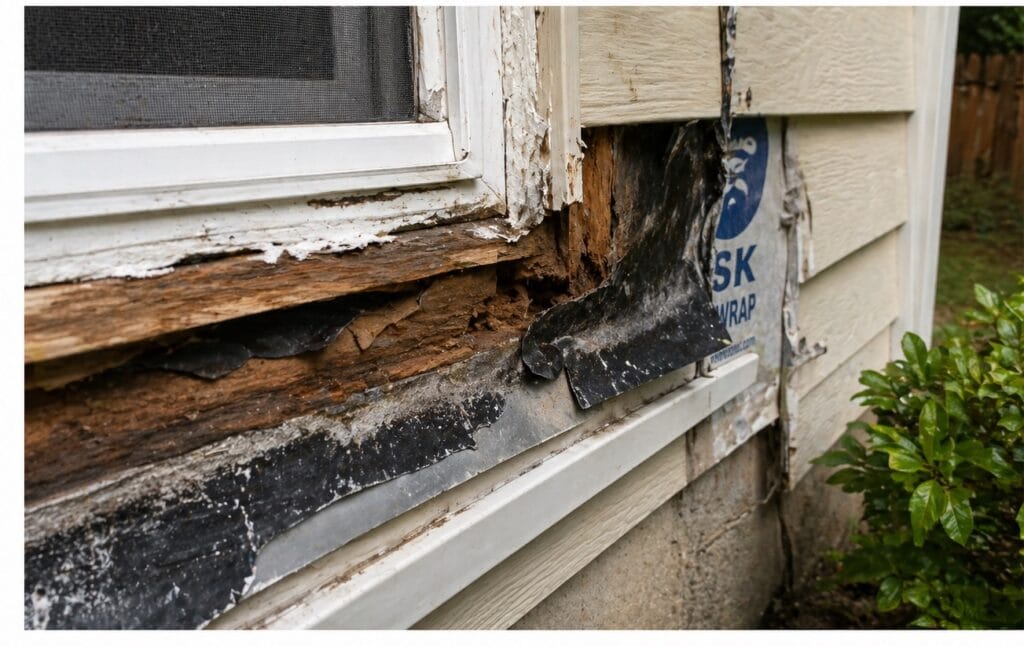
Window sill and jamb with the siding removed, showing rotted wood and failed flashing membrane

The Same Symptom, Different Causes

This is the whole reason the inspection exists. Six complaints bring homeowners to us, and not one of them identifies its own cause.

01

Fogging between the panes. The sealed glass unit has lost its edge seal. The frame around it may be perfectly sound. See foggy window repair.

02

A draft. Either air genuinely moving through a gap, or cold glass chilling the room air so it sinks past you. Two different repairs. See drafty window repair.

03

Water at the window. The hardest one, because water moves before it appears. See window leak repair.

04

A window that sticks or will not lock. Usually the frame or the opening rather than the sash — something has moved, or was never square.

05

Cracked glass. Impact, thermal stress or movement in the opening. The last of those means the glass is a symptom. See glass replacement.

06

Rot or staining. Evidence that water has been present, somewhere, for a while. Where it came from is a separate question from where the damage is.

Notice what those six have in common: each is a description of what you can see, and each has at least two plausible explanations. Quoting a repair off the symptom alone is guessing with your money.

What We Look At Outside

Most window problems are exterior problems, so this is where the time goes:

  • the perimeter joints, and whether the sealant has failed, been applied where it should not be, or was never there

  • the trim and casing around the opening, and whether anything is soft

  • whatever flashing is visible at the edges of the opening

  • how the siding meets the window, and whether it was returned correctly after any earlier work

  • staining, streaking or growth that marks where water has been running

  • damage to the cladding above and beside the opening

  • the drainage path, where it can be followed — including whether anything has sealed it shut

One honest limit: flashing sits behind the cladding by design. We can see its edges, judge it from how water is behaving, and tell you it is a likely suspect — but confirming its condition usually means removing something. See window flashing and caulking and sealing.
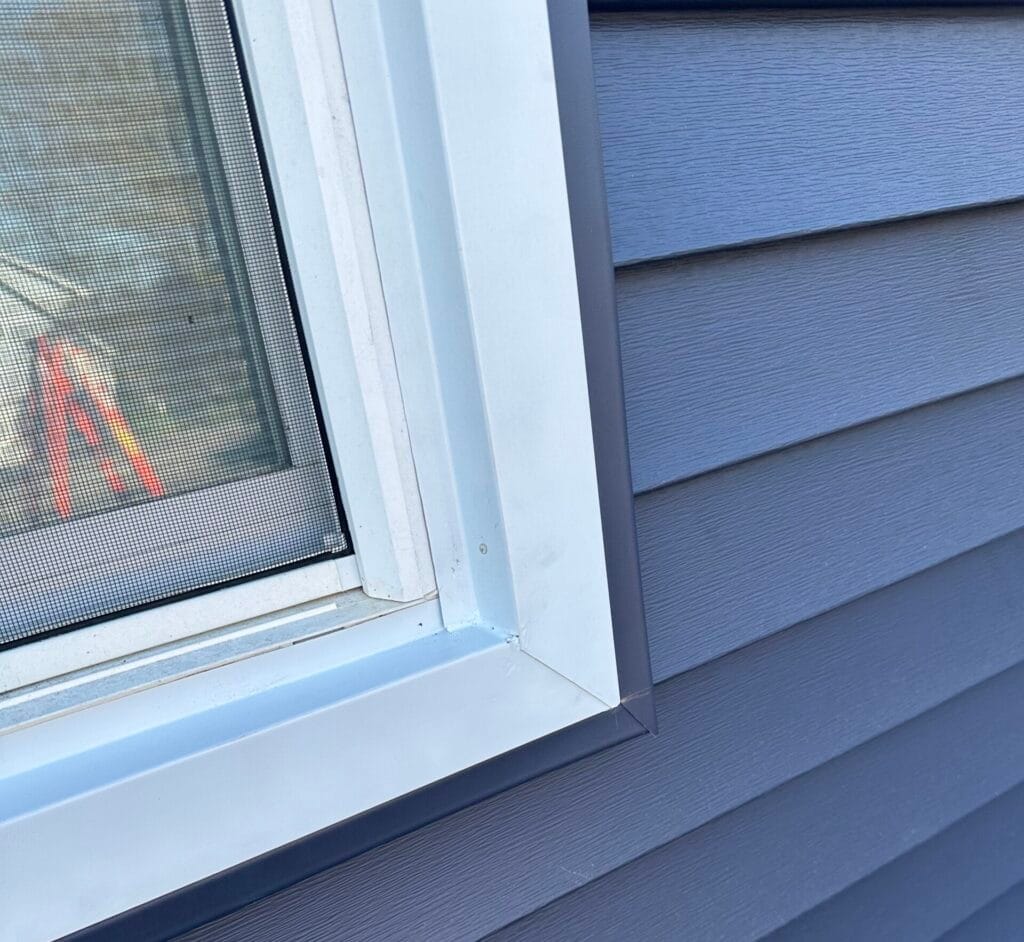
Close-up of a window corner where aluminum wrap meets vinyl siding

What We Look At Inside

The interior tells you where water or air ended up, which is a different thing from where it started:

  • staining on the sill, the casing, the wall below the opening or the ceiling above it

  • trim that is soft, swollen, separating or has been painted over repeatedly

  • the drywall around the opening — bubbling, discoloration, a seam that has opened

  • where condensation forms, and on which surface, because that distinguishes a humidity problem from a failed seal

  • how the sash moves through its full travel, and whether it binds at any point

  • whether the lock engages and actually pulls the sash in

  • visible gaps at the casing, and whether air can be felt at them

A visual inspection can establish that water has been there. It is much weaker at establishing where it entered, which is why the inside is read alongside the outside rather than on its own.

Glass, Sash and How the Window Works

The window itself gets checked in three parts, and each one points somewhere different.

01

The glass. Cracks, chips, and haze or moisture between the panes. Haze between the panes means the sealed unit has failed — it does not mean the window has. See glass replacement.

02

The sash and hardware. How it moves through its full travel, where it binds or rubs, and whether the lock engages and draws the sash in. A lock that no longer pulls it tight leaves a gap by design.

03

The frame. Visible damage, separation at the corners, and soft material where water has been sitting. A frame out of square is usually the reason a sash drags.

Operation matters more than it sounds. A window that binds or will not lock is reporting on the frame and the opening, not just on itself — so how it works is part of the diagnosis.

On drafts specifically: feeling cold near a window does not prove air is coming in. Cold glass cools the room air, which sinks and moves past you. That is a real comfort problem with a completely different fix from sealing a gap, and telling the two apart is covered on drafty window repair.

Water Is the Hard One, Because Water Moves

This is where most money gets wasted, and the reason is simple: water enters at one point, travels inside the assembly, and appears somewhere else. A stain beneath a window is proof that water reached that spot. It is not proof that it came in through the window.

At least seven origins can produce the same stain:

  • The window unit itself — a failed sealed unit, or a gap at the sash

  • The perimeter joint where the window meets the opening

  • The flashing, missing, lapped backwards, or damaged

  • The siding or trim above or beside the opening

  • The wall above, with the water running down inside and stopping at the first thing in its way

  • A roof-to-wall transition, which can deliver water a long way from where it lands

  • Drainage and grade, where the opening is low enough for it to matter

Only the first two are fixed by working on the window. The other five are not, which is why we do not assume the window is the source — and why a new window fitted into an opening that is being fed water from above will leak exactly as the old one did.

Two limits worth stating plainly. A leak that is not active while we are there cannot be observed; we have to work from the evidence it left and from what you can tell us about when it happens. And please do not test it with a garden hose — hose pressure is far higher than rain, and it can drive water into places rain would never reach, which turns a diagnosis into a new problem.

Tracing a water path is covered under window leak repair, and the assembly it travels through under window flashing.

What an Inspection Cannot See

Saying this out loud is part of doing the job properly. A visual inspection reaches a long way, and then it stops.

Generally visible: sealant condition, trim and siding damage, staining, soft material you can press, how the window operates, haze in the glass, gaps you can feel air at, and the edges of the flashing.

Generally not, until something comes off:

  • the condition of the flashing behind the cladding

  • how the weather barrier was lapped around the opening

  • rot in the framing, the sheathing or a hidden sill

  • what an earlier repair actually did behind the trim

  • the full extent of damage a stain is reporting

So we tell you which findings are observations and which are suspicions, and what it would take to settle the difference. When something is opened up and the picture changes, the Hidden Damage Policy below takes over: document it, explain it, price it, get written approval, then proceed. Nothing gets added to a job without a written Change Order.
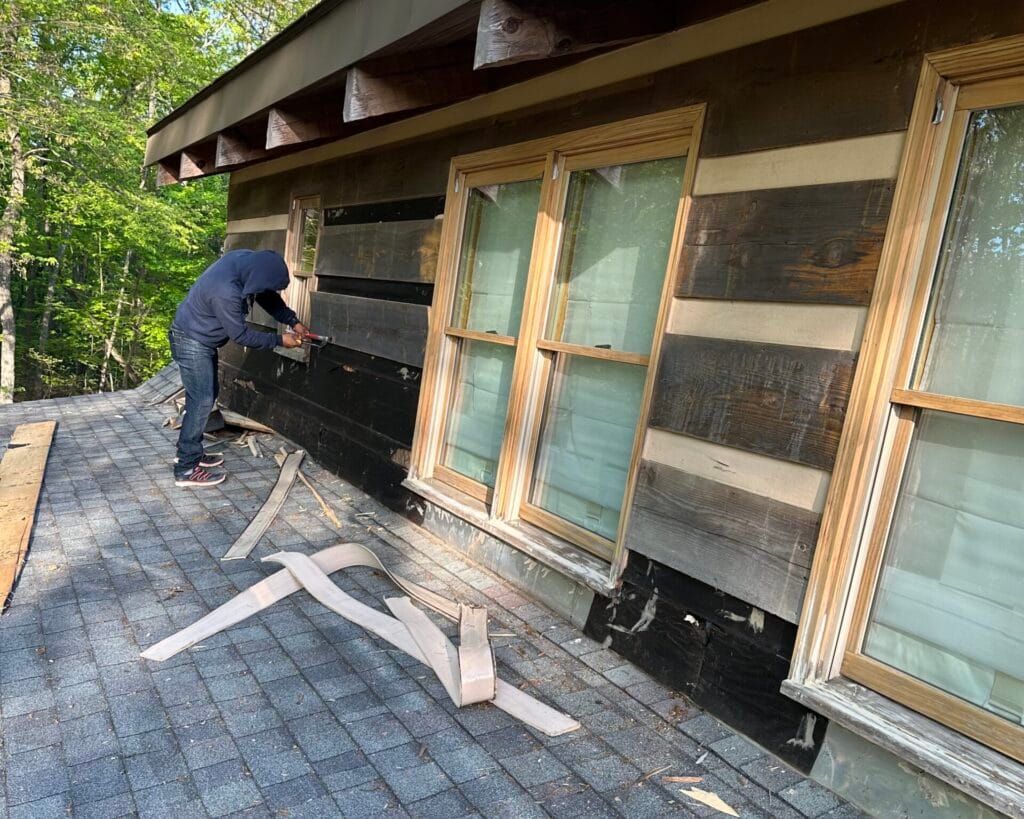
Crew removing old wood siding beside windows on a Knoxville, TN home

What You Get From It

At the end of the visit, you should have:

  • what we saw, described plainly, opening by opening where it matters

  • photographs of the conditions we are describing, including anything behind trim we were able to look at

  • the likely cause, and the other candidates we ruled out and why

  • the scope we would recommend, and what it is meant to solve

  • the limits — what we could not confirm, and what it would take to confirm it

  • what might change once something is opened up

That is a contractor’s condition assessment and scope recommendation. It is the basis for deciding what work to do, and it is written so you can take it to someone else if you want a second opinion.

What an Inspection Covers, and What Follows It

An inspection is only worth what it examines, and what it finds decides whether the answer is a repair or a replacement.

Three different jobs, not one. An insert (pocket) replacement keeps the existing frame and sets a new unit inside it. A full-frame replacement takes the old frame out to the rough opening, which is the only way to see and correct the flashing and whatever is behind the trim. A new-construction (nail-fin) unit fastens to the sheathing and integrates with the weather barrier, which is why it belongs on a new build or where the siding is coming off anyway. Which one is right is decided at the opening, not in the showroom.

What the written estimate itemizes. The number of openings and their sizes, the window line and series by name, the installation method for each opening — insert, full-frame or new-construction — flashing and weather barrier at every opening, interior and exterior finish, removal and disposal of the old units, and an allowance for what is found once the opening is bare. Where two window quotes differ sharply, the gap is almost always in the method and the flashing rather than in the glass.

Two warranties, kept separate. The manufacturer warrants the window; we warrant the installation. Our workmanship warranty runs five years on a full window installation or replacement and one year on a repair scope. Manufacturer coverage varies by product line and comes from the manufacturer, not from us.

Licensed Home Improvement Contractor (TN #13334) · City of Knoxville Building Contractor (#BC13334) · BBB Accredited with an A+ rating · Workers’ Compensation and General Liability carried · family owned and operated, bilingual English and Spanish · 20+ years of hands-on construction and exterior remodeling experience · rated 5.0 from 61 Google reviews.

Repair or Replacement — How It Gets Decided

Neither is the default. What is failing, and what is still sound around it, decides it.

Repair is usually the route when the problem is:

01

a localized sealant joint that has failed on sound material

02

weatherstripping, or a sash that is out of adjustment

03

hardware that is no longer pulling the sash closed

04

a failed glass or insulated glass unit in a sound sash

05

limited trim damage with the frame and opening intact

06

flashing or siding work that can be reached without taking the window out

Replacement tends to make more sense when there is: major frame damage, rot in the frame or the opening, a window that keeps failing to operate however it is adjusted, parts that are no longer made for that product, or a broader installation defect that cannot be corrected from the face of the wall.

We are not going to push you up that list. If the honest answer is a weatherstrip and an hour of adjustment, that is the answer you will get — and we have given it plenty of times to people who arrived expecting to buy windows.

How the Inspection Runs

Nine steps, and the first one is you talking:
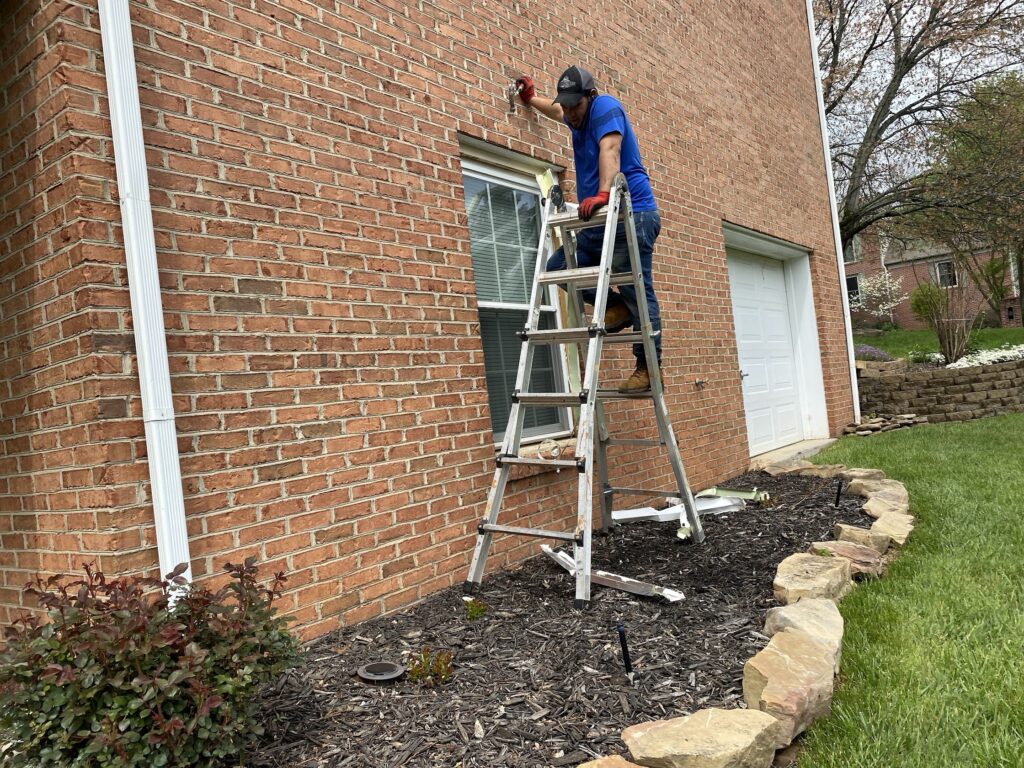
Installer on a ladder working at a window opening on a brick home
01

You describe it. What you are seeing, when it happens, how long it has been going on, and what has been done before. History narrows the field faster than anything.

02

Inside and outside get looked at together, because the symptom and the source are rarely in the same place.

03

Glass, sash, frame and operation — the window as a working thing, not just a surface.

04

The perimeter and the exterior integration, as far as they can be reached without removal.

05

Identify the likely source, and the candidates that have been ruled out.

06

Separate the observed from the suspected — and say which is which.

07

Set out the options, repair and replacement both, with the reasoning for each.

08

Document the scope, with photos and the known limits.

09

Explain the next step, including what would change the picture.

Product, Installation, or the Wall Around It

One of the more useful things an inspection settles is which of three categories your problem belongs to, because they lead to different work and different costs:

  • Product-related — the unit itself has failed. A sealed glass unit, hardware, a sash. Often the cheapest to put right.

  • Installation-related — the window is fine but was never properly integrated with the wall. See window installation.

  • Wall or opening-related — rot, damaged sheathing, a flashing detail that was wrong from the start, or water arriving from somewhere else entirely.

The third is where being an exterior contractor rather than a window dealer matters. Window problems spill into siding, trim, flashing, the weather barrier and the material behind it, and we can carry the work across that boundary instead of handing you to someone else halfway through. Where the damage has gone beyond the opening, see siding repair.

Warranty on Work That Follows

The inspection itself is an assessment, not a workmanship warranty. Warranty attaches to work we are contracted to carry out, and which level applies depends on the scope:

  • repair and partial work — One (1) Year Limited Workmanship Warranty

  • full window installation or replacement — Five (5) Year Limited Workmanship Warranty

Both are subject to a signed agreement and to the scope of work defined in it, and they cover our workmanship. Any warranty on a window or a component is the manufacturer’s, separate from ours, and varies by brand and by model.

Serving Knoxville and Nearby Communities

MI Homesiding & Roofing inspects windows and exteriors in Knoxville TN and the surrounding communities, including:

  • Farragut TN

  • Powell TN

  • Karns TN

  • Hardin Valley TN

  • Oak Ridge TN

If you have been told you need new windows and you are not sure the window is the problem, this is the visit that settles it one way or the other.

Window Inspection FAQs

What does a window inspection check?

The glass and sealed unit, the sash and how it operates, the locks and hardware, the frame, the interior trim and the wall around it, the exterior perimeter joints, the trim and siding at the opening, and whatever of the flashing and water-management detail can be seen without taking the wall apart. The point is not a list of parts; it is working out which of them is actually causing what you are seeing.

Can you tell where a window leak is coming from?

Often, but not always from a visual inspection alone, and we will say which it is. Water travels: it enters at one point, runs down inside the assembly, and shows up somewhere else entirely. A stain under a window is evidence that water got there, not evidence that it came in through the window. What we can do is narrow it down, rule out the sources that do not fit, and tell you honestly when the only way to confirm it is to open something up.

Does fogging mean I need a new window?

No. Haze between the panes means the sealed glass unit has lost its edge seal. The frame and sash around it can be perfectly sound, and in many cases the sealed unit can be replaced on its own. What decides it is the condition of everything around the glass, not the fogging. The symptom is covered on our foggy window repair page.

Can a draft be caused by something other than the window?

Yes, and this is one of the most common misreadings. Cold glass chills the air next to it, that air sinks, and you feel movement near the floor even though nothing is entering the house. That feels identical to an air leak and is fixed completely differently. Air can also come in at the trim or the perimeter rather than through the window itself.

Can you inspect flashing without removing siding?

Only partly, and we will not pretend otherwise. Some of the flashing detail is visible at the edges of the opening, and a good deal can be inferred from how the trim, the siding and the water line up. But flashing sits behind the cladding by design, so confirming what is actually there usually means removing something. An inspection can tell you the flashing is a likely suspect; it cannot always tell you what condition it is in.

What if there is hidden rot?

Some of it shows up as staining, soft trim or a sill that gives under pressure, and some of it stays invisible until the trim or the window comes off. If we find rot once something is opened, the process is the same every time: document it with photos, explain what we found and why it matters, price the additional work, and get your written approval before going further.

How do you decide between repair and replacement?

By what is failing and what is still sound around it. Weatherstripping, hardware alignment, a localized sealant joint, a failed glass unit or limited trim damage are all repairable with the window staying where it is. Major frame damage, rot in the opening, a window that repeatedly fails to operate, parts that are no longer made, or a broader installation defect push toward replacement. The condition decides it, not a preference of ours.

Do you inspect the glass and sash too?

Yes. The glass gets checked for cracks, chips and haze between the panes; the sash for how it moves through its full travel, whether it binds and whether the lock engages and pulls it in properly. A window that drags or will not lock is telling you something about the frame or the opening, so how it operates is part of the diagnosis rather than a separate issue.

Is the Technical Assessment credited?

Yes. On-site estimates are free for standard projects. For complex inspections, such as active leaks, previous repair work, or conditions we cannot verify from the ground, we charge a $350 Technical Assessment, credited back in full if you move forward.

Is this inspection different from a free estimate?

Yes, and the difference is what it is for. An estimate prices work that has already been decided on. This is the step before that: establishing what is actually wrong, where it is, and whether the window is even the right thing to be spending money on. Most straightforward projects still get a free on-site estimate; the Technical Assessment is for the ones a walk-up look cannot settle.

How long does the inspection take?

Usually one to two hours, though it depends on the house, how many openings are involved and how much of the exterior relates to the problem. A single window with an obvious symptom is quick. A leak that could be coming from several places takes longer, because ruling things out is most of the work.

Hidden Damage Policy

If rotted framing, failed flashing, or moisture behind the trim is discovered during the project, we stop and document the problem with photos. We explain what we found and why it matters, then provide a written Change Order before moving forward.

The opening is inspected before a new window goes into it.

Ready to Get Started?

Tell us what you are seeing and we will take a look. Free estimates, clear pricing, and a licensed, insured crew that does what it says.

Call or Message for Prompt Assistance

MI Homesiding & Roofing is proud to serve Knoxville, TN, and surrounding communities with quality craftsmanship and dependable home improvement services.

Email

contact@mihomesidingllc.com

Location

Knoxville, TN