



Verified credentials
Who you are actually hiring, and who stands behind the work.

BBB Accredited Business — A+ Rating
- TN #13334Licensed & Insured
Licensed Home Improvement Contractor
Tennessee license #13334 · General Liability and Workers’ Compensation insured

What Window Sealant Actually Does
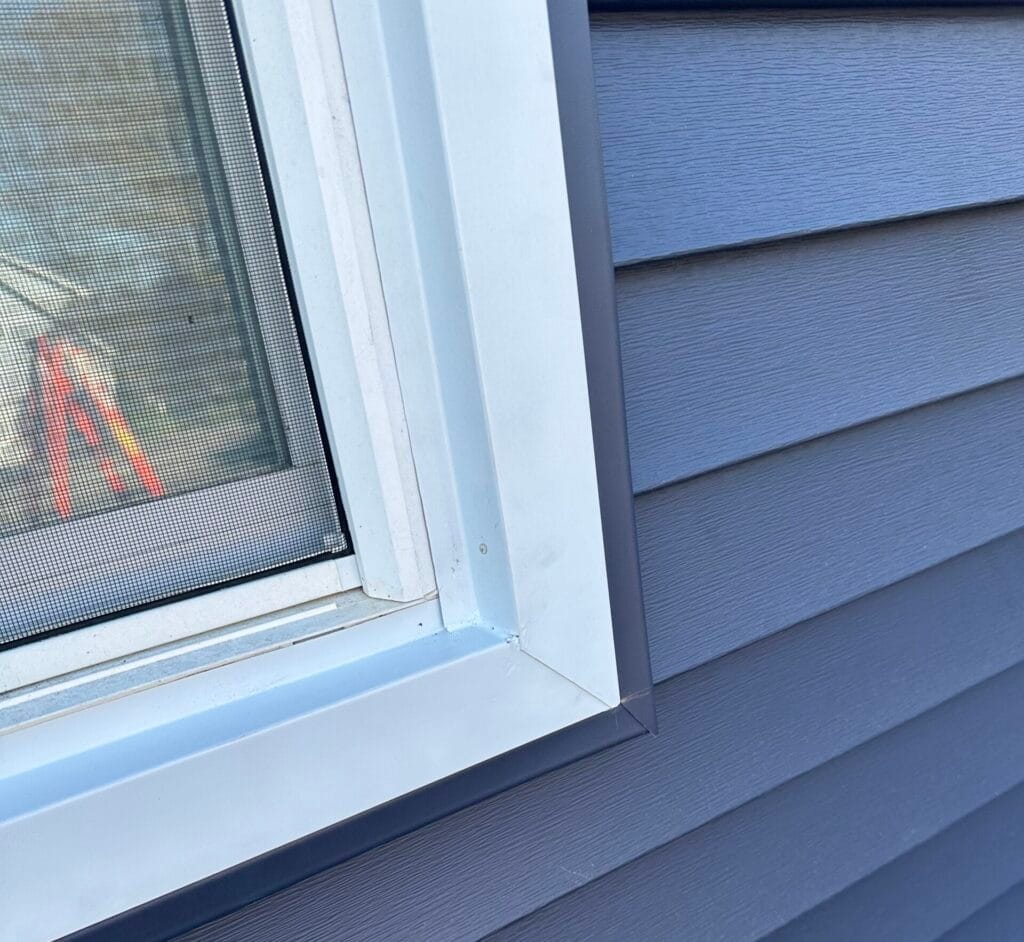
Sealant is a flexible material that closes a selected joint and stays flexible while that joint moves. Around a window the joints that typically get sealed are where the frame meets the trim, where the trim meets the cladding, and gaps the assembly was designed to have closed.
Two things follow from that, and both matter:
It is a joint treatment, not a coating. It belongs in specific gaps, not spread around the whole opening.
It has to move. Every joint around a window opens and closes a little as the materials expand and contract. A sealant that cannot stretch tears away from one side, and that is what most failed beads actually are.
What sealant is not: the water-management system for the wall. That is flashing, and it is a different thing doing a different job. A window can be perfectly sealed at every joint and still leak, because the water never came through a joint in the first place.
Where Sealant Genuinely Helps
These are the conditions where a sealing repair is the right call and usually a durable one:

01
Perimeter sealant that has failed. Cracked, shrunk, hardened, or pulled away from one side of the joint — the most common case, and a straightforward one.
02
An open trim joint. Where the casing meets the cladding and the joint has opened up with movement.
03
A localized exterior gap that lines up with the symptom, on sound material either side of it.
04
Joints the assembly intends to be sealed that were never sealed, or were sealed badly, when the window went in.
What all four have in common: the material either side of the joint is sound, the joint is one the assembly wants closed, and the symptom actually lines up with it. When those three are true, sealing is a real repair rather than a cosmetic one.
Where Sealant Will Not Solve the Problem
This is the more useful list, because this is where money gets wasted. In every one of these cases a bead of sealant either does nothing or makes the situation worse by hiding it.
01
A failed insulated glass unit. Haze between the panes is a seal inside the glass assembly. Nothing applied to the outside of the window reaches it. See glass replacement.
02
Rot. Sealant over soft wood seals moisture in. The rot keeps going, out of sight, and the bead looks fine while it does.
03
A damaged frame. If the frame is out of square, split or no longer holding the sash, closing a joint around it changes nothing about why it is failing.
04
Bad or missing flashing. Water arriving from above travels behind the cladding. Sealing the visible joint does not interrupt that path — it just moves where the water shows up.
05
Water already trapped. If moisture is in the assembly, sealing the last opening keeps it there. This is the one that turns a repair into a replacement.
06
Structural or opening movement. If the opening is moving more than the joint can take, the bead will reopen. The movement is the problem, not the sealant.
There is a seventh that belongs with them: drainage and grading around the house. Water pooling against a wall finds its way in somewhere, and the window is often just where it becomes visible. Sealing the window does not change where the water is coming from.
Inside and Outside Are Not the Same Job
“Sealing around the window” means something different depending on which side of the wall you are standing on, and the materials are generally not interchangeable either.
The interior side is mostly about air. The gap between the window frame and the framing around it is a path for conditioned air. Closing it on the inside is an air-sealing detail, and it is the one that affects how a room feels.
The exterior side is mostly about water — and a good part of that detail is about letting water out, which is why the outside is not simply sealed all the way round.
Which is why one bead around the inside does not correct a water problem on the outside, and sealing the outside all the way round does not close the air path on the inside. They are different jobs, in different places, often with different materials.
If the symptom is a cold draft rather than water, the diagnosis belongs on our drafty window repair page — where air is getting in is a different question from where sealant belongs.
A Sealing Repair, or Something Larger?
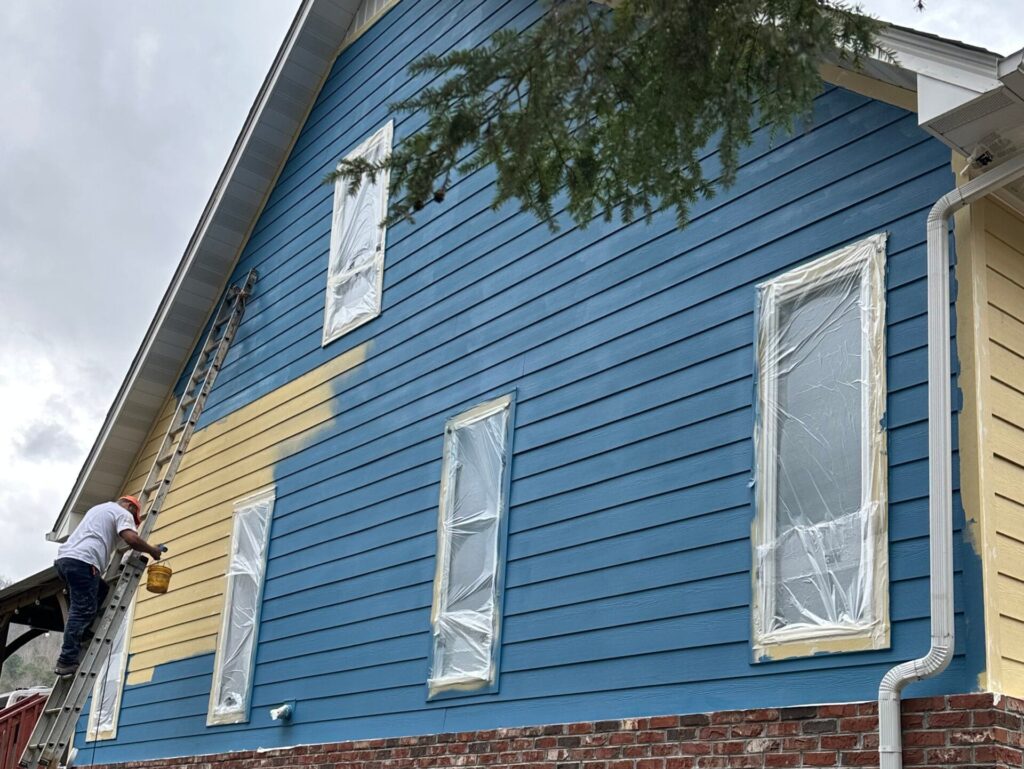
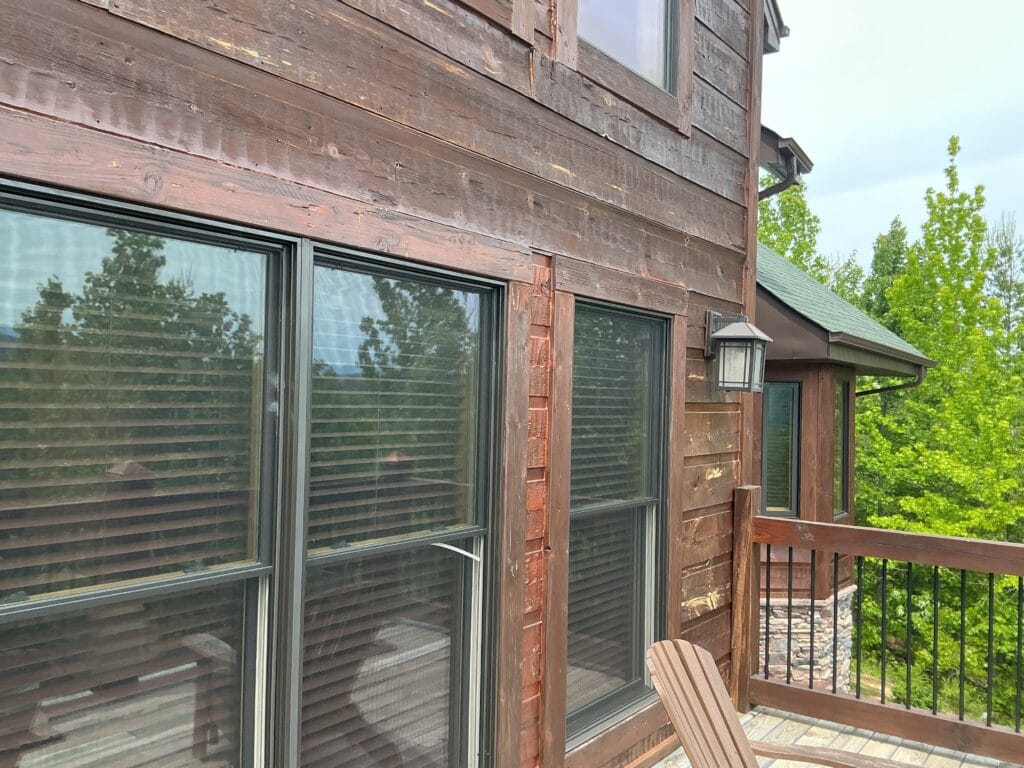
Most of the time this is a contained repair. Sometimes it is the visible end of something bigger, and it is better to know which before starting.
01
A localized sealing repair when the joint failed, the material either side is sound, and the symptom matches. Remove, prepare, reseal, done.
02
Sealing plus trim work when the casing or the wrap at the joint has had enough and the joint cannot be rebuilt against it.
03
Opening up to look when there is staining, softness or a history of leaks, and the only way to know is to take the trim off. See window leak repair.
04
Broader window or opening work when the frame, the flashing or the installation is the real problem. See window repair and window replacement.
We are not going to talk you up the list. If the joint failed and everything around it is fine, that is a sealing repair and we will say so.
Our Sealing Process
Nine steps, and the first three happen before anything is opened:
01
Inspect the symptom and the joint, inside and out.
02
Identify the actual source — and whether it is a joint at all.
03
Decide whether sealant belongs there, or whether that joint is meant to drain.
04
Remove the failed material where it needs to come out.
05
Prepare the joint so the new bead has sound surfaces and room to move.
06
Deal with hidden damage if we find it — documented, explained and approved by written Change Order first.
07
Apply a compatible sealant chosen for that joint and those materials.
08
Check the adjacent trim and flashing, because the joint is part of a wall.
09
Clean up and walk it with you.
Workmanship Warranty
Which level applies depends on the scope of the work rather than on the product:
repair and partial work, including sealing — One (1) Year Limited Workmanship Warranty
full window installation or replacement — Five (5) Year Limited Workmanship Warranty
Both are subject to a signed agreement and to the scope of work defined in it, and they cover our workmanship.
Any warranty on the sealant itself is its manufacturer’s, separate from ours, and it varies by product. We will tell you what is being used on your joint rather than describing it in general terms here.
Why Knoxville Homeowners Choose MI Homesiding & Roofing
We work on the exterior as a system, which is the useful thing to have on a sealing job: the joint is part of a wall, and whether sealing it is the right move depends on the wall.
01
the source established before a bead is proposed
02
the joints that are meant to drain left alone
03
what we find behind the trim documented with photos first
04
more than 20 years of hands-on construction and exterior remodeling experience
Homeowners work directly with me. More than once the honest answer has been that the bead was fine and the problem was three feet above it.
Serving Knoxville and Nearby Communities
MI Homesiding & Roofing provides window caulking and sealing in Knoxville TN and the surrounding communities, including:
Farragut TN
Powell TN
Karns TN
Hardin Valley TN
Oak Ridge TN
If the sealant around your windows has cracked or pulled away, we will tell you which joints need closing, which ones need leaving open, and whether sealing is the repair at all.

Window Caulking & Sealing FAQs
Can caulking fix a drafty window?
Sometimes. If the air is coming through a gap at the perimeter joint, sealing that joint can close it. If the air is coming between the sash and the frame, through worn weatherstripping or a sash that no longer pulls in tight, sealing the outside perimeter does not reach it. And if the cold you feel is the glass surface rather than moving air, no amount of sealant will change it. Which one you have is covered on our drafty window repair page.
Can caulk stop a leaking window?
It can stop a leak that is genuinely entering through a failed perimeter joint. It will not stop water that is getting in above the window through flashing, siding, trim or a roof-to-wall path, and it will not stop water already inside the wall. Sealing over a leak you have not traced usually traps the water instead of stopping it, which makes the damage worse rather than better.
What is the difference between caulk and flashing?
Flashing is a layered, drained system built into the wall that directs water back out to the surface of the cladding. Sealant is a flexible material that closes a specific joint. Flashing does the water management; sealant closes the gaps the assembly intends to have closed. Sealant is not a substitute for flashing, and a window that is leaking because the flashing is wrong cannot be sealed back to health from outside.
Should old caulk be removed first?
Usually, where it has failed. New sealant needs to bond to sound, clean surfaces, and it generally will not bond reliably to old sealant that is cracked, chalky, loose or pulling away. Laying a fresh bead over failed material tends to look fixed for a season and then fail along the same line, because the weak layer underneath is still the weak layer.
Can I seal around a window from the inside?
Interior and exterior sealing do different jobs. The interior side is generally about air: closing the gap between the window frame and the framing so conditioned air is not moving through it. The exterior side is about water, and a good part of the exterior detail is about letting water out rather than sealing it in. A bead of caulk around the inside will not correct a water problem on the outside.
Does every window need exterior caulk?
No. Sealant belongs at the joints the assembly intends to have sealed, and not at the ones it intends to drain. The bottom edge is the usual example: on many installations the bottom is deliberately left open so that any water that gets behind the trim or the cladding has a way back out. Sealing it closed can turn the opening into a basin. What applies to your window is set by how it was installed and by the manufacturer instructions for that product.
What if the frame has rot?
Then sealant is the wrong answer. Rot means water has been getting in and staying in, and running a bead over soft wood seals the moisture inside and hides the problem while it continues. The rotted material has to come out and the source has to be found first. If we discover it once the trim is off, we stop, document it with photos, explain what we found, and provide a written Change Order before going further.
How do you know whether sealant is actually the problem?
By looking at where the symptom is, where the joint actually failed, and what is around it. A cracked bead that lines up with the symptom is one thing; a sound bead with a stain below it is another, and points somewhere else. We also look at the trim, the cladding and how the window was integrated into the wall, because the joint that failed is often not the joint the homeowner is looking at. That is why we do not diagnose this from a phone call or a photo alone.
How often should window caulking be replaced?
There is no single interval. Exterior sealant ages with sun, heat and movement, and how long a bead lasts depends on the product used, how the joint was prepared, how much that joint moves and which elevation of the house it is on. The practical answer is to look at it rather than count years: check it when you are cleaning the windows, and deal with it when it cracks, shrinks, hardens or pulls away from one side.
What type of caulking is best for windows?
There is no single best one, and anyone naming one without seeing the window is guessing. The right choice depends on what the joint is made of on both sides, how much that joint moves, whether it has been painted or needs to be painted afterward, how much sun it takes, and what the window manufacturer calls for. Different chemistries behave differently: some accept paint and some will not hold it at all.
What warranty applies?
Repair and partial work carry a One (1) Year Limited Workmanship Warranty. A full window installation or replacement carries a Five (5) Year Limited Workmanship Warranty. Both are subject to a signed agreement and to the scope of work defined in it. Any warranty on the sealant itself comes from its manufacturer and varies by product.