

Halls Crossroads, TN: Transparent Gutter Installation | MI Homesiding & Roofing
Gutters are the part of a house nobody thinks about until water is going somewhere it should not. Most of what goes wrong with them is decided before the first length goes up: how much roof drains into each run, where the outlets sit, and whether the board behind the gutter is sound enough to hold it. This is what a proper installation involves and how the sizing is worked out, so you can judge an estimate on something other than the price at the bottom.
What a Proper Gutter Installation Includes
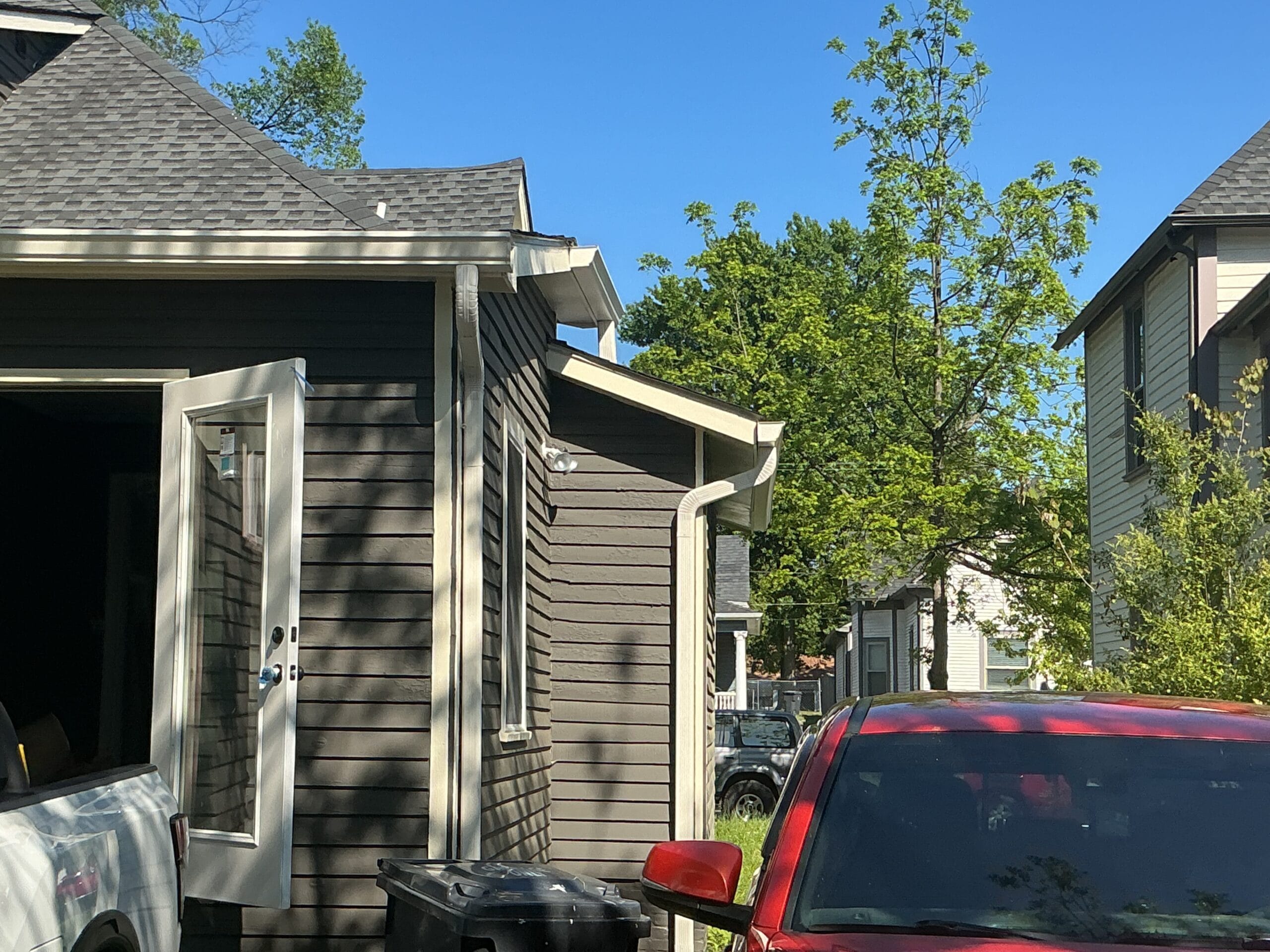
- Seamless runs. Rolled on site to the length of each run, so the joints fall at the corners and outlets instead of every ten feet, and the discharge is placed to carry water clear of the siding and the foundation.
- An itemized written estimate. Priced by the foot and measured on the house, with the hangers, outlets, downspouts and labor listed line by line — not a round number pulled from a table.
- Tied into the roof edge. Drip edge over the back of the gutter, fascia sound and flashed behind it, so runoff lands in the trough rather than behind it.
- Hangers at the right spacing, into sound wood. A hanger screwed into softened fascia has nothing to hold, which is why the board gets dealt with before the gutter goes up rather than after.
- Downspouts that finish the job. Getting water into the gutter is half of it. Where the downspout puts that water down decides whether it ends up away from the house or back against the foundation.
- Leaf protection, if the tree cover calls for it. A guard reduces how often a trough has to be cleared. It does not remove the need to check it, and it will not fix a gutter that is undersized or pitched wrong.
How Gutter Sizing Actually Works
Gutter size is not a style choice and it is not the same on every house. What a gutter can carry depends on four things, in this order:
- The roof area draining into that run. Not the floor plan of the house — the actual roof surface that sheds into one length of gutter. A long rear slope feeding a single run moves far more water than two short runs feeding the same total.
- The pitch of that roof. A steeper roof delivers the same volume of water faster and with more force, which is why a steep roof can overshoot a gutter that would be fine on a shallow one.
- The fall of the gutter and where the outlets are. Water has to reach an outlet before it reaches the end of the run. Outlet placement decides that more than trough width does.
- The number and size of the downspouts. This is the one most often undersized. A wider trough with too few outlets still backs up at the ends in a hard rain.
Five inch or six inch? Six-inch with larger outlets is the right answer on some houses and unnecessary on others. It earns its place where a large or steep roof area concentrates into one run, or where the run is long and the outlets are few. Plenty of homes are well served by five-inch with the outlets in the right places. The contributing roof area is what settles it, not a preference for the wider trough.
Where the gutter sits matters too. A gutter hung too low catches less of a fast-moving sheet of water; hung too high it can take rain behind it. The drip edge has to land inside the trough, and on a roof-to-wall transition the kick-out has to throw water out over the gutter instead of behind the cladding.
Questions Homeowners Ask
Is a seamless gutter really better than sectional?
A seamless gutter is rolled in one continuous piece for each side of the house, so the only joints are at the corners and the outlets. A sectional gutter has a joint every ten feet or so. Joints are where sealant eventually fails, which is why a sectional run usually starts leaking at the seams first. That is the practical difference — fewer places to fail, not a different material.
How long does a gutter installation take?
It depends on the length of the run, the access around the house, and whether the fascia behind the old gutter needs work before anything new goes up. That last one is the usual reason a job runs longer than expected. The timeline comes with the written estimate rather than as a blanket figure.
My gutters overflow but they look clear. Why?
That is usually capacity rather than a blockage: too much roof draining into one run, or too few outlets for the water arriving. Adding a guard will not change it, and neither will cleaning. The fix is in the outlet count or the trough size, which is why the roof area gets measured first.
Can the color be matched to the house?
Aluminum gutter stock comes in a range of finishes, so it can be matched to the siding and trim rather than left as a contrasting band along the roofline.
If you are ready to have it looked at
For a new or replacement system, our gutter installation page for Halls Crossroads covers what the estimate itemizes and what moves the price. If the gutters are already there and the problem is sagging, leaking seams, clogging or water at the foundation, that is gutter repair and drainage. Where the fascia behind the gutter has gone soft, it belongs with soffit and fascia repair.
Serving Halls Crossroads, TN & Nearby Areas
MI Homesiding & Roofing installs seamless gutters, downspouts and leaf protection for homeowners in Halls Crossroads, Powell, Corryton and Maynardville, with broader exterior remodeling service across Knoxville and East Tennessee.