

MI Homesiding & Roofing
Standing near a window and feeling cold is one of the most common winter complaints in Knoxville and East Tennessee — and one of the most commonly misdiagnosed, because two completely different things produce the same sensation.
One is air actually getting in. The other is cold glass chilling the air in the room. The first can be sealed; the second cannot, and no amount of caulk will change it.
At MI Homesiding & Roofing the first job is establishing which one you have, because that decides whether this is a small repair or something else entirely.
For more than 20 years, I’ve worked on exterior remodeling across Knoxville. Plenty of drafty window problems turn out not to be the window at all, but gaps in the trim, the siding or the way the opening was closed up.
Related: window repair, window caulking and sealing, and foggy window repair.
EXCELLENT
Based on 64 reviews
Posted on Google![]()
Dan HoppTrustindex verifies that the original source of the review is Google.
Had a fascia bit replaced. That was one of the fastest, cleanest jobsPosted on Google![]()
RichardTrustindex verifies that the original source of the review is Google.
Thanks for the great work! Quick, fair price, professional and friendly. Highly recommend.Posted on Google![]()
Andreas EnnsTrustindex verifies that the original source of the review is Google.
The guys were very responsive and did a great job!Posted on Google![]()
Lauren Senesac NicholsTrustindex verifies that the original source of the review is Google.
Mel was so easy to work with. We had him out because we needed to figure out how to fix a roof leak where the flashing wasn't done right (and part of the siding was also not right). He did a thorough inspection and explained to me what issues he saw. His quote was similar to the other we got. We ended up having him put on a new roof, with a new under shingle ventilation system and a roof vent. He also corrected siding issues (and flashing), fixed some rotten trim, and repainted part of the siding and trim. Everything looks great! His crews were very nice. Of all the contractors we've worked with on various renovations, Mel was easily one of the best at quickly responding when we had a question or saw an issue we wanted handled differently. We'll definitely hire him again if we need roof or siding work!Posted on Google![]()
James KellerTrustindex verifies that the original source of the review is Google.
Mel and his team were extremely thorough in identifying and correcting a water leakage problem from the top of our deck into the enclosed sun room below. They were both professional and courteous and provided great follow up after the job was completed. I highly recommend MI Homesiding & Roofing for any problem that involves water leakage into your home. I will definitely use MI in the future.Posted on Google![]()
Laura RomansTrustindex verifies that the original source of the review is Google.
Highly recommend MI Homesiding! They completed a major home exterior project for us including replacing and painting our siding as well as replacing our roofing and gutters. They did an excellent job and we began getting compliments immediately from our neighbors about it! Mel was very communicative and proactive, listened to our questions and ideas, and took care of things in a timely manner. His team was always professional and the work is just superb! We not only recommend MI Homesiding, we will be using them again for future projects ourselves.Posted on Google![]()
Ricardas LukosiunasTrustindex verifies that the original source of the review is Google.
I found MI Homesiding & Roofing through their YouTube channel and called with a few questions about siding. Even though I’m not located in Tennessee and wouldn’t be hiring them directly, they answered the phone right away and took the time to answer every question in detail. They provided specific, helpful information and even assisted me in finding a contractor in my area. It’s rare to find a company so willing to help someone who isn’t even a local customer. Awesome people, excellent service, and truly knowledgeable. Thank you so much!Posted on Google![]()
Jeff NeldenTrustindex verifies that the original source of the review is Google.
Exceptionally pleased with entire process and results. Most professional estimate I received, good communication, timely, and did what they said they would. Building looks exceptional. I highly recommend Mel and his crew,Showing only 5 star reviews
Verified credentials
Who you are actually hiring, and who stands behind the work.

BBB Accredited Business — A+ Rating
Licensed Home Improvement Contractor
Tennessee license #13334 · General Liability and Workers’ Compensation insured

Knoxville Chamber Investor
Investor member of the Knoxville Chamber

Feeling cold near a window does not, on its own, prove that air is leaking in. It proves you are uncomfortable, which is a real problem but not yet a diagnosis.
Six things can produce it, and more than one can be true at the same time:

Actual air leakage. Outside air moving through a gap or joint and into the room. The only one of the six that sealing directly addresses.
A cold glass surface. The pane is cold, the air touching it cools and falls. It feels like moving air because it is — just not air from outside.
Failed weatherstripping. Worn, torn, compressed flat or missing, so the sash no longer seals against the frame when it is shut.
Poor sash contact. The sash closes but does not pull in tight, often because of alignment or a lock that is no longer doing its job.
Gaps at the trim or perimeter. Where the window meets the wall, inside or out. The window itself can be perfect and this can still leak.
An installation or opening defect. How the window was set and closed up in the first place, which is behind the trim and not visible from the room.
This is the distinction worth getting right before anybody is paid to seal anything, because the two have nothing in common except the sensation.
Air leakage is outside air physically moving through a gap or a joint. It tends to be localized — you can often trace it to a line, a corner or an edge rather than to the whole window. It usually changes with the weather: stronger on a windy day, weaker when the air is still, and often stronger on the windward side of the house. This is the one that sealing, weatherstripping and adjustment actually fix.
The cold surface effect is different. The glass and frame are cold, the room air that touches them cools, becomes denser and slides downward. You feel movement near the sill and around your feet. Nothing has entered the house. It is steady rather than gusty, it does not care much about wind, and it is strongest when the outside temperature is lowest. Sealing the perimeter does nothing for it.
Both can be happening in the same window, which is why neither should be assumed. A rough guide: a draft that comes and goes with the wind points toward leakage; a cold, steady fall of air down the face of the glass on a still night points toward the surface effect.
It matters commercially as well as technically. If the problem is the surface effect and someone sells you perimeter sealing, you will pay for work that was done properly and still feel the cold — and reasonably conclude you were cheated. That is a conversation worth avoiding by checking first.
When there is real leakage, these are the places it tends to come from. This is a list of where to look, not a list of what is wrong with your window — which of them applies is specific to the unit and the opening.
Between the sash and the frame — where the weatherstripping is supposed to be doing the work
At the meeting rail — where two sashes come together on a double-hung or a slider
At the lock or hardware — if the lock no longer draws the sash in tight, the seal never gets compressed
Around the frame perimeter — where the window meets the rough opening
Behind the interior trim — a gap that was never insulated or sealed when the casing went on
At the installation joint — how the window was integrated with the siding, wrap and flashing outside
The last two are the ones homeowners rarely suspect and we find often, because they are invisible from inside the room. They are also the reason a window can be in perfect condition and the opening still leak air.
Where the leak is between the sash and the frame, the cause is usually one of three things, and all three are repairs rather than replacements.
Weatherstripping that has given up — worn, torn, hardened, or compressed so flat it no longer springs back against the sash
Sash alignment — a sash that sits slightly out of square closes without ever making even contact
Hardware — locks and keepers are not just security. On many windows the lock is what pulls the sash in and compresses the seal, so one that no longer engages properly leaves a gap by design
One caveat worth stating plainly: not every window has weatherstripping that can be replaced. On some products it is an integral part of the sash rather than a separate piece, and on older units the original part may simply not be made any more. That is established by looking at the window, not by assuming.
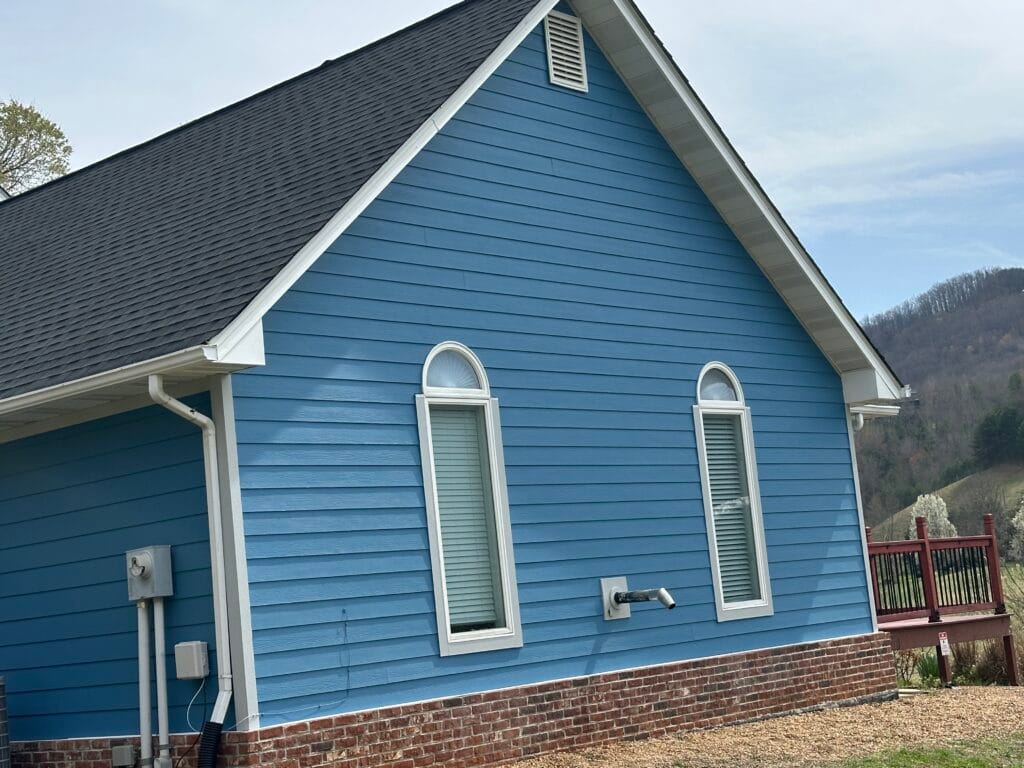
Perimeter sealant is a real repair for a real condition: a gap at the joint where the window meets the wall, with sound surfaces either side and a joint the right size for sealant to span and stay flexible. Done there, it works.
It is the wrong tool for all of these:
air coming through the sash itself — sealing the outside perimeter does not reach it
a failed insulated glass unit — that failure is inside the sealed glass assembly
rot in the frame, sash or trim — sealant over rot hides it and keeps it wet
flashing or water-management defects — a different system with a different job
a structural problem with the opening — movement will simply reopen the joint
Sealant is covered properly on our window caulking and sealing page, including where it belongs and what it is being asked to do. The reason it gets a caution here is that “we’ll caulk it” is the cheapest-sounding answer to a draft, and on a good number of drafty windows it is simply the wrong one.
They get bundled together as “the window is bad”. Each has its own evidence, and having one does not prove you have the others.
A draft is not a water leak. Air leakage and water intrusion are different conditions. They can share a failed joint — which is why finding one sometimes leads us to the other — but a draft is not evidence that water is getting into your wall, and a dry window is not evidence that air is not getting in. See window leak repair.
A fogged window is not automatically a draft. Haze between the panes means the sealed glass unit lost its edge seal — a seal that sits inside the glass assembly, not between outdoors and your room. It does not open a path into the house. See foggy window repair.
But they do overlap. A failed unit insulates worse, so the glass runs colder, so the cold surface effect gets stronger — and the window feels draftier without any air moving through it. Both conditions can be present in the same window at the same time.
That third point is the one that causes the most wasted money. A homeowner with fogged, cold glass is told the window is “leaking air”, pays to have it sealed, and feels no difference — because the glass was the problem and the perimeter was never the issue.
Neither answer is the default. The condition of the frame and sash around the leak decides it, not the draft.
Repair usually makes sense when:
the weatherstripping is the problem and a replacement part exists
the sash or hardware can be adjusted back into proper contact
the leak is a localized gap that sealant can genuinely close
the trim or perimeter needs attention but the frame is sound
Replacement tends to make more sense when:
there is rot or real damage in the frame or sash
the window no longer opens, closes or locks as it should
several things have failed at once rather than one
the parts needed are no longer made for that product
And a broader installation defect can land on either side: sometimes the opening can be corrected from outside, sometimes it genuinely needs the window out to be put right. That one is decided on site.
We are not going to push you toward replacement. If a draft can be fixed with a weatherstrip and an hour of adjustment, that is what we will tell you. If replacement is the honest answer, see window replacement and installation.
A draft cannot be fully diagnosed over the phone. It depends on where the air is, whether it is air at all, and what the opening looks like behind the trim — and none of that travels down a phone line.
On site, this is what gets checked:
how the sash operates, and whether it closes evenly
the weatherstripping: present, intact, still springing back
the locks and hardware, and whether they pull the sash in properly
the interior trim and the perimeter joint
visible gaps, inside and out
the condition of the frame and sash themselves
any sign of moisture, staining or rot
how the window is integrated with the siding and trim outside
The last one is where being a siding and exterior contractor is genuinely useful on a window problem: the leak is often in the joint between the window and everything around it, and that is a wall detail rather than a window detail.
Reducing genuine air leakage generally makes a room more comfortable, and air that moves through the envelope is air you paid to heat or cool. That much is straightforward.
What is not straightforward is putting a number on it. The effect on a bill depends on the whole house — how much total leakage there is, where it is, what the equipment is doing and what the weather does — and a window is one part of that. We will not quote you a savings percentage, because anyone who does has not measured your house.
And the honest caveat: if what you are feeling is the cold surface effect rather than leakage, sealing will improve neither comfort at the glass nor the bill. That is a glass and product question, covered under energy-efficient windows.
A draft is a symptom with several possible causes, and the right repair depends on which one it is.
Three different jobs, not one. An insert (pocket) replacement keeps the existing frame and sets a new unit inside it. A full-frame replacement takes the old frame out to the rough opening, which is the only way to see and correct the flashing and whatever is behind the trim. A new-construction (nail-fin) unit fastens to the sheathing and integrates with the weather barrier, which is why it belongs on a new build or where the siding is coming off anyway. Which one is right is decided at the opening, not in the showroom.
What the written estimate itemizes. The number of openings and their sizes, the window line and series by name, the installation method for each opening — insert, full-frame or new-construction — flashing and weather barrier at every opening, interior and exterior finish, removal and disposal of the old units, and an allowance for what is found once the opening is bare. Where two window quotes differ sharply, the gap is almost always in the method and the flashing rather than in the glass.
Two warranties, kept separate. The manufacturer warrants the window; we warrant the installation. Our workmanship warranty runs five years on a full window installation or replacement and one year on a repair scope. Manufacturer coverage varies by product line and comes from the manufacturer, not from us.
Licensed Home Improvement Contractor (TN #13334) · City of Knoxville Building Contractor (#BC13334) · BBB Accredited with an A+ rating · Workers’ Compensation and General Liability carried · family owned and operated, bilingual English and Spanish · 20+ years of hands-on construction and exterior remodeling experience · Google Reviews.
Every repair begins with finding out what is actually happening, in that order:
Locate the symptom. Which window, which part of it, and when you notice it.
Establish whether air is actually moving, or whether this is a cold surface. This step decides everything after it.
Check the sash, hardware and weatherstripping — operation, contact and condition.
Inspect the perimeter and the trim, inside and out.
Look at the frame and the opening where what we have found calls for it.
Identify the route — repair or replacement — and explain why, with both on the table.
Document anything hidden with photos if rot or damage turns up behind the trim.
Confirm the scope in writing before work starts, and by Change Order if it grows.
Carry out the repair or replacement as agreed.
Check it with you — operation, lock, seal and the finished joint.
Which level applies depends on the scope of the work rather than on the product:
repair and partial work — One (1) Year Limited Workmanship Warranty
full window installation or replacement — Five (5) Year Limited Workmanship Warranty
Both are subject to a signed agreement and to the scope of work defined in it, and they cover our workmanship.
Any warranty on the window or its components is the manufacturer’s, separate from ours, and its length and terms vary by brand and by model.
You work directly with me, and the inspection happens before the recommendation.
the cause established before anything is sold
repair and replacement both explained, with the reasons for each
the window treated as part of the wall, not in isolation
more than 20 years of hands-on construction and exterior remodeling experience
More than once the useful answer has been that the window was fine and the trim above it was not.
MI Homesiding & Roofing provides drafty window repair in Knoxville TN and the surrounding communities, including:
Farragut TN
Powell TN
Karns TN
Hardin Valley TN
Oak Ridge TN
If a window in your house feels cold, we will tell you whether air is getting in or the glass is simply cold — and those two answers lead to very different work.
Two different things produce that feeling. One is actual air leakage: outside air moving through a gap at the sash, the hardware, the perimeter or the trim. The other is the cold surface effect: the glass is cold, the air touching it cools and sinks, and that falling air feels like a draft even though nothing is getting in. They are fixed differently, so it is worth knowing which one you have.
No. A cold pane cools the air next to it, that air gets heavier and slides down into the room, and you feel movement near the floor. Nothing has entered the house. A single-pane window or one with a failed sealed unit does this strongly. It is a real comfort problem, but sealing the perimeter will not change it.
Sometimes, when the leak is between the sash and the frame and the weatherstripping is worn, compressed, torn or missing. It will not help if the air is coming through the perimeter joint or the trim instead. One thing to know in advance: not every window has weatherstripping that can be replaced. On some products it is integral to the sash, which changes the options.
It can, when the gap is at the perimeter joint, the surfaces are sound and the joint is the right size for sealant. It will not fix air coming through the sash itself, a window that no longer closes properly, rot in the frame or trim, or a flashing problem. Caulk is one repair among several, and the useful question is whether your gap is the kind sealant actually closes.
Not by itself. Fogging between the panes means the sealed glass unit has lost its edge seal, and that seal is inside the glass assembly rather than between outside and your room. What a failed unit does do is leave the glass colder, which produces the cold surface effect and can feel like a draft. Both conditions can be present at once in the same window.
No. Air leakage and water leakage are different conditions and they are confirmed by different evidence. They can share a failed joint, which is why one sometimes leads us to the other, but a draft is not proof that water is getting in and a dry window is not proof that air is not.
Often. Where the cause is weatherstripping, sash alignment, hardware that is not pulling the sash closed, or a localized gap at the perimeter or trim, repair is usually the sensible route. What decides it is the condition of the frame and sash around the leak, not the draft itself.
When the parts around the leak are what is wrong: rot or damage in the frame or sash, a window that no longer operates or locks properly, several failures at once, parts that are no longer made for that product, or a broader installation problem that cannot be corrected from outside. None of that is a reason to replace more than you need to.
Reducing genuine air leakage generally improves comfort, and air that moves through the envelope is energy you paid to condition. How much difference it makes on a bill depends on the whole house, the equipment and the weather, so we do not attach a percentage to it. And if the feeling is the cold surface effect rather than leakage, sealing will not change the bill at all.
Repair and partial work carry a One (1) Year Limited Workmanship Warranty. A full window installation or replacement carries a Five (5) Year Limited Workmanship Warranty. Both are subject to a signed agreement and to the scope of work defined in it. Any warranty on the window or its components comes from the manufacturer and varies by brand and model.
If rotted framing, failed flashing, or moisture behind the trim is discovered during the project, we stop and document the problem with photos. We explain what we found and why it matters, then provide a written Change Order before moving forward.
The opening is inspected before a new window goes into it.
Tell us what you are seeing and we will take a look. Free estimates, clear pricing, and a licensed, insured crew that does what it says.