



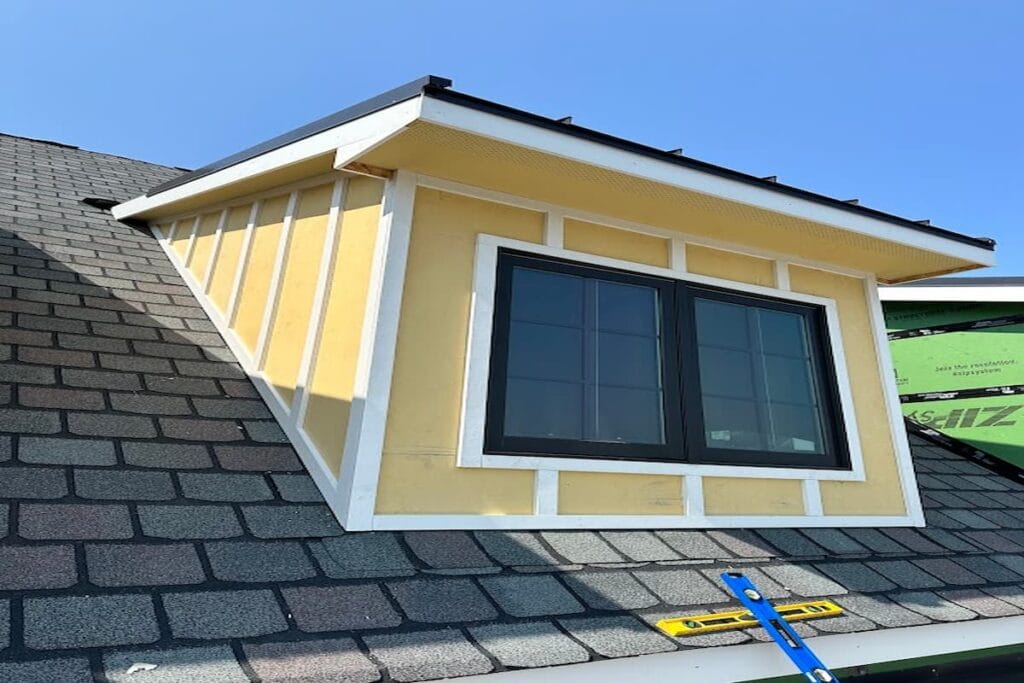
TruLog siding is a steel siding system designed to give your home the look of real wood logs without the maintenance problems that come with traditional wood.
In Knoxville, TN, where humidity and rain are constant, many homeowners are looking for a siding option that combines durability with appearance.
At MI Homesiding & Roofing, we install TruLog siding systems built for long-term performance, moisture protection, and clean finishes.


Verified credentials
Who you are actually hiring, and who stands behind the work.

James Hardie™ ALLIANCE Affiliate
Fiber cement siding · Affiliate level

True Metal Supply
Metal roofing and siding supplier

BBB Accredited Business — A+ Rating
- TN #13334Licensed & Insured
Licensed Home Improvement Contractor
Tennessee license #13334 · General Liability and Workers’ Compensation insured

Knoxville Chamber Investor
Investor member of the Knoxville Chamber



What Is TruLog Siding?
TruLog siding is a steel siding system with a factory-applied woodgrain finish that gives a wall the appearance of real log siding. TruLog publishes 26-gauge American steel for its log product, with a foam backer behind the panel and a corrosion-resistant barrier under the finish.
Unlike traditional wood siding:
Those four are fair to say about steel. What they do not mean is that the wall is waterproof or that nothing needs looking at, and the sections below go through both honestly.
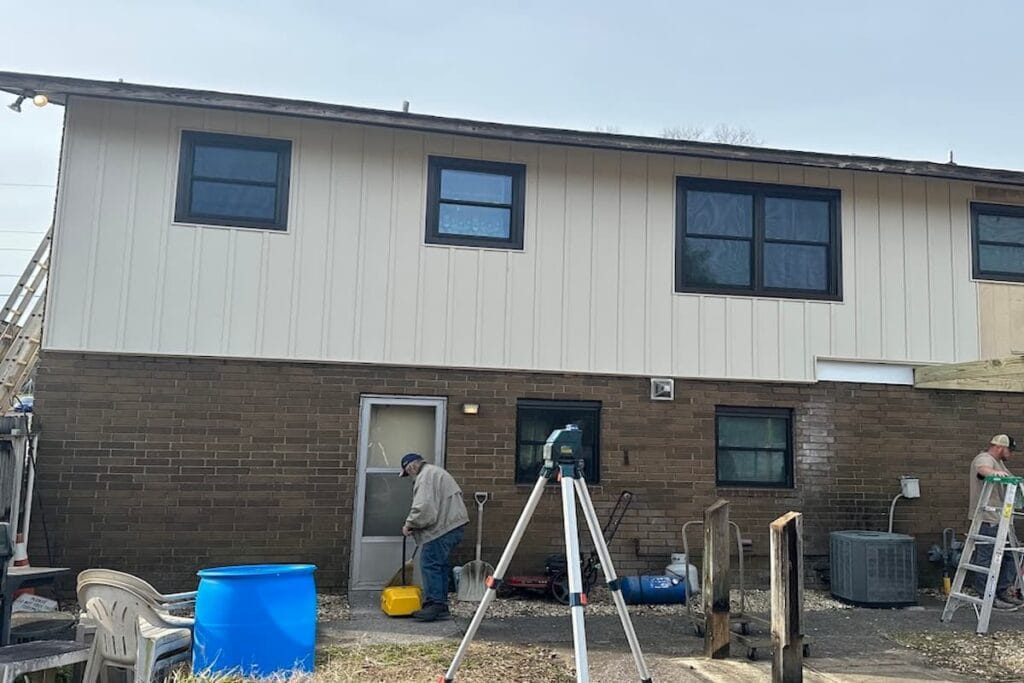
01
It does not rot
02
It does not warp
03
It does not require staining or sealing
04
It resists moisture and pests
TruLog Panel Construction and Specifications
These are the numbers TruLog publishes for its steel log product. Where the manufacturer does not publish a figure, we say so rather than fill the gap.
01
26-gauge American steel
TruLog publishes 26-gauge for the steel log product. Thicker is not automatically better, and one gauge is not a universal requirement
02
Panels 12 ft long, covering 9 in tall
Published for the steel log panel. Dimensions for the other profiles come from each product's own documentation
03
Foam backer, R-3 to R-4
The manufacturer's figure for the backer itself, not for your wall
04
Corrosion-resistant barrier
Beneath the finish, as published by TruLog
05
Woodgrain finish with a UV-protectant clear coat
A baked-on coating system, described by TruLog as fade-resistant
06
Class A fire, Class 4 impact
Published product ratings for the panel. See the ratings section below for exactly what that covers
What TruLog does not publish. Fastener spacing, expansion and contraction allowances, cut-edge treatment, touch-up paint, dent and scratch guidance, panel-replacement procedure, and wind ratings do not appear in its public FAQ or product pages. The product's own installation guide governs those, and we work from that document rather than from a general rule.
The TruLog Systems We Install
MI Homesiding & Roofing installs TruLog Steel Log, Board & Batten, Lap, Soffit and Fascia systems, subject to current product availability and the approved project scope.
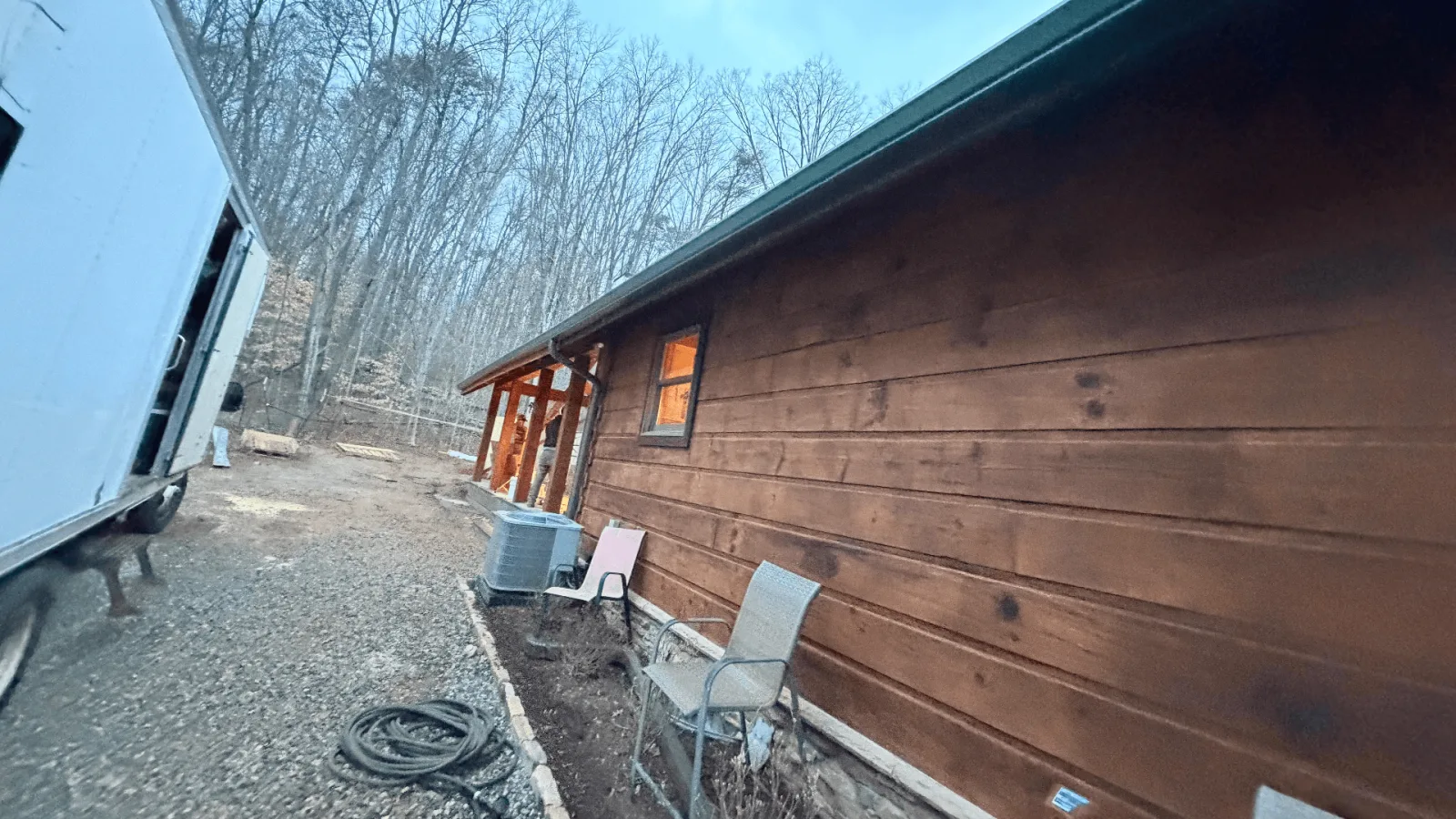
TruLog Steel Log. The log-look steel panel, formed with hew and chink lines so the wall reads as a log cabin from the street. This is the product TruLog publishes the most detail about: 26-gauge steel, 12 ft panels covering 9 in, foam backer, woodgrain finish.
TruLog Board & Batten. The vertical board-and-batten look in steel. Worth repeating what we say on our other pages: board and batten is a style and a profile rather than one material, and the same look exists in vinyl, in fiber cement and in steel. This is the steel version.
TruLog Lap. Horizontal lap siding in steel, running in courses across the wall in the way most homeowners picture ordinary siding, with the steel substrate and coating system instead of vinyl or wood.
TruLog Soffit. We install TruLog soffit where it suits the eave and the approved scope. How the eave interacts with attic intake air is covered on our soffit and fascia page.
TruLog Fascia. We install TruLog fascia and roof-edge trim according to the current official product documentation for the system being used. We are not going to describe a profile or a dimension that the manufacturer has not published.
TruLog also sells its products in more than one tier, which matters because the warranty term is not the same across them. We cover that below. What we install on your house is whatever is in the written scope, and we will tell you which product and tier that is before anything is ordered.
Why TruLog Siding Works Well in Knoxville
Homes in Knoxville are exposed to:
Wood siding in these conditions often requires constant maintenance.
TruLog siding is designed to handle moisture and weather exposure while maintaining its appearance over time.
- High humidity
- Heavy rain
- Seasonal temperature changes
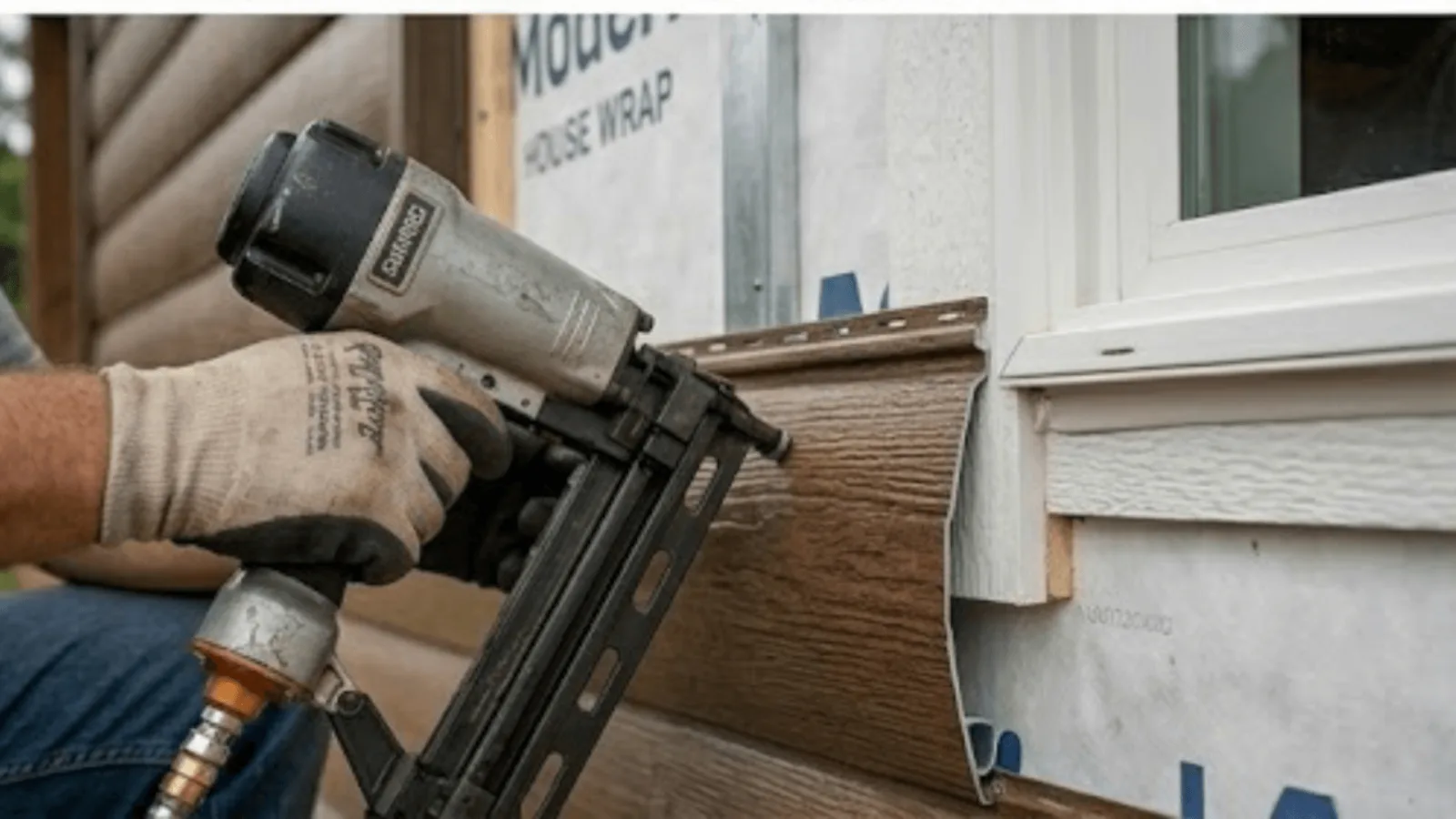
TruLog Siding Installation
Proper installation is critical for any siding system, including TruLog.
Our installation process includes:
Even durable materials like steel siding can fail if installed incorrectly.
Our full installation approach is detailed on our TruLog metal siding installation page.
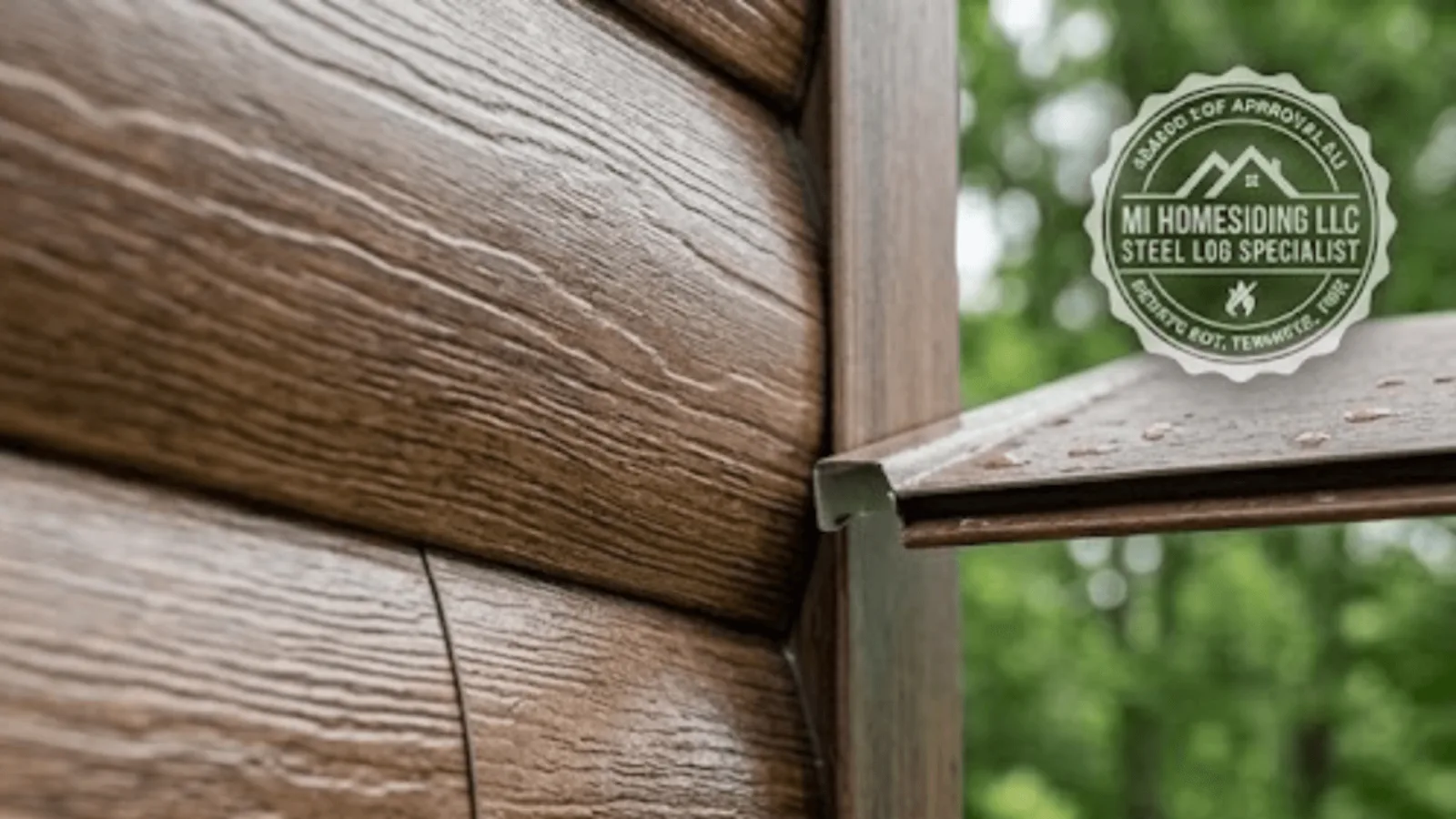
01
Full wall preparation
02
Moisture barrier installation
03
Proper flashing at all transitions
04
Secure fastening system
05
Clean finishing around windows, doors, and trim
Steel Moves, and the Fastening Has to Allow It
Every cladding material moves with temperature, steel included. What differs is how much, and what the system does about it.
TruLog's own comparison material makes the point that "Steel is heat stable and does not warp or soften like vinyl," which is a fair description of the difference in behavior rather than a claim that steel does not move at all. It does. The panel has to be attached so the system can perform the way it was designed to, and the trim and accessories are part of that, not decoration.
What TruLog publishes about attachment: panels lock together and are fastened with screws through the nailing flange, and a correct installation deals with starter strips, J-channels, corners and elevation changes. The manufacturer also says plainly that if you are not comfortable with metal siding installation it is wise to hire an experienced siding professional, and it provides detailed installation guides for each product line.
What we will not do is invent the numbers. TruLog does not publish fastener spacing or expansion allowances in its public material, and we are not going to borrow figures from standing-seam metal roofing, which is a different system with different movement and different details. Those dimensions come from the installation guide for the specific TruLog product, and that is the document our crews work from. Our sequence on site is on our TruLog metal siding installation page.
TruLog Siding Cost in Knoxville, TN
The cost of TruLog siding depends on several factors:
In many cases, the cost also includes correcting previous installation issues or moisture damage behind the siding.
For a closer look at what drives the number, see TruLog siding cost in Knoxville.
- Size of the home
- Complexity of the structure
- Condition of the existing siding
- Amount of prep work required
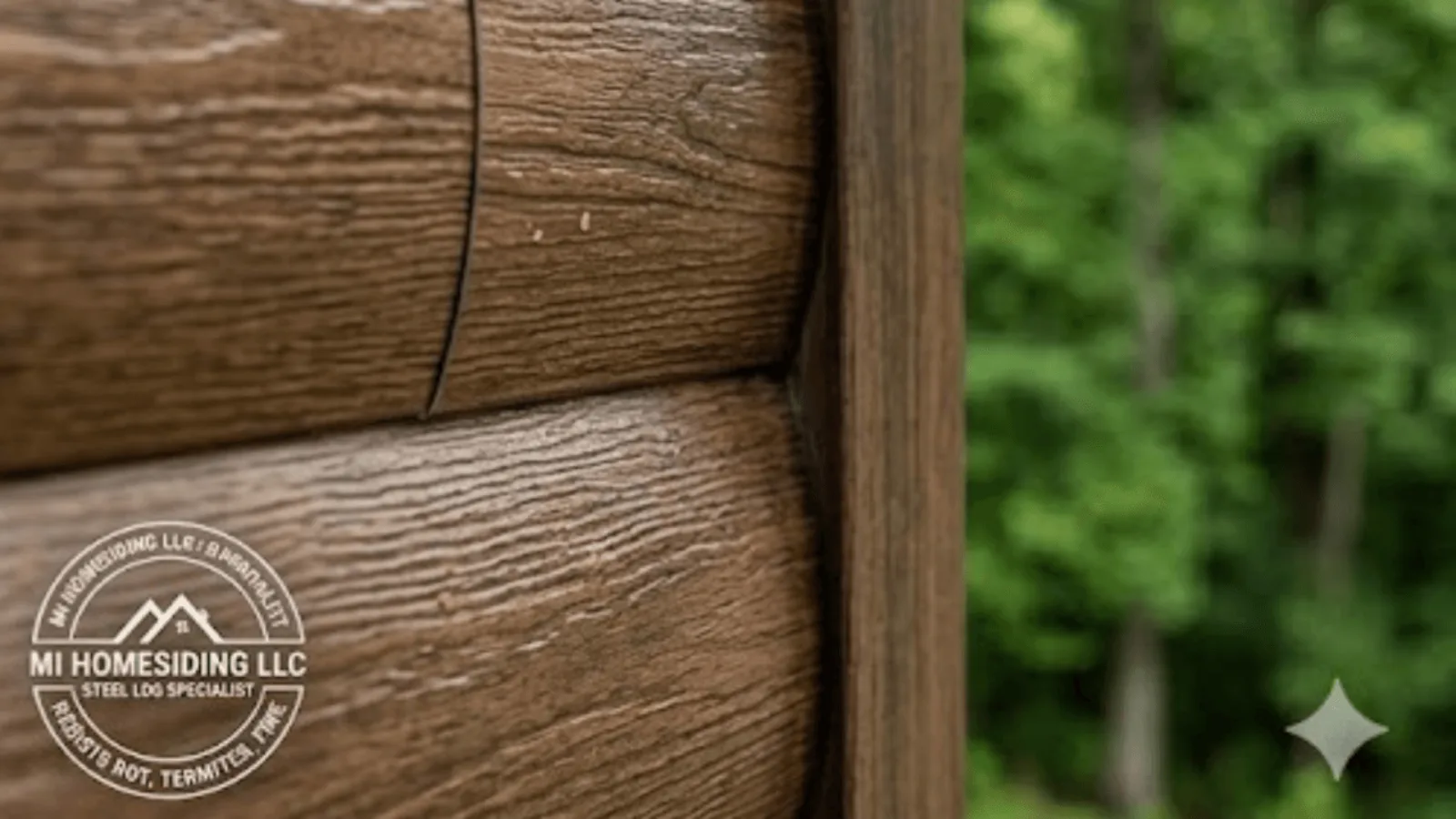
TruLog Siding Colors and Styles
TruLog siding is available in different styles and finishes, including:
These options allow homeowners to achieve a rustic or modern look while maintaining durability.
Every profile and finish is covered in our TruLog siding colors and styles guide.
- Log-style profiles
- Board and batten options
- Woodgrain finishes
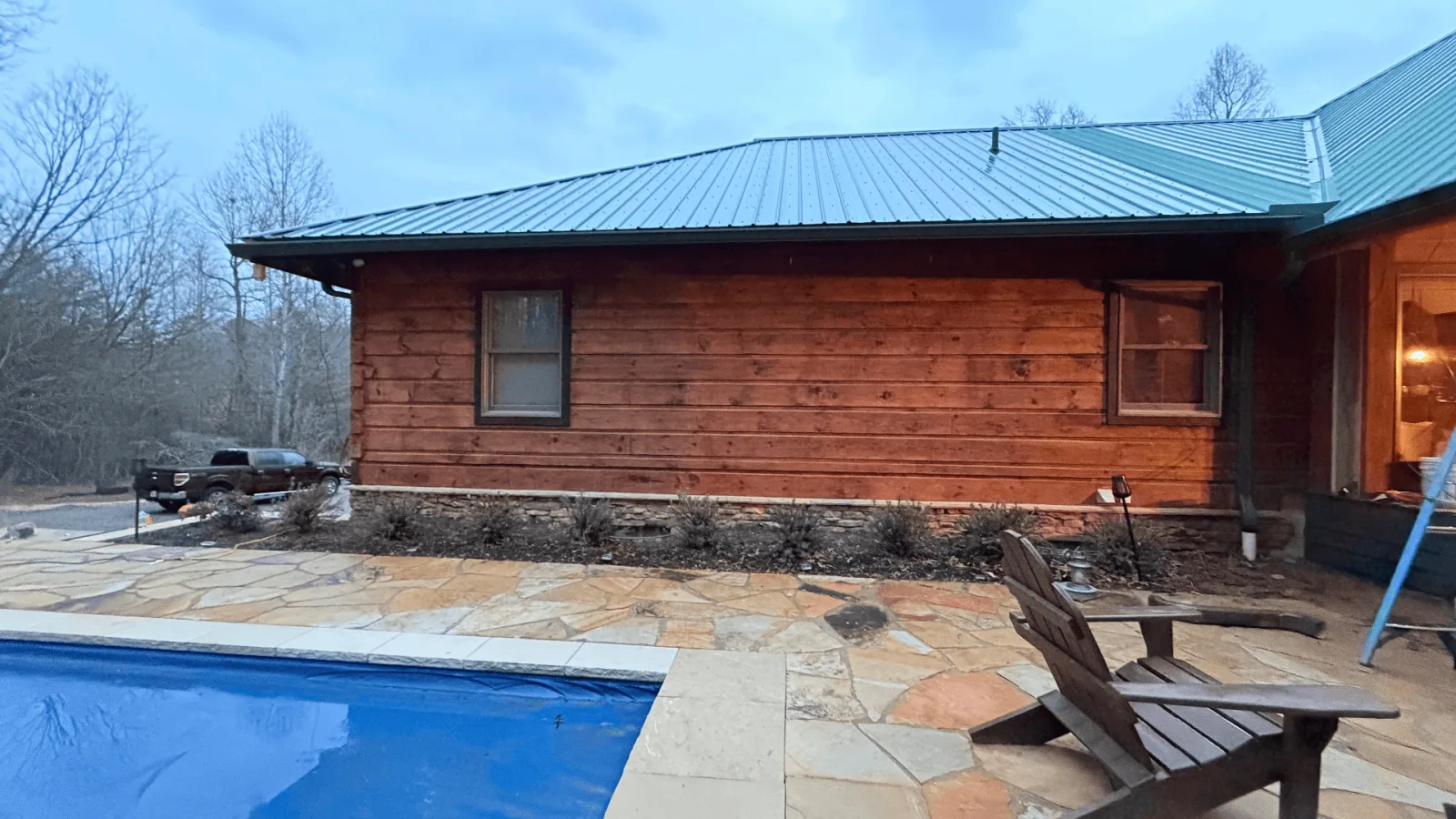
TruLog vs Wood Siding
When comparing TruLog to traditional wood siding:
In Knoxville’s climate, wood siding can deteriorate faster if not properly maintained.
We compare the two in detail in TruLog vs wood siding, and look at the other common alternative in TruLog vs vinyl siding.
- TruLog → steel, low maintenance, moisture-resistant
- Wood → natural, but requires ongoing maintenance
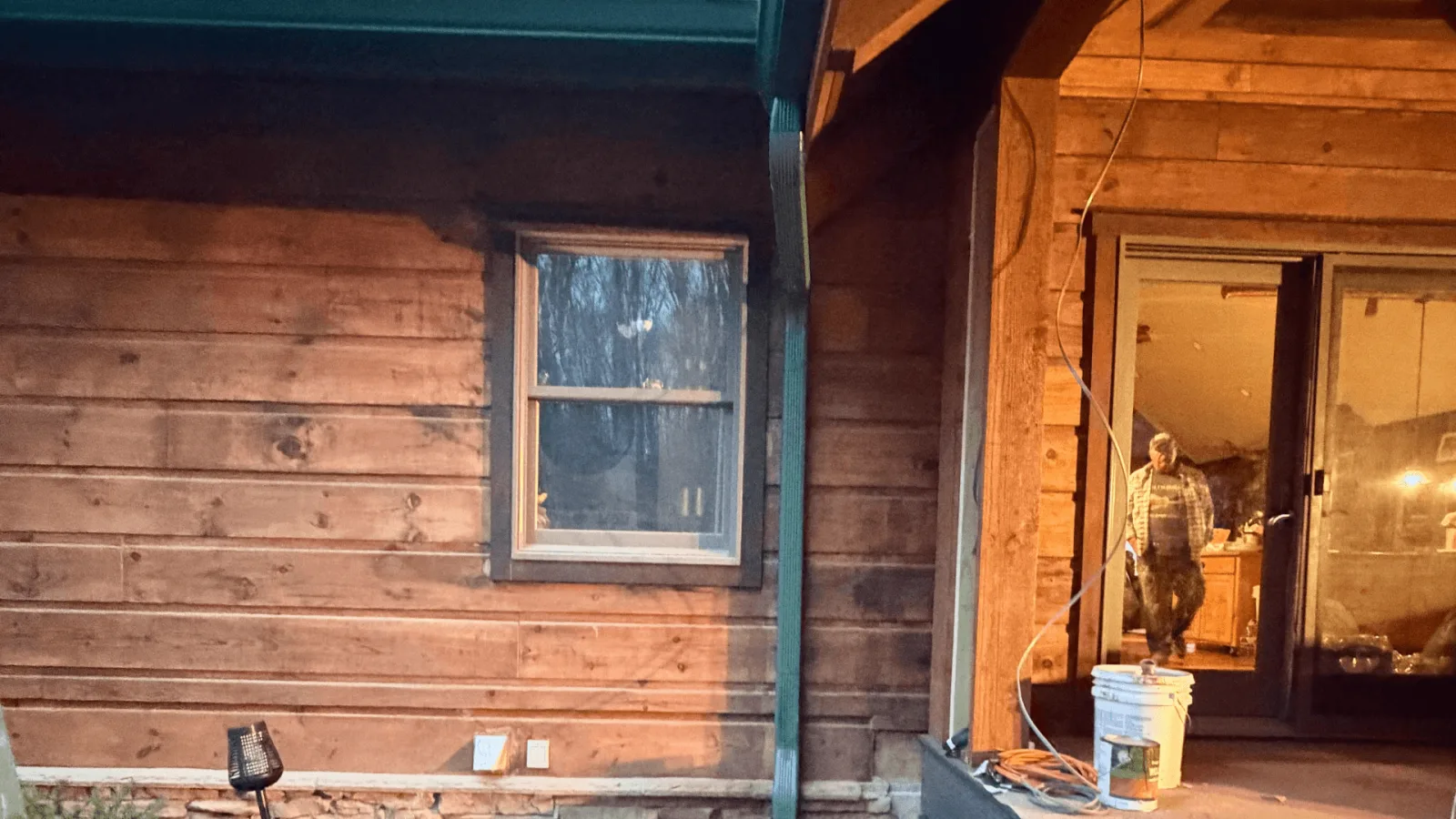
How TruLog Compares With Other Materials
No winner declared here, because the right answer depends on the house and what you want from it. What follows is how these materials differ, not which is best.
Appearance. TruLog exists for one reason above the others: it gives a log or woodgrain look in a steel panel. If the log-cabin appearance is the goal, nothing else on this list reproduces it the same way. Vinyl offers lap, board-and-batten and shake profiles; James Hardie fiber cement and LP SmartSide both offer a range of profiles with their own character.
Maintenance. TruLog states its product requires no staining or sealing, and that cleaning is generally a rinse or mild detergent as needed. Natural wood is the opposite end: its protection is the finish, so the finish has to be maintained. Vinyl and fiber cement sit in between, each with their own upkeep.
Moisture sensitivity. Steel does not rot and insects do not eat it. Fiber cement is not a food source either. Wood is moisture-sensitive by nature. But none of that makes the wall waterproof, which is the point of the water-management section above: the panel is not what keeps water out of the assembly.
Weight and installation. Steel panels are light to handle, and TruLog markets the 12 ft panel as straightforward to install. Fiber cement is heavier and is cut and handled differently. Each system has its own trim, its own transitions and its own learning curve, which is why the installer matters at least as much as the product.
Finish and repairability. TruLog's finish is factory-applied, which is why it is not repainted on a cycle the way wood is. The trade-off is that a factory finish is harder to touch up convincingly if it gets damaged. Wood can be sanded and refinished. Fiber cement can be painted. We go into TruLog repairs further down, and the direct comparisons live on our TruLog vs wood siding and TruLog vs vinyl siding pages.
If you are weighing steel generally rather than TruLog specifically, our metal siding installation page is the broader guide to metal cladding.
Common Problems We Prevent
We often see issues when siding is installed incorrectly, including:
At MI Homesiding & Roofing, we focus on installing siding systems correctly from the start.

01
Water getting behind siding
02
Improper flashing
03
Poor sealing around openings
04
Structural damage over time
Steel Siding Is Cladding, Not the Water-Management System
This is the thing that decides whether a wall lasts, and it has very little to do with which panel you picked.
No exterior cladding is the water barrier. Tennessee has adopted the 2018 International Residential Code, which requires not fewer than one layer of water-resistive barrier behind the exterior wall covering, integrated with flashing and continuous to the top of the wall, and requires the exterior wall envelope to prevent water from accumulating inside the assembly and to provide a means of draining water that does get in back to the exterior. The City of Knoxville enforces its own amended edition and unincorporated Knox County is a separate jurisdiction, so the detail that applies to your house follows the code your property is actually under.
So the parts that keep the wall dry are the barrier behind the panel, the flashing at every opening and penetration, the corners and the transitions, and a drainage path that lets water that gets behind the cladding get back out. TruLog's own material points the same direction when it notes that its mounting accessories help protect against moisture accumulating under the siding panels. The panel sheds most of the water. It is not the system.
Worth being direct about one gap: TruLog's published FAQ and product pages do not address water-resistive barrier requirements at all. That does not mean a barrier is optional, it means the requirement comes from the code and from the product's installation guide rather than from the marketing pages. When water has already been getting in, the work usually overlaps with siding flashing repair and water behind siding repair.
How We Handle the Transitions
MI field practice. This is how we build. It is our own practice, not a manufacturer requirement and not a code requirement.
We use caulk where a sealed finish is appropriate: at trim boards, at corners, around windows, and at similar trim and joint conditions. Where the detail has to manage water behind the cladding, we do not rely on caulk as the primary method. There we install flashing to direct water out of and away from the assembly.
Caulk is a finish at a joint. Flashing is how water gets handled. Treating the two as interchangeable is one of the most common reasons we get called out to look at somebody else's work.
Is TruLog Siding Right for Your Home?
TruLog siding may be a good option if you:
It is a weaker fit if the log or woodgrain look is not what you want, if the budget is pointing you toward a standard lap product, or if matching an existing cladding matters more than changing the appearance. Steel also will not fix a wall that is getting wet: if water is already getting behind the cladding, that gets corrected first regardless of what goes back on.
We look at the actual house and tell you which of those you are in.
- Want a log cabin appearance
- Prefer low maintenance
- Want a durable siding system
- Are concerned about moisture damage
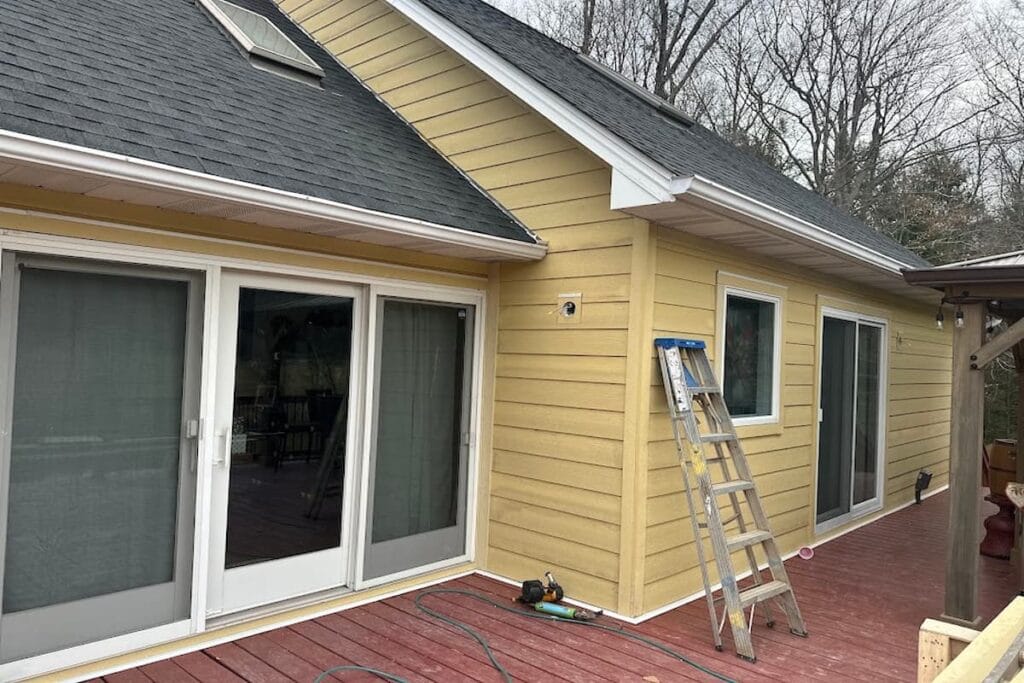
Repairs, Dents and Matching
Steel behaves differently from vinyl when something hits it, and that changes what a repair looks like.
Can a damaged panel be replaced? Sometimes, and it depends on where it is. These systems lock together in courses, so reaching a panel low on a wall can mean working above it. A panel at the top of a gable is a different job from one beside the driveway. We look at the actual location before telling you what it involves.
Dents and scratches vary. A light surface scratch in the clear coat is not the same as a gouge through to the steel, and a shallow dent is not the same as a crease. Severity drives the answer, and so does whether the coating has been breached, because that is the part that protects the steel.
Matching gets harder with age. Finishes and colors change, product lines get revised, and a finish that is discontinued cannot be ordered at any price. A panel that has faced south or west for years has also weathered, so even a correct current color can read as a patch next to it. We do not promise invisible repairs on steel siding. We tell you what is actually available for your product before anything is ordered, and sometimes the honest answer is that running new material to a natural break looks better than a patch.
TruLog does not publish panel-replacement or color-matching guidance, so this is our field assessment plus what the supplier confirms per project, not a manufacturer procedure. For repairs across other materials, see our siding repair page, and for a full re-side our siding replacement page.
Built for East Tennessee Weather
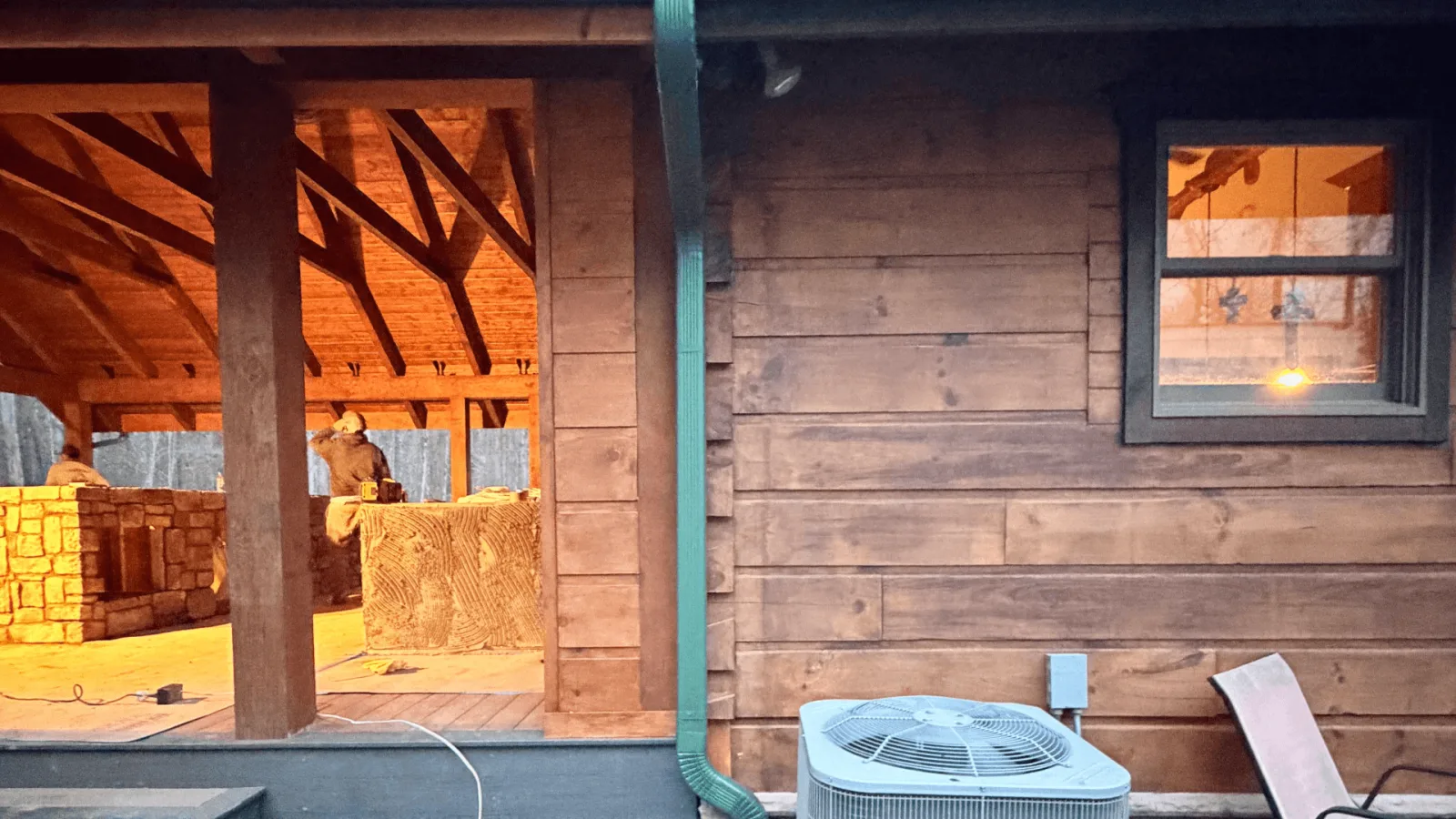
At MI Homesiding & Roofing, we install siding systems designed to handle local conditions.
We focus on:
This ensures your siding performs as expected.
01
Moisture control
02
Proper drainage
03
Correct installation methods
04
Long-term durability
Fire, Impact and Exactly What Those Ratings Cover
TruLog publishes two ratings for its steel log product, and both are worth understanding precisely rather than loosely.
Class A fire rating. TruLog states that its steel log siding carries a Class A fire rating and describes that as the highest fire safety classification for siding materials. That rating belongs to the product. It is not a rating of your wall assembly, which also contains sheathing, a water-resistive barrier, framing, insulation and whatever is already on the house. Steel itself does not burn, and that is a real advantage over a combustible cladding. We are not going to call it fireproof, because nothing on a house is.
Class 4 impact resistance. TruLog publishes Class 4 impact resistance, which it presents in the context of hail and storms. Again, that is the panel's rating. It is not a promise about your house in a particular storm, and it is not hail-proof or storm-proof. A Class 4 panel can still be dented by a hard enough strike, and a dent in steel does not self-correct the way some materials flex back.
What we will not do is extend either rating to the whole wall or to products TruLog has not published them for. If you want the ratings for the specific product and tier going on your house, we will get you the current documentation for it.
The Foam Backer, the R-Value and the Rest of the Wall
TruLog publishes a foam backer behind its log panels with an insulation value of R-3 to R-4, and describes it as improving efficiency and dent resistance.
Two honest qualifications. First, that figure is for the backer, not for your wall. A wall's thermal performance comes from the cavity insulation, the sheathing, the air sealing, the windows and how well all of it was detailed. A backer adds to that; it does not define it, and there is no whole-wall R-value we could honestly print here from a siding specification.
Second, we are not going to promise you a lower power bill. Energy use depends on the whole house, how it is heated and cooled, and how it is used. The backer is a genuine component with a published number. Turning that number into a dollar saving would be a guess, and TruLog does not publish one either.
The useful part of the backer, in our experience on site, is less about the R-value than about the panel: it sits behind the steel and stiffens it, which is why TruLog ties it to dent resistance as well as efficiency.
Coatings, Corrosion and What Actually Rusts
Steel and rust is the first question most homeowners ask, and it deserves a straight answer rather than a slogan.
A TruLog panel is a steel substrate with a corrosion-resistant barrier over it and a factory-applied woodgrain finish with a UV-protectant clear coat on top. TruLog describes its lap product as giving long-term protection against corrosion, weathering and coating failure, and its maintenance material says the siding is coated to protect against moisture damage. The protection is the coating system. That is the whole mechanism.
Which tells you where the risk is. Intact coating protects the steel. A deep scratch, a gouge from a trimmer or a ladder, or an exposed cut edge is where bare steel can be reached, and bare steel is what corrodes. So the honest version is not "it never rusts" and not "rust-proof", neither of which we will print. It is that a properly coated, undamaged panel resists corrosion, and that damage to the coating is the thing to attend to.
TruLog does not publish guidance on cut-edge treatment, touch-up paint or scratch repair, so we ask the supplier what is available for the specific product and finish rather than improvising. If you are in a salt-exposed or unusual environment, that is a question for the manufacturer before you buy, because it is not addressed in the public documentation either.
What Maintenance Actually Looks Like
TruLog markets the product as essentially maintenance-free. We are not going to repeat that phrase, because the manufacturer's own instructions describe maintenance.
What TruLog actually says: the siding can be cleaned with a rinse from a garden hose; generally you will occasionally rinse off debris or use a mild detergent as needed, should you notice dirt accumulation or bird droppings; it requires no staining or sealing; and maintaining proper drainage and avoiding direct contact with soil or plants will help maximize the lifespan. That last one is the part homeowners miss most often.
So the realistic list is short. Rinse it when it needs it. Keep shrubs, mulch and soil off the panels. Keep the gutters and the roof edge doing their job, because water running down a wall is what finds the weak points. And look at it once in a while: at the trim and the transitions, at the sealant where it was used, and at any place the coating has been scratched or dented.
We are not publishing a cleaning interval or an inspection schedule, because TruLog does not set one and the right frequency depends on your exposure, your trees and your elevation.
Warranty: Read the One for Your Product
You will see "TruLog has a 30-year warranty" in a lot of places. It is not that simple, and we would rather show you why than repeat a number that may not apply to what you buy.
The term depends on the product line and the tier. TruLog sells its profiles in more than one tier, and its published pricing material lists different warranty lengths across them: a 20-year term on the TruGrain colors for Steel Log, Board & Batten and Lap, and a 30-year term on the Premium and Standard lines of those profiles. For Soffit and Fascia the same material lists 30-year terms on two tiers and a 10-year term on the third. So the answer genuinely changes with what is being quoted.
What the coverage is written against. TruLog describes a limited warranty covering the coating for 40 years against peeling, cracking and checking, and for 30 years against excessive chalking and finish-appearance fade, materials only, with registration required. Notice that this is coating-performance coverage, and notice the registration condition: a warranty you never registered is a warranty you may not be able to use.
TruLog's own pages state it inconsistently. Across its site the term appears as a flat 30-year limited warranty in one place, as the 40-and-30-year coating split in another, and as a limited lifetime warranty with 30-year chalk and fade protection in a third. We checked. That is precisely why we point you to the warranty document for the product and tier you are actually buying instead of printing one number on a page.
Not published anywhere we could verify: whether the coverage is prorated or non-prorated, whether it transfers to a new owner, who is eligible, the exclusions, and the registration deadline. We will not state any of those as fact. If they matter to your decision, and transferability often does at resale, we will request the current written warranty for your product before you commit.
A warranty term is not a lifespan. A 30-year coating warranty does not mean the siding lasts 30 years, and it does not mean it fails at 31. TruLog markets expected life as 30+ years in one place and 40+ in another; those are marketing figures, not a verified service life, and we do not publish either as a lifespan.
Our workmanship is separate. General repair work carries a One (1) Year Limited Workmanship Warranty unless something different is stated in writing. Full replacement and installation work carries a Five (5) Year Limited Workmanship Warranty where the signed agreement is the full replacement or installation agreement. In both cases the term follows the signed agreement and the scope it defines. They cover our installation, separately from whatever the manufacturer covers on the material.
Why Homeowners Choose MI Homesiding & Roofing
We install siding systems built to last. With 500+ Siding Projects Completed and more than 20 years of hands-on exterior remodeling experience, we are a Licensed Home Improvement Contractor in Tennessee and a City of Knoxville Building Contractor, BBB Accredited with an A+ rating, carrying General Liability and Workers’ Compensation coverage. Family owned and operated, with bilingual English and Spanish service.
- Professional installation crews
- Experience with multiple siding systems
- Focus on long-term solutions
- Clear and honest estimates
- Clean, professional work

Get a Free TruLog Siding Estimate in Knoxville, TN
Every home is different, and choosing the right siding matters.
At MI Homesiding & Roofing:
Call or message today for a free estimate in Knoxville, TN.
- We inspect your home
- We explain your options
- We provide a clear and honest estimate
Serving Knoxville and East Tennessee
MI Homesiding & Roofing installs TruLog Steel Log, Board & Batten, Lap, Soffit and Fascia systems for applicable projects across Knoxville and the surrounding East Tennessee communities, subject to current product availability and the approved project scope.
KnoxvilleFarragutPowellHalls CrossroadsMaryvilleAlcoaOak RidgeSeymourSeviervillePigeon ForgeGatlinburgLenoir CityLoudonClintonNewportMorristownDandridgeCorryton
If your community is not listed, it is worth asking — we work across East Tennessee around Knoxville.
Talk with MI Homesiding & Roofing about your TruLog siding project.
Call Now 865-243-1243